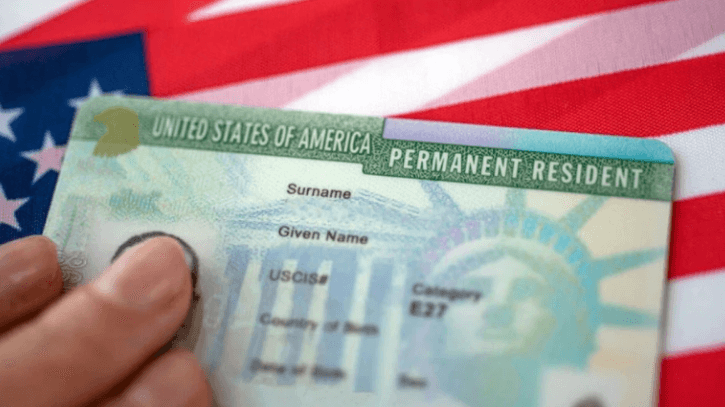
What Is a Combo Card?
A combo card is a single plastic card functioning as both Employment Authorization Document and Advance Parole travel document. Instead of two separate cards, you receive one document serving both purposes.
The card displays your photo, biographical information, validity dates, and annotations indicating "(c)(9)" category for EAD and "AP" for Advance Parole authorization.
Combo cards are issued specifically to adjustment of status applicants who apply for both work and travel authorization simultaneously using Forms I-765 and I-131.
How Is a Combo Card Different from Separate EAD and AP?
Functionality is identical whether you receive a combo card or separate documents. Both provide work authorization and travel permission.
Combo cards offer convenience: one card to carry, one expiration date to track, one renewal filing for both benefits.
USCIS issues combo cards when both applications are filed together. Filing only I-765 or only I-131 results in single-purpose documents.
How Do You Apply for a Combo Card?
File Form I-765 Application for Employment Authorization selecting category (c)(9) for adjustment applicants. File Form I-131 Application for Travel Document selecting Advance Parole.
Both forms can be filed concurrently with your I-485 adjustment of status application. Filing fees for I-765 and I-131 are often included in the I-485 fee for adjustment applicants.
According to USCIS filing instructions, submit both applications together to receive a combined document.
What Documents Support Combo Card Applications?
Submit copies of your I-485 receipt notice (or file concurrently), passport biographical page, passport-style photographs meeting USCIS specifications, and any required fees.
If filing separately from I-485, include evidence of your pending adjustment application and eligibility for employment authorization.
Evidence of underlying petition approval (I-140 for employment-based, I-130 for family-based) supports your application.
What Are the Benefits of EAD Work Authorization?
EAD provides unrestricted employment authorization. You can work for any employer, in any position, full-time or part-time, without employer sponsorship or immigration filings.
Unlike H-1B requiring employer petitions for job changes, EAD allows free employment mobility. Change jobs without notifying USCIS or waiting for approvals.
Self-employment, freelancing, and starting your own business are permitted under EAD. The work authorization is not tied to any particular employer.
When Can You Start Working on EAD?
You cannot work until you receive the physical EAD card. Pending applications do not authorize employment; the approved, issued card is required.
After approval, USCIS produces the card and mails it to your address. Card production and mailing typically add 1 to 2 weeks after approval.
Present your combo card for I-9 employment verification. EAD is a List A document establishing both identity and work authorization.
How Does Advance Parole Work?
Advance Parole authorizes international travel while your adjustment of status is pending. Without AP, departing the United States could be considered abandonment of your pending I-485.
When returning to the United States using Advance Parole, Customs and Border Protection (CBP) "paroles" you into the country rather than "admitting" you in a visa status.
Present your combo card to the airline for boarding and to CBP upon arrival. CBP stamps your passport indicating parole entry.
What Is the Difference Between Parole and Admission?
Admission means entering the United States in a specific visa category (H-1B, L-1, F-1, etc.) after inspection. Your immigration status reflects the admission category.
Parole means being allowed into the country without formal admission in a visa category. Parolees are technically not "admitted" but are authorized to be present.
For most adjustment applicants, this distinction has minimal practical effect. Your I-485 continues processing regardless of parole versus admission entry.
Critical Warning for H-1B and L-1 Holders
Using Advance Parole to reenter the United States may abandon your H-1B or L-1 status. When you reenter as a parolee rather than H-1B/L-1, your underlying work visa status may terminate.
If your I-485 is subsequently denied after abandoning H-1B status, you would be a parolee without valid status, potentially requiring immediate departure.
According to USCIS policy guidance, using AP for reentry does not maintain the prior nonimmigrant status for most purposes.
Should H-1B Holders Use Advance Parole?
Risk assessment depends on your case strength. If I-485 approval is highly likely, using AP is generally safe because denial is improbable.
If your case has complications or potential issues, maintaining H-1B as backup status provides safety. Reentering on H-1B preserves that status if your adjustment is denied.
Many attorneys recommend H-1B holders reenter on H-1B visa when possible and reserve AP for situations where H-1B reentry is unavailable (such as expired visa stamp requiring consular renewal).
How Long Is a Combo Card Valid?
Combo cards are typically issued for 2 years, though validity periods may vary based on underlying case circumstances.
If your adjustment remains pending beyond combo card expiration, you must renew by filing new I-765 and I-131 applications before expiration.
According to USCIS automatic extension policy, category (c)(9) EAD holders with timely-filed renewals receive automatic extensions of up to 540 days.
When Should You Apply for Combo Card Renewal?
File renewal applications 150 to 180 days before expiration. Current processing times make early filing essential for avoiding gaps.
If you file renewal before expiration, the automatic extension rule extends your work authorization while the renewal processes. The expired card plus I-797C receipt notice evidence the extension.
Advance Parole does not have automatic extension. If your AP expires before renewal is approved, you cannot travel until the new card arrives.
What Happens When Your Green Card Is Approved?
When your I-485 is approved, you become a lawful permanent resident. The combo card is no longer needed because your green card provides work authorization and travel permission.
Your green card serves as evidence of permanent resident status, work authorization, and travel document for international trips.
Update your I-9 with your employer after green card approval. Transition from EAD-based work authorization to permanent resident work authorization.
What Documents Replace the Combo Card?
Your green card (Form I-551) replaces both EAD and Advance Parole. As a permanent resident, you have permanent work authorization and travel rights.
For international travel, your green card plus passport allows reentry to the United States. No separate travel document is required for trips under one year.
If your green card has not arrived but your I-485 is approved, request a passport stamp as temporary evidence of permanent residence.