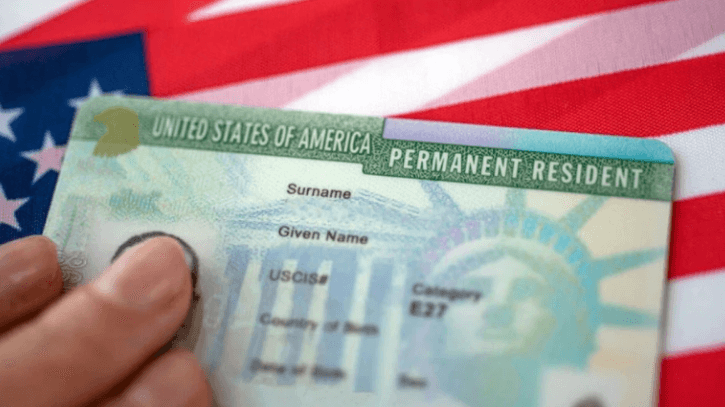
Entrepreneurs can self-petition for a green card through the EB-2 National Interest Waiver without employer sponsorship or PERM labor certification. Applicants must pass the three-prong Dhanasar test by proving their venture has substantial merit, national importance, and that they are well-positioned to advance it. The I-140 filing fee is $715, plus a $600 Asylum Program Fee. Premium processing costs $2,805 (increasing to $2,965 on March 1, 2026) and guarantees a decision within 45 business days.
KEY TAKEAWAYS
The EB-2 NIW allows entrepreneurs to self-petition for a U.S. green card without a job offer, employer sponsor, or PERM labor certification.
Applicants must pass the three-prong Dhanasar test established in Matter of Dhanasar, 26 I&N Dec. 884 (AAO 2016).
USCIS updated NIW guidance on January 15, 2025 (Policy Alert PA-2025-03), adding stricter scrutiny on entrepreneur petitions and requiring a specific proposed endeavor beyond general business activity.
The I-140 filing fee is $715, plus a $600 Asylum Program Fee, totaling $1,315 in government fees before premium processing.
Premium processing for EB-2 NIW costs $2,805 (increasing to $2,965 effective March 1, 2026) and provides a decision within 45 business days.
Standard I-140 processing time without premium processing averages 8-19 months as of early 2026.
The EB-2 NIW approval rate for FY2025 was approximately 61%, with a declining trend due to increased petition volume and heightened USCIS scrutiny.
Table of Content
What Is the EB-2 National Interest Waiver (NIW)?
The EB-2 National Interest Waiver is a subcategory of the employment-based second preference (EB-2) immigrant visa. It allows qualified foreign nationals to petition for a U.S. green card without the two requirements that most employment-based green cards demand: a specific job offer from a U.S. employer and PERM labor certification through the Department of Labor.
The NIW was created under the Immigration Act of 1990. Congress recognized that some individuals contribute so significantly to the national interest that requiring them to go through the standard labor market test would be counterproductive. Under 8 CFR 204.5(k), USCIS may waive the job offer and labor certification requirements when it determines that doing so would benefit the United States.
For entrepreneurs, this is especially powerful. Unlike the H-1B or most other work visas, the NIW lets business founders file Form I-140 (Immigrant Petition for Alien Workers) on their own behalf. There is no need for a separate U.S. employer to sponsor the petition.
Who Is Eligible for the EB-2 NIW as an Entrepreneur?
Before USCIS evaluates the national interest waiver itself, the applicant must first qualify for the underlying EB-2 classification. There are two ways to meet this threshold:
Advanced Degree
The applicant holds a U.S. master's degree or higher (or a foreign equivalent). A U.S. bachelor's degree plus 5 years of progressive post-degree work experience in the specialty also qualifies.
Exceptional Ability
The applicant demonstrates exceptional ability in their field - which can include business, science, technology, or the arts - by meeting at least 3 of 6 criteria defined in 8 CFR 204.5(k)(3)(ii):
Official academic record showing a degree related to the area of exceptional ability
Letters from current or former employers documenting at least 10 years of full-time experience
A license or certification to practice the profession
Evidence of commanding a salary or remuneration that demonstrates exceptional ability
Membership in professional associations
Recognition for achievements and contributions by peers, government entities, or professional organizations
Important for entrepreneurs: Following the January 15, 2025 USCIS policy update (PA-2025-03), officers now scrutinize EB-2 threshold eligibility more explicitly before evaluating the NIW prongs. The proposed occupation must require at least a bachelor's degree for entry into the field, and the applicant's exceptional ability must directly relate to the proposed endeavor.
How Entrepreneurs Prove National Interest: The Dhanasar Framework
The core legal test for the NIW comes from Matter of Dhanasar, 26 I&N Dec. 884 (AAO 2016). This precedent decision replaced the older New York State Department of Transportation test and established three prongs that every NIW petitioner must satisfy:
Prong 1: Substantial Merit and National Importance
The entrepreneur's proposed endeavor must have both substantial merit and national importance. USCIS evaluates this broadly across areas like business, technology, healthcare, education, and economic development.
What works for entrepreneurs:
A technology startup developing solutions that address a national challenge (such as cybersecurity, clean energy, or healthcare access)
A business that creates measurable job growth in the U.S. economy
A venture that advances innovation in a STEM field with documented market need
What does NOT work: The January 2025 USCIS guidance explicitly states that "an entrepreneur cannot demonstrate national importance solely by opening a consulting firm for those working or seeking to work in a nationally important occupation." Similarly, general statements about the importance of an industry (such as claiming the car dealership industry is nationally important) do not satisfy this prong. Source: USCIS - Employment-Based Immigration: Second Preference EB-2
The endeavor must show impact beyond the applicant's own company or local market. USCIS looks for potential national-scale benefits.
Prong 2: Well-Positioned to Advance the Endeavor
The entrepreneur must demonstrate they have the education, skills, knowledge, and track record to successfully carry out the proposed endeavor. USCIS considers:
Relevant educational background and degrees
Prior entrepreneurial successes, such as companies founded, revenue generated, or products launched
A detailed business plan showing how the endeavor will be pursued
Progress already made toward the endeavor (customers acquired, funding secured, partnerships formed, patents filed)
Letters from industry experts, investors, or partners confirming the petitioner's qualifications
Critical note: USCIS's updated 2025 guidance emphasizes that general work experience alone may not be sufficient. For example, if an entrepreneur's experience is limited to a narrow role, USCIS may determine they have not established they are well-positioned to lead a broader entrepreneurial venture. The petition must connect specific past accomplishments to the proposed future plan.
Prong 3: Balancing - Waiver Benefits the United States
The petitioner must show that, on balance, it would be beneficial to the United States to waive the job offer and labor certification requirements. Relevant arguments include:
It is impractical for an entrepreneur or self-employed innovator to secure a traditional job offer from a separate U.S. employer
The endeavor has potential to generate considerable economic impact, such as job creation or economic revitalization
There is urgency in the national benefit offered by the endeavor
The petitioner's unique qualifications make them difficult to replace through the standard labor market process
This prong is often where entrepreneur petitions are strongest, because the very nature of founding a company makes the traditional employer-employee labor certification process impractical.
What Evidence Do Entrepreneurs Need? Complete Checklist
Entrepreneurs should prepare a comprehensive evidence package that addresses all three Dhanasar prongs. The following checklist covers the key documents:
Threshold EB-2 Qualification
Copies of advanced degree(s) with transcripts, or bachelor's degree plus documentation of 5 years of progressive experience
Foreign credential evaluations (if applicable)
Professional licenses or certifications
Prong 1 Evidence (Substantial Merit and National Importance)
Business plan with market analysis, financial projections, and clear articulation of national-level impact
Industry reports or government data showing the national importance of the problem being addressed
Media coverage of the industry challenge or opportunity
Evidence of alignment with U.S. government priorities (STEM, infrastructure, healthcare, clean energy, national security)
Prong 2 Evidence (Well-Positioned)
Resume or CV documenting relevant entrepreneurial experience
Documentation of prior business successes (revenue figures, user growth, company valuations)
5-8 recommendation letters from independent industry experts, investors, customers, or academic authorities who can speak to the petitioner's qualifications and the endeavor's potential impact
Evidence of progress toward the endeavor: funding raised, customers acquired, partnerships signed, patents filed or granted, product launches
Published articles, conference presentations, or media features about the petitioner or their work
Evidence of grants, awards, or recognitions
Prong 3 Evidence (Balancing)
Explanation of why a traditional job offer and PERM process are impractical
Any urgency factors (time-sensitive market opportunity, government priority area)
Step-by-Step Application Process for Entrepreneurs
The EB-2 NIW filing process involves several stages. Here is a step-by-step breakdown:
Step 1: Evaluate Eligibility Before investing time and money, assess whether you meet the EB-2 threshold (advanced degree or exceptional ability) and whether your entrepreneurial endeavor can satisfy all three Dhanasar prongs. A professional evaluation from a licensed immigration attorney is strongly recommended.
Step 2: Gather Evidence and Build the Petition Compile all supporting documents. Write or commission a detailed petition letter that presents a clear narrative connecting your qualifications, your proposed endeavor, and the national interest. Obtain recommendation letters from credible, independent experts.
Step 3: File Form I-140 Submit Form I-140, Immigrant Petition for Alien Workers, to USCIS. Self-petitioners file on their own behalf. Include the $715 filing fee plus the $600 Asylum Program Fee. Optionally, include Form I-907 for premium processing ($2,805, or $2,965 if postmarked on or after March 1, 2026).
Step 4: Wait for USCIS Decision Standard processing takes approximately 8-19 months. Premium processing guarantees action (approval, denial, or RFE) within 45 business days. If you receive a Request for Evidence (RFE), you typically have 84 days to respond.
Step 5: Adjustment of Status or Consular Processing After I-140 approval, the next step depends on your location and the Visa Bulletin:
If you are in the U.S. and your priority date is current, file Form I-485 (Adjustment of Status) along with applications for an Employment Authorization Document (EAD) and Advance Parole.
If you are abroad, proceed through consular processing at a U.S. embassy.
Step 6: Receive Green Card Once I-485 is approved or your immigrant visa is issued, you receive your permanent resident card.
Learn more about the green card process
Processing Time and Costs 2026
Item
Cost / Timeline
Form I-140 filing fee
$715
Asylum Program Fee
$600
Premium processing (Form I-907)
$2,805 (increasing to $2,965 on March 1, 2026)
Standard I-140 processing time
8-19 months
Premium processing decision time
45 business days (approximately 9 weeks)
Form I-485 filing fee
$1,440
Medical exam (Form I-693)
$200-$500 (varies by provider)
Attorney fees (typical range)
$5,000-$15,000+
Total government fees (I-140 + I-485, no premium)
$2,755
Total government fees (I-140 + I-485, with premium)
$5,560 (before March 1, 2026)
Visa Bulletin wait (most countries)
Approximately 1-2 years after I-140 approval
Visa Bulletin wait (India)
10+ years
Visa Bulletin wait (China)
3-5+ years
Note: As of the January 2026 Visa Bulletin, the EB-2 Final Action Date for "All Chargeability Areas Except Those Listed" was April 1, 2024. For China, it was September 1, 2021. For India, it was July 15, 2013. These dates shift monthly. Check the latest Visa Bulletin here
EB-2 NIW vs Other Green Card Options for Entrepreneurs
Feature
EB-2 NIW
EB-1A (Extraordinary Ability)
EB-5 (Investor Visa)
Visa Type
Immigrant (Green Card)
Immigrant (Green Card)
Immigrant (Green Card)
Self-Petition Allowed
Yes
Yes
Yes (through Regional Center or Direct)
Employer Sponsorship
Not required
Not required
Not required
PERM Labor Certification
Waived
Not required
Not required
Minimum Investment
None
None
$800,000 (TEA) or $1,050,000
Evidence Standard
Dhanasar three-prong test
Meet 3 of 10 criteria for extraordinary ability
Capital investment + job creation
Premium Processing
Available ($2,805)
Available ($2,805)
Not available for I-526E
Premium Processing Time
45 business days
15 business days
N/A
I-140 Filing Fee
$715
$715
$3,675 (Form I-526E)
Annual Visa Cap
Part of EB-2 allocation (approximately 40,000)
Part of EB-1 allocation (approximately 40,000)
10,000 per year
Priority Date Backlog
Moderate (1-2 years for most countries)
Generally shorter
Varies
Best For
Entrepreneurs with advanced degrees and nationally important ventures
Entrepreneurs with extraordinary achievements and recognition
Common Mistakes That Lead to Denial for Entrepreneur NIW Petitions
1. Vague or Overly Broad Proposed Endeavor
USCIS wants a specific, well-defined endeavor - not a general statement like "I will contribute to the technology industry." The 2025 policy update makes clear that claiming importance of an entire industry is not enough.
2. Relying Solely on a Business Plan
A business plan alone, no matter how detailed, is insufficient without documented past success. USCIS needs evidence of tangible progress - customers, revenue, funding, partnerships - not just projections.
3. Using Generic Recommendation Letters
Template letters that do not address the specific Dhanasar prongs weaken a petition. Recommendation letters should come from independent experts (not just business partners or employees) and should address specific facts about the petitioner's qualifications and the endeavor's national importance.
4. Confusing Company Profits With National Impact
USCIS is more interested in how a startup addresses national problems than how much revenue it generates. Petitions that focus primarily on profitability without connecting to broader national benefits are more likely to receive RFEs or denials.
5. Failing to Establish EB-2 Threshold Eligibility
Under the 2025 guidance, USCIS now scrutinizes threshold EB-2 qualification more explicitly. Applicants who cannot clearly demonstrate an advanced degree or exceptional ability - specifically related to the proposed endeavor - risk denial before the NIW analysis even begins.
6. Ignoring the Visa Bulletin
I-140 approval does not immediately lead to a green card. Entrepreneurs from countries with long visa backlogs (India, China) should plan their immigration timeline carefully and consider concurrent filing strategies where eligible.
Key USCIS Policy Changes Affecting Entrepreneur NIW Petitions in 2025-2026
On January 15, 2025, USCIS published Policy Alert PA-2025-03, updating the guidance in Volume 6, Part F, Chapter 5 of the USCIS Policy Manual. This is the most significant NIW policy update since Matter of Dhanasar in 2016. Key changes relevant to entrepreneurs include:
Stricter EB-2 threshold analysis: Officers now confirm EB-2 eligibility before reaching the Dhanasar prongs. The proposed occupation must require at least a bachelor's degree.
Specific endeavor required: General claims about industry importance are insufficient. The endeavor must be clearly defined with specific goals and measurable impact.
Entrepreneurship scrutiny: Not all entrepreneurs automatically qualify. USCIS evaluates whether the specific business - not just the industry - serves the national interest.
RFEs reflect new standards: Requests for Evidence are increasingly asking petitioners to clarify the occupation, the exact endeavor, and the nexus between qualifications and the endeavor.
Disclaimer: OpenSphere is not a law firm and does not provide legal advice. This article is for informational purposes only and should not be considered legal counsel. Immigration laws change frequently; always consult with a licensed immigration attorney for advice specific to your situation.
The EB-2 National Interest Waiver is a subcategory of the employment-based second preference (EB-2) immigrant visa. It allows qualified foreign nationals to petition for a U.S. green card without the two requirements that most employment-based green cards demand: a specific job offer from a U.S. employer and PERM labor certification through the Department of Labor.
The NIW was created under the Immigration Act of 1990. Congress recognized that some individuals contribute so significantly to the national interest that requiring them to go through the standard labor market test would be counterproductive. Under 8 CFR 204.5(k), USCIS may waive the job offer and labor certification requirements when it determines that doing so would benefit the United States.
For entrepreneurs, this is especially powerful. Unlike the H-1B or most other work visas, the NIW lets business founders file Form I-140 (Immigrant Petition for Alien Workers) on their own behalf. There is no need for a separate U.S. employer to sponsor the petition.
Who Is Eligible for the EB-2 NIW as an Entrepreneur?
Before USCIS evaluates the national interest waiver itself, the applicant must first qualify for the underlying EB-2 classification. There are two ways to meet this threshold:
Advanced Degree
The applicant holds a U.S. master's degree or higher (or a foreign equivalent). A U.S. bachelor's degree plus 5 years of progressive post-degree work experience in the specialty also qualifies.
Exceptional Ability
The applicant demonstrates exceptional ability in their field - which can include business, science, technology, or the arts - by meeting at least 3 of 6 criteria defined in 8 CFR 204.5(k)(3)(ii):
Official academic record showing a degree related to the area of exceptional ability
Letters from current or former employers documenting at least 10 years of full-time experience
A license or certification to practice the profession
Evidence of commanding a salary or remuneration that demonstrates exceptional ability
Membership in professional associations
Recognition for achievements and contributions by peers, government entities, or professional organizations
Important for entrepreneurs: Following the January 15, 2025 USCIS policy update (PA-2025-03), officers now scrutinize EB-2 threshold eligibility more explicitly before evaluating the NIW prongs. The proposed occupation must require at least a bachelor's degree for entry into the field, and the applicant's exceptional ability must directly relate to the proposed endeavor.
How Entrepreneurs Prove National Interest: The Dhanasar Framework
The core legal test for the NIW comes from Matter of Dhanasar, 26 I&N Dec. 884 (AAO 2016). This precedent decision replaced the older New York State Department of Transportation test and established three prongs that every NIW petitioner must satisfy:
Prong 1: Substantial Merit and National Importance
The entrepreneur's proposed endeavor must have both substantial merit and national importance. USCIS evaluates this broadly across areas like business, technology, healthcare, education, and economic development.
What works for entrepreneurs:
A technology startup developing solutions that address a national challenge (such as cybersecurity, clean energy, or healthcare access)
A business that creates measurable job growth in the U.S. economy
A venture that advances innovation in a STEM field with documented market need
What does NOT work: The January 2025 USCIS guidance explicitly states that "an entrepreneur cannot demonstrate national importance solely by opening a consulting firm for those working or seeking to work in a nationally important occupation." Similarly, general statements about the importance of an industry (such as claiming the car dealership industry is nationally important) do not satisfy this prong. Source: USCIS - Employment-Based Immigration: Second Preference EB-2
The endeavor must show impact beyond the applicant's own company or local market. USCIS looks for potential national-scale benefits.
Prong 2: Well-Positioned to Advance the Endeavor
The entrepreneur must demonstrate they have the education, skills, knowledge, and track record to successfully carry out the proposed endeavor. USCIS considers:
Relevant educational background and degrees
Prior entrepreneurial successes, such as companies founded, revenue generated, or products launched
A detailed business plan showing how the endeavor will be pursued
Progress already made toward the endeavor (customers acquired, funding secured, partnerships formed, patents filed)
Letters from industry experts, investors, or partners confirming the petitioner's qualifications
Critical note: USCIS's updated 2025 guidance emphasizes that general work experience alone may not be sufficient. For example, if an entrepreneur's experience is limited to a narrow role, USCIS may determine they have not established they are well-positioned to lead a broader entrepreneurial venture. The petition must connect specific past accomplishments to the proposed future plan.
Prong 3: Balancing - Waiver Benefits the United States
The petitioner must show that, on balance, it would be beneficial to the United States to waive the job offer and labor certification requirements. Relevant arguments include:
It is impractical for an entrepreneur or self-employed innovator to secure a traditional job offer from a separate U.S. employer
The endeavor has potential to generate considerable economic impact, such as job creation or economic revitalization
There is urgency in the national benefit offered by the endeavor
The petitioner's unique qualifications make them difficult to replace through the standard labor market process
This prong is often where entrepreneur petitions are strongest, because the very nature of founding a company makes the traditional employer-employee labor certification process impractical.
What Evidence Do Entrepreneurs Need? Complete Checklist
Entrepreneurs should prepare a comprehensive evidence package that addresses all three Dhanasar prongs. The following checklist covers the key documents:
Threshold EB-2 Qualification
Copies of advanced degree(s) with transcripts, or bachelor's degree plus documentation of 5 years of progressive experience
Foreign credential evaluations (if applicable)
Professional licenses or certifications
Prong 1 Evidence (Substantial Merit and National Importance)
Business plan with market analysis, financial projections, and clear articulation of national-level impact
Industry reports or government data showing the national importance of the problem being addressed
Media coverage of the industry challenge or opportunity
Evidence of alignment with U.S. government priorities (STEM, infrastructure, healthcare, clean energy, national security)
Prong 2 Evidence (Well-Positioned)
Resume or CV documenting relevant entrepreneurial experience
Documentation of prior business successes (revenue figures, user growth, company valuations)
5-8 recommendation letters from independent industry experts, investors, customers, or academic authorities who can speak to the petitioner's qualifications and the endeavor's potential impact
Evidence of progress toward the endeavor: funding raised, customers acquired, partnerships signed, patents filed or granted, product launches
Published articles, conference presentations, or media features about the petitioner or their work
Evidence of grants, awards, or recognitions
Prong 3 Evidence (Balancing)
Explanation of why a traditional job offer and PERM process are impractical
Any urgency factors (time-sensitive market opportunity, government priority area)
Step-by-Step Application Process for Entrepreneurs
The EB-2 NIW filing process involves several stages. Here is a step-by-step breakdown:
Step 1: Evaluate Eligibility Before investing time and money, assess whether you meet the EB-2 threshold (advanced degree or exceptional ability) and whether your entrepreneurial endeavor can satisfy all three Dhanasar prongs. A professional evaluation from a licensed immigration attorney is strongly recommended.
Step 2: Gather Evidence and Build the Petition Compile all supporting documents. Write or commission a detailed petition letter that presents a clear narrative connecting your qualifications, your proposed endeavor, and the national interest. Obtain recommendation letters from credible, independent experts.
Step 3: File Form I-140 Submit Form I-140, Immigrant Petition for Alien Workers, to USCIS. Self-petitioners file on their own behalf. Include the $715 filing fee plus the $600 Asylum Program Fee. Optionally, include Form I-907 for premium processing ($2,805, or $2,965 if postmarked on or after March 1, 2026).
Step 4: Wait for USCIS Decision Standard processing takes approximately 8-19 months. Premium processing guarantees action (approval, denial, or RFE) within 45 business days. If you receive a Request for Evidence (RFE), you typically have 84 days to respond.
Step 5: Adjustment of Status or Consular Processing After I-140 approval, the next step depends on your location and the Visa Bulletin:
If you are in the U.S. and your priority date is current, file Form I-485 (Adjustment of Status) along with applications for an Employment Authorization Document (EAD) and Advance Parole.
If you are abroad, proceed through consular processing at a U.S. embassy.
Step 6: Receive Green Card Once I-485 is approved or your immigrant visa is issued, you receive your permanent resident card.
Learn more about the green card process
Processing Time and Costs 2026
Item
Cost / Timeline
Form I-140 filing fee
$715
Asylum Program Fee
$600
Premium processing (Form I-907)
$2,805 (increasing to $2,965 on March 1, 2026)
Standard I-140 processing time
8-19 months
Premium processing decision time
45 business days (approximately 9 weeks)
Form I-485 filing fee
$1,440
Medical exam (Form I-693)
$200-$500 (varies by provider)
Attorney fees (typical range)
$5,000-$15,000+
Total government fees (I-140 + I-485, no premium)
$2,755
Total government fees (I-140 + I-485, with premium)
$5,560 (before March 1, 2026)
Visa Bulletin wait (most countries)
Approximately 1-2 years after I-140 approval
Visa Bulletin wait (India)
10+ years
Visa Bulletin wait (China)
3-5+ years
Note: As of the January 2026 Visa Bulletin, the EB-2 Final Action Date for "All Chargeability Areas Except Those Listed" was April 1, 2024. For China, it was September 1, 2021. For India, it was July 15, 2013. These dates shift monthly. Check the latest Visa Bulletin here
EB-2 NIW vs Other Green Card Options for Entrepreneurs
Feature
EB-2 NIW
EB-1A (Extraordinary Ability)
EB-5 (Investor Visa)
Visa Type
Immigrant (Green Card)
Immigrant (Green Card)
Immigrant (Green Card)
Self-Petition Allowed
Yes
Yes
Yes (through Regional Center or Direct)
Employer Sponsorship
Not required
Not required
Not required
PERM Labor Certification
Waived
Not required
Not required
Minimum Investment
None
None
$800,000 (TEA) or $1,050,000
Evidence Standard
Dhanasar three-prong test
Meet 3 of 10 criteria for extraordinary ability
Capital investment + job creation
Premium Processing
Available ($2,805)
Available ($2,805)
Not available for I-526E
Premium Processing Time
45 business days
15 business days
N/A
I-140 Filing Fee
$715
$715
$3,675 (Form I-526E)
Annual Visa Cap
Part of EB-2 allocation (approximately 40,000)
Part of EB-1 allocation (approximately 40,000)
10,000 per year
Priority Date Backlog
Moderate (1-2 years for most countries)
Generally shorter
Varies
Best For
Entrepreneurs with advanced degrees and nationally important ventures
Entrepreneurs with extraordinary achievements and recognition
Common Mistakes That Lead to Denial for Entrepreneur NIW Petitions
1. Vague or Overly Broad Proposed Endeavor
USCIS wants a specific, well-defined endeavor - not a general statement like "I will contribute to the technology industry." The 2025 policy update makes clear that claiming importance of an entire industry is not enough.
2. Relying Solely on a Business Plan
A business plan alone, no matter how detailed, is insufficient without documented past success. USCIS needs evidence of tangible progress - customers, revenue, funding, partnerships - not just projections.
3. Using Generic Recommendation Letters
Template letters that do not address the specific Dhanasar prongs weaken a petition. Recommendation letters should come from independent experts (not just business partners or employees) and should address specific facts about the petitioner's qualifications and the endeavor's national importance.
4. Confusing Company Profits With National Impact
USCIS is more interested in how a startup addresses national problems than how much revenue it generates. Petitions that focus primarily on profitability without connecting to broader national benefits are more likely to receive RFEs or denials.
5. Failing to Establish EB-2 Threshold Eligibility
Under the 2025 guidance, USCIS now scrutinizes threshold EB-2 qualification more explicitly. Applicants who cannot clearly demonstrate an advanced degree or exceptional ability - specifically related to the proposed endeavor - risk denial before the NIW analysis even begins.
6. Ignoring the Visa Bulletin
I-140 approval does not immediately lead to a green card. Entrepreneurs from countries with long visa backlogs (India, China) should plan their immigration timeline carefully and consider concurrent filing strategies where eligible.
Key USCIS Policy Changes Affecting Entrepreneur NIW Petitions in 2025-2026
On January 15, 2025, USCIS published Policy Alert PA-2025-03, updating the guidance in Volume 6, Part F, Chapter 5 of the USCIS Policy Manual. This is the most significant NIW policy update since Matter of Dhanasar in 2016. Key changes relevant to entrepreneurs include:
Stricter EB-2 threshold analysis: Officers now confirm EB-2 eligibility before reaching the Dhanasar prongs. The proposed occupation must require at least a bachelor's degree.
Specific endeavor required: General claims about industry importance are insufficient. The endeavor must be clearly defined with specific goals and measurable impact.
Entrepreneurship scrutiny: Not all entrepreneurs automatically qualify. USCIS evaluates whether the specific business - not just the industry - serves the national interest.
RFEs reflect new standards: Requests for Evidence are increasingly asking petitioners to clarify the occupation, the exact endeavor, and the nexus between qualifications and the endeavor.
Disclaimer: OpenSphere is not a law firm and does not provide legal advice. This article is for informational purposes only and should not be considered legal counsel. Immigration laws change frequently; always consult with a licensed immigration attorney for advice specific to your situation.