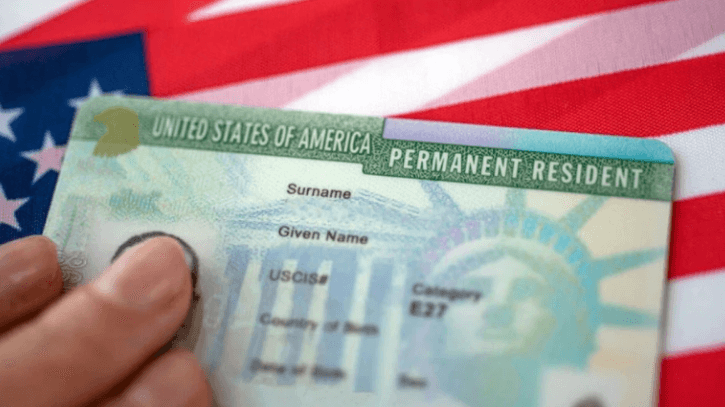
H-1B lottery has 25-30% selection rate, leaving thousands rejected annually. Alternative paths include O-1A for extraordinary ability, EB-2 NIW self-petition bypassing employer sponsorship, L-1 transfer through multinational company, marriage to U.S. citizen or permanent resident, and staying on F-1 through additional degree programs. Each path has specific requirements and timelines.
Key Takeaways
O-1A doesn't require lottery and can be filed anytime for extraordinary ability
EB-2 NIW allows self-petition without employer sponsorship
L-1 requires working for company abroad then transferring to U.S. office
Marriage to U.S. citizen provides fastest path to work authorization
Additional F-1 programs buy time while building alternative visa case
Cap-exempt H-1B positions at universities bypass lottery entirely
Table of Content
O-1A: Extraordinary Ability Visa
O-1A visa is for individuals with extraordinary ability in sciences, business, education, or athletics. No lottery, no annual cap, no employer lock-in. You can work for multiple employers with proper petitions. The catch is proving "extraordinary ability" through meeting 3 of 8 USCIS criteria.
O-1A is more accessible than most people think. You don't need Nobel Prize or Olympic medal. You need strategic documentation of achievements, recognition, and impact. Many software engineers, researchers, entrepreneurs, and professionals qualify with proper evidence presentation.
Evidence categories for O-1A (need 3 of 8):
Awards or prizes for excellence
Membership in associations requiring outstanding achievement
Published material about you in professional media
Judging others' work in your field
Original contributions of major significance
Scholarly articles authored by you
High salary compared to others in field
Employment in critical or essential capacity
Work with immigration attorney experienced in O-1 cases. They know how to frame your achievements to meet USCIS criteria. Processing takes 2-4 months (15 days with premium processing). You can start working immediately upon approval.
EB-2 NIW: Self Petition Green Card
EB-2 National Interest Waiver allows self-petitioning for green card without employer sponsorship or job offer. You demonstrate your work benefits America's national interest. This is permanent residency path, not temporary visa, but you can apply while on F-1 OPT.
NIW requires advanced degree (Master's or higher) or bachelor's plus 5 years progressive experience. You must prove your proposed work has substantial merit and national importance, you're well positioned to advance it, and it would benefit America to waive normal labor certification requirement.
Popular NIW fields include technology, healthcare, research, renewable energy, and STEM education. Processing takes 12-18 months typically. You can stay on F-1 OPT or other valid status while petition is pending.
L-1: Multinational Transfer
L-1 visa allows multinational companies to transfer employees from foreign office to U.S. office. You must have worked for company abroad for continuous one year in past three years. L-1A is for managers/executives, L-1B is for specialized knowledge workers.
This requires strategic planning. If you're currently in U.S. on F-1 and getting rejected from H-1B lottery, consider returning to home country to work for multinational company with U.S. presence. After one year abroad, transfer to U.S. office on L-1.
L-1 doesn't have lottery or annual cap. Processing is relatively quick. L-1A provides clear path to green card through EB-1C category. The downside is you must leave U.S. for one year to qualify.
Marriage to U.S. Citizen or Permanent Resident
If you're in genuine relationship with U.S. citizen, marriage provides fastest path to work authorization and green card. Work authorization (EAD) comes 3-6 months after filing, green card follows 12-18 months later for citizen spouses.
Marriage to permanent resident is slower with 2-3 year wait times currently, but still provides eventual path. USCIS scrutinizes marriage-based applications heavily for fraud, so relationship must be genuine. Never marry solely for immigration benefit.
F-1 Extensions: Additional Degrees
If you need more time to build O-1 case or wait for other options, additional F-1 degree programs provide legal status and work authorization through OPT. Many use this strategy: after bachelor's, pursue master's (2 years + 3 years STEM OPT = 5 years total). After master's, some pursue PhD (4-6 years + 3 years OPT).
This isn't indefinite solution but buys time to strengthen alternative visa case, build extraordinary ability evidence, or wait for circumstances to change.
Alternative Comparison
Path
Timeline
Difficulty
Cost
Best For
O-1A
2-4 months
Medium-High
$5K-$15K
High achievers with documentation
EB-2 NIW
12-18 months
Medium
$8K-$20K
Advanced degree holders with national impact
L-1
3-6 months (after 1 year abroad)
Medium
$5K-$10K
Those willing to work abroad temporarily
Marriage
3-6 months (EAD), 12-18 months (GC)
Low (if genuine)
$2K-$5K
Those in genuine relationship
F-1 Extension
Immediate
Low
Tuition varies
Need time to build other options
Cap-Exempt H-1B Positions
One often-overlooked option is cap-exempt H-1B positions. Universities, nonprofit research organizations, and government research facilities can sponsor H-1B outside the lottery system. These petitions can be filed anytime.
If you have research background or relevant skills, target positions at universities or research institutions. These typically pay less than private sector but provide H-1B sponsorship without lottery risk. After 1-2 years in cap-exempt position, you can transfer to for-profit company's cap-exempt H-1B petition.
Yes. You can prepare and file O-1A petition while on valid F-1 OPT status. If approved before OPT expires, you transition directly to O-1A without leaving the country.
Is EB-2 NIW realistic for software engineers?
Yes, if you can demonstrate your work advances U.S. technology sector, national security, or economic competitiveness. Many software engineers in AI, cybersecurity, and critical infrastructure qualify.
What if I don't have advanced degree for NIW?
Bachelor's degree plus 5 years progressive experience in your field qualifies as equivalent to advanced degree for EB-2 NIW purposes.
Can I start L-1 process while in U.S. on F-1?
You must return to home country and work for qualifying company for one continuous year before L-1 transfer. Plan requires leaving U.S. temporarily.
How long can I extend F-1 through additional degrees?
Theoretically many years through bachelor's → master's → PhD pathway, but you must be making reasonable academic progress. USCIS scrutinizes obviously stalling tactics.