Refugee Admissions and Resettlement: How the U.S. Refugee Program Works
The U.S. Refugee Admissions Program provides protection to people forced to flee their countries due to persecution or fear of persecution. Unlike asylum, refugee status is sought outside the United States. This guide explains how the refugee program works, who qualifies, and what happens after refugees arrive in the United States.
The U.S. Refugee Admissions Program provides protection to people forced to flee their countries due to persecution or fear of persecution. Unlike asylum, refugee status is sought outside the United States. This guide explains how the refugee program works, who qualifies, and what happens after refugees arrive in the United States.
The U.S. Refugee Admissions Program admits refugees from outside the United States who meet the legal definition of refugee under the Immigration and Nationality Act. According to USCIS refugee information, refugees must be unable or unwilling to return to their home country due to persecution or well-founded fear of persecution based on race, religion, nationality, membership in a particular social group, or political opinion. The annual ceiling is set by the President in consultation with Congress. Approved refugees receive resettlement assistance, work authorization upon arrival, and become eligible for green cards after one year. The process typically takes 18 to 36+ months from referral to U.S. arrival.
Key Takeaways
Refugee status is sought from outside the United States; asylum is sought from within.
Annual refugee admissions are determined by Presidential Determination, varying significantly by year.
Most refugees are referred by UNHCR, U.S. embassies, or designated NGOs.
Refugees pass extensive security screening before approval.
Approved refugees receive resettlement assistance through nine voluntary agencies.
Work authorization is automatic upon arrival as a refugee.
Refugees can apply for green cards after one year and citizenship five years after arrival.
Table of Content
What Is the Refugee Definition?
The U.S. legal definition of refugee mirrors the 1951 UN Refugee Convention. To qualify, individuals must demonstrate:
Fear of persecution: A well-founded fear of persecution if returned to their home country.
Protected ground: The persecution must be on account of one of five protected grounds: race, religion, nationality, membership in a particular social group, or political opinion.
Unable or unwilling to return: Inability or unwillingness to avail themselves of the protection of their country.
Outside country of nationality: Located outside their country of nationality (or last habitual residence for stateless persons).
The definition matches the asylum standard. The procedural difference is location: refugees apply from outside the U.S., asylum seekers from within.
What Are the Protected Grounds in Detail?
Race: Persecution based on racial or ethnic identity.
Religion: Persecution for religious beliefs, practices, or membership in religious groups.
Nationality: Persecution based on national origin, ethnicity, or citizenship.
Political opinion: Persecution for actual or imputed political views, including support for opposition movements.
Particular social group: Membership in a defined social group sharing immutable characteristics. This is the most legally complex ground and includes various recognized groups such as LGBTQ+ individuals, victims of domestic violence in some contexts, and family-based groups.
How Does the Refugee Process Work?
The refugee process involves multiple stages and agencies:
Stage 1: Referral: Most refugees are referred to the U.S. program by UNHCR, U.S. embassies, or designated NGOs. Some categories allow direct application.
Stage 2: Initial screening: Resettlement Support Centers conduct preliminary interviews and prepare case files for USCIS review.
Stage 3: USCIS interview: USCIS officers travel to refugee processing locations and conduct in-person interviews to determine eligibility.
Stage 4: Security checks: Multiple federal agencies conduct extensive security screening, including biometric checks, intelligence reviews, and inter-agency consultations.
Stage 5: Medical examination: Refugees undergo medical examinations by panel physicians.
Stage 6: Cultural orientation: Approved refugees attend orientation programs about life in the United States.
Stage 7: Travel and arrival: Approved refugees travel to the U.S. and are met by resettlement agencies.
How Long Does the Process Take?
Total processing time typically ranges from 18 to 36 months or longer:
Initial referral and screening: 6 to 12 months
USCIS interview to security clearance: 6 to 18 months
Medical examination and travel preparation: 1 to 3 months
Travel arrangements: 1 to 2 months
Processing times vary significantly by region, security review complexity, and current administration priorities. Some cases take much longer than the typical range.
Who Determines Annual Refugee Admissions?
The President sets the annual refugee admissions ceiling through Presidential Determination after consultation with Congress.
Recent annual ceilings have varied:
Some years: 75,000 to 125,000+ admissions
Other years: 15,000 to 30,000 admissions
Specific allocations made for different regions and priorities
Allocations include:
Africa
East Asia
Europe and Central Asia
Latin America and Caribbean
Near East and South Asia
Presidential Determinations also identify specific groups of special concern, which can affect prioritization within regions.
What Are Priority Categories?
Refugee priorities indicate processing access:
Priority 1 (P-1): Individual cases referred by UNHCR, U.S. embassies, or specific NGOs based on protection needs.
Priority 2 (P-2): Group designations for populations of special humanitarian concern. Examples have included specific religious minorities, certain Cuban populations, and others.
Priority 3 (P-3): Family reunification cases for spouses, children, and parents of refugees, asylees, or qualified U.S. persons.
Different priorities affect access to the program but not the eligibility standard.
Immediate assistance: Reception at airports by resettlement agency staff, transportation to housing, and initial provisions.
Housing: Resettlement agencies help refugees secure housing in the United States.
Cash and medical assistance: Limited initial cash assistance and Medicaid-equivalent medical coverage through the Refugee Cash Assistance and Refugee Medical Assistance programs.
Employment services: Job placement help, skills assessment, and English language training.
Cultural orientation: Continued education about life in the U.S., laws, and customs.
Which Agencies Resettle Refugees?
Nine national voluntary agencies (commonly called "VOLAGs") cooperate with the State Department to resettle refugees:
Church World Service
Episcopal Migration Ministries
Ethiopian Community Development Council
HIAS
International Rescue Committee
Lutheran Immigration and Refugee Service
Refugee Council USA
U.S. Committee for Refugees and Immigrants
World Relief
These agencies work with local affiliates across the United States to provide direct services to arriving refugees.
What Benefits Do Refugees Receive?
Refugees receive significant benefits and rights upon arrival:
Work authorization: Automatic work authorization upon arrival. Refugees receive Employment Authorization Documents (EADs) without separate application.
Federal benefits eligibility: Refugees can access federal benefits including Refugee Cash Assistance (RCA), Refugee Medical Assistance (RMA), Supplemental Security Income (SSI) for elderly or disabled refugees, and Temporary Assistance for Needy Families (TANF) where eligible.
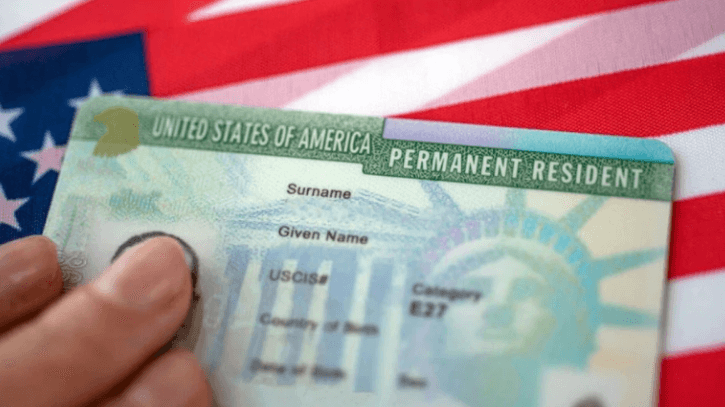
Path to permanent residence: Refugees can apply for green cards after one year of physical presence in the U.S.
Path to citizenship: After becoming permanent residents, refugees can naturalize after four more years (totaling five years from refugee arrival).
Family reunification: Refugees can petition for spouses and unmarried children under 21 within two years of arrival.
How Do Refugees Adjust to Permanent Residence?
After one year in the U.S., refugees apply for green cards:
File Form I-485: Application to Register Permanent Residence. Use the appropriate eligibility category for refugees.
No fee: Form I-485 fee is waived for refugee adjustment.
Mandatory adjustment: Refugees are statutorily required to apply for permanent residence after one year.
Backdating: Permanent residence is backdated to the date of refugee arrival, accelerating the path to naturalization.
No medical exam required if completed pre-arrival: Refugees who completed medical exams as part of the refugee process generally do not need new exams.
Refugee vs. Asylum Comparison
Both refugees and asylees receive similar protection but apply differently:
Feature
Refugee
Asylum
Where applied
Outside U.S.
Inside U.S. or at border
Annual cap
Yes (Presidential Determination)
No (but limits for first-time applicants)
Resettlement assistance
Yes (full program)
No
Work authorization
Automatic upon arrival
After 180-day waiting period
Family petition window
2 years
2 years
Path to green card
After 1 year
After 1 year
The choice between paths usually depends on location: refugees apply abroad, asylum seekers from within the U.S.
Can Refugees Travel Abroad?
Refugees can travel abroad with proper documents:
Refugee Travel Document: File Form I-131 to receive a Refugee Travel Document, which serves as a passport for international travel.
Avoid home country: Travel to your country of nationality may be considered evidence of having "availed yourself" of that country's protection, potentially terminating refugee status.
Reentry to U.S.: Use the Refugee Travel Document for reentry. Carry evidence of refugee status.
Document travel carefully and consider potential immigration consequences before departing.
What Is the Refugee Definition?
The U.S. legal definition of refugee mirrors the 1951 UN Refugee Convention. To qualify, individuals must demonstrate:
Fear of persecution: A well-founded fear of persecution if returned to their home country.
Protected ground: The persecution must be on account of one of five protected grounds: race, religion, nationality, membership in a particular social group, or political opinion.
Unable or unwilling to return: Inability or unwillingness to avail themselves of the protection of their country.
Outside country of nationality: Located outside their country of nationality (or last habitual residence for stateless persons).
The definition matches the asylum standard. The procedural difference is location: refugees apply from outside the U.S., asylum seekers from within.
What Are the Protected Grounds in Detail?
Race: Persecution based on racial or ethnic identity.
Religion: Persecution for religious beliefs, practices, or membership in religious groups.
Nationality: Persecution based on national origin, ethnicity, or citizenship.
Political opinion: Persecution for actual or imputed political views, including support for opposition movements.
Particular social group: Membership in a defined social group sharing immutable characteristics. This is the most legally complex ground and includes various recognized groups such as LGBTQ+ individuals, victims of domestic violence in some contexts, and family-based groups.
How Does the Refugee Process Work?
The refugee process involves multiple stages and agencies:
Stage 1: Referral: Most refugees are referred to the U.S. program by UNHCR, U.S. embassies, or designated NGOs. Some categories allow direct application.
Stage 2: Initial screening: Resettlement Support Centers conduct preliminary interviews and prepare case files for USCIS review.
Stage 3: USCIS interview: USCIS officers travel to refugee processing locations and conduct in-person interviews to determine eligibility.
Stage 4: Security checks: Multiple federal agencies conduct extensive security screening, including biometric checks, intelligence reviews, and inter-agency consultations.
Stage 5: Medical examination: Refugees undergo medical examinations by panel physicians.
Stage 6: Cultural orientation: Approved refugees attend orientation programs about life in the United States.
Stage 7: Travel and arrival: Approved refugees travel to the U.S. and are met by resettlement agencies.
How Long Does the Process Take?
Total processing time typically ranges from 18 to 36 months or longer:
Initial referral and screening: 6 to 12 months
USCIS interview to security clearance: 6 to 18 months
Medical examination and travel preparation: 1 to 3 months
Travel arrangements: 1 to 2 months
Processing times vary significantly by region, security review complexity, and current administration priorities. Some cases take much longer than the typical range.
Who Determines Annual Refugee Admissions?
The President sets the annual refugee admissions ceiling through Presidential Determination after consultation with Congress.
Recent annual ceilings have varied:
Some years: 75,000 to 125,000+ admissions
Other years: 15,000 to 30,000 admissions
Specific allocations made for different regions and priorities
Allocations include:
Africa
East Asia
Europe and Central Asia
Latin America and Caribbean
Near East and South Asia
Presidential Determinations also identify specific groups of special concern, which can affect prioritization within regions.
What Are Priority Categories?
Refugee priorities indicate processing access:
Priority 1 (P-1): Individual cases referred by UNHCR, U.S. embassies, or specific NGOs based on protection needs.
Priority 2 (P-2): Group designations for populations of special humanitarian concern. Examples have included specific religious minorities, certain Cuban populations, and others.
Priority 3 (P-3): Family reunification cases for spouses, children, and parents of refugees, asylees, or qualified U.S. persons.
Different priorities affect access to the program but not the eligibility standard.
Immediate assistance: Reception at airports by resettlement agency staff, transportation to housing, and initial provisions.
Housing: Resettlement agencies help refugees secure housing in the United States.
Cash and medical assistance: Limited initial cash assistance and Medicaid-equivalent medical coverage through the Refugee Cash Assistance and Refugee Medical Assistance programs.
Employment services: Job placement help, skills assessment, and English language training.
Cultural orientation: Continued education about life in the U.S., laws, and customs.
Which Agencies Resettle Refugees?
Nine national voluntary agencies (commonly called "VOLAGs") cooperate with the State Department to resettle refugees:
Church World Service
Episcopal Migration Ministries
Ethiopian Community Development Council
HIAS
International Rescue Committee
Lutheran Immigration and Refugee Service
Refugee Council USA
U.S. Committee for Refugees and Immigrants
World Relief
These agencies work with local affiliates across the United States to provide direct services to arriving refugees.
What Benefits Do Refugees Receive?
Refugees receive significant benefits and rights upon arrival:
Work authorization: Automatic work authorization upon arrival. Refugees receive Employment Authorization Documents (EADs) without separate application.
Federal benefits eligibility: Refugees can access federal benefits including Refugee Cash Assistance (RCA), Refugee Medical Assistance (RMA), Supplemental Security Income (SSI) for elderly or disabled refugees, and Temporary Assistance for Needy Families (TANF) where eligible.
Path to permanent residence: Refugees can apply for green cards after one year of physical presence in the U.S.
Path to citizenship: After becoming permanent residents, refugees can naturalize after four more years (totaling five years from refugee arrival).
Family reunification: Refugees can petition for spouses and unmarried children under 21 within two years of arrival.
How Do Refugees Adjust to Permanent Residence?
After one year in the U.S., refugees apply for green cards:
File Form I-485: Application to Register Permanent Residence. Use the appropriate eligibility category for refugees.
No fee: Form I-485 fee is waived for refugee adjustment.
Mandatory adjustment: Refugees are statutorily required to apply for permanent residence after one year.
Backdating: Permanent residence is backdated to the date of refugee arrival, accelerating the path to naturalization.
No medical exam required if completed pre-arrival: Refugees who completed medical exams as part of the refugee process generally do not need new exams.
Refugee vs. Asylum Comparison
Both refugees and asylees receive similar protection but apply differently:
Feature
Refugee
Asylum
Where applied
Outside U.S.
Inside U.S. or at border
Annual cap
Yes (Presidential Determination)
No (but limits for first-time applicants)
Resettlement assistance
Yes (full program)
No
Work authorization
Automatic upon arrival
After 180-day waiting period
Family petition window
2 years
2 years
Path to green card
After 1 year
After 1 year
The choice between paths usually depends on location: refugees apply abroad, asylum seekers from within the U.S.
Can Refugees Travel Abroad?
Refugees can travel abroad with proper documents:
Refugee Travel Document: File Form I-131 to receive a Refugee Travel Document, which serves as a passport for international travel.
Avoid home country: Travel to your country of nationality may be considered evidence of having "availed yourself" of that country's protection, potentially terminating refugee status.
Reentry to U.S.: Use the Refugee Travel Document for reentry. Carry evidence of refugee status.
Document travel carefully and consider potential immigration consequences before departing.
Frequently Asked Questions
Can I apply for refugee status if I am already in the United States?
Can I apply for refugee status if I am already in the United States?
Does the refugee program prioritize certain countries?
Does the refugee program prioritize certain countries?