Quick Answer
Conference speaking can satisfy multiple O-1/EB-1A criteria depending on the type: invited keynotes demonstrate recognition and satisfy "judging" or "published material," accepted papers satisfy "authorship" and "original contributions," and serving on program committees satisfies "judging."
USCIS values invitation-based speaking (you were selected) over submission-based speaking (you applied). Keynotes at major conferences are strongest; poster presentations at local events are weakest.
Key Takeaways
Invited talks are stronger than accepted papers
Being invited demonstrates others recognize your expertise; submitting papers shows you did good work.
Keynotes and plenary sessions are top-tier evidence
These satisfy "published material about you" (you're featured in conference program) and potentially "judging" (selecting you required evaluation).
Program committee membership satisfies "judging"
Reviewing submissions for major conferences is strong evidence.
Conference prestige matters
Speaking at NeurIPS, SIGMOD, or PyCon is stronger than speaking at local meetups.
Document attendance numbers and selectivity
"Selected from 500 submissions" or "Spoke to 2,000 attendees" adds context USCIS needs.
Build a portfolio across tiers
Don't rely on one keynote - show sustained pattern of speaking at multiple conferences.
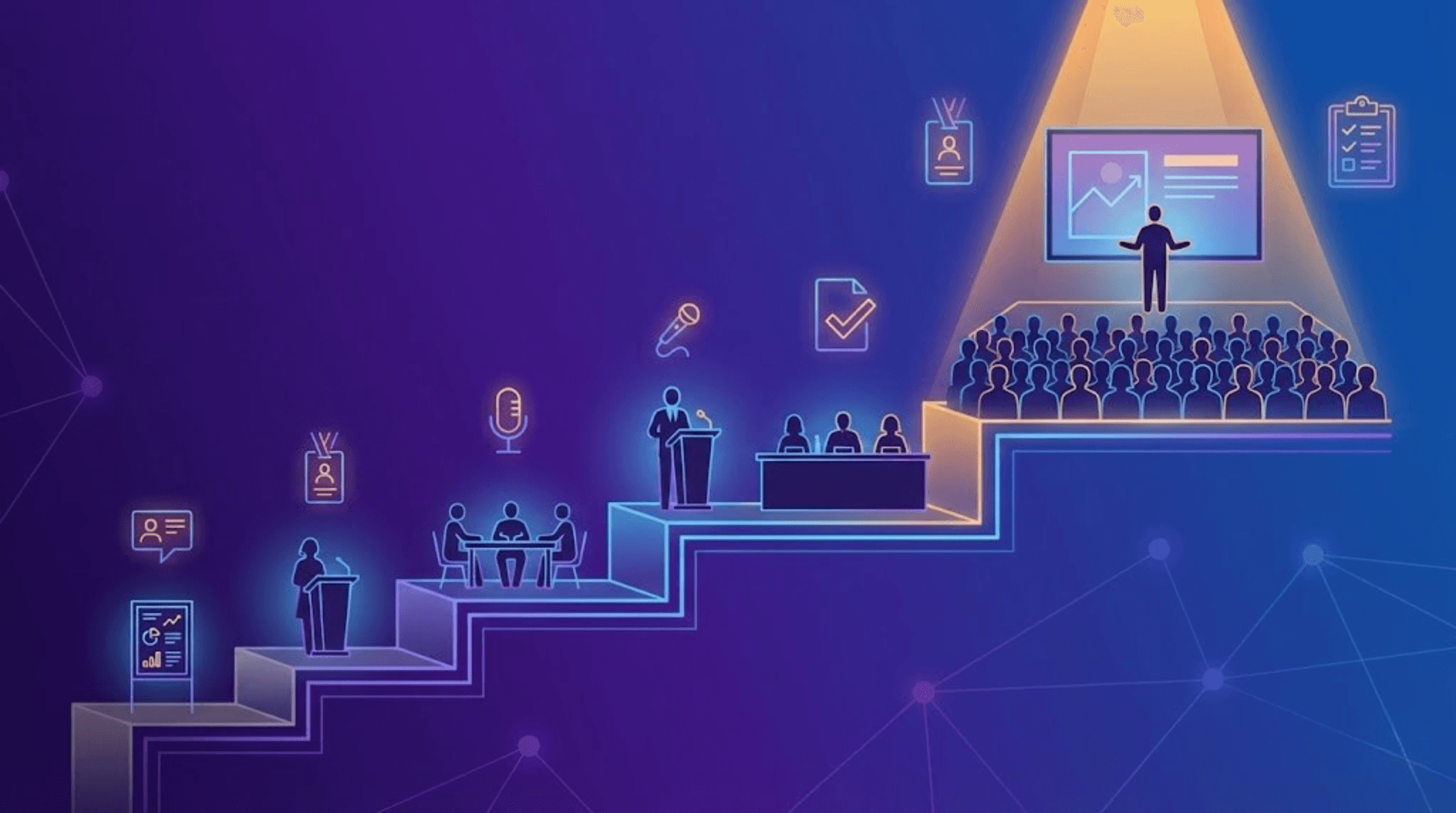
The Conference Speaking Hierarchy (Strongest to Weakest)
Tier 1: Keynote/Plenary Speaker (Strongest)
What it is: You're invited as featured speaker for entire conference or major track. Your name is on marketing materials.
Why it's strong:
Conference organizers selected you specifically
Demonstrates significant recognition in your field
You're speaking to full audience (hundreds to thousands)
Conference promotes your talk
USCIS criteria satisfied:
Published material about you (Criterion 3): Conference program, marketing materials, website feature you
Original contributions (Criterion 5): You're sharing expertise others want to learn
Potentially judging (Criterion 4): If you're asked to evaluate others' work
Evidence to collect:
Invitation email/letter from organizers
Conference program showing you as keynote
Marketing materials featuring your name/photo
Attendance numbers (estimated audience size)
Video recording if available
Press coverage of your talk
Examples:
Keynote at PyCon (3,000+ attendees)
Plenary speaker at NeurIPS (10,000+ attendees)
Featured speaker at industry summit (500+ decision-makers)
Tier 2: Invited Talk/Panel Speaker (Strong)
What it is: You're invited to speak on specific topic or participate in expert panel. You didn't submit - organizers reached out.
Why it's strong:
Organizers sought you out based on reputation
Shows field recognition
Typically 50-500 attendees per session
USCIS criteria satisfied:
Published material about you (Criterion 3): Listed in program as invited speaker
Original contributions (Criterion 5): Sharing expertise
Evidence to collect:
Invitation email from organizers
Conference program showing "Invited Talk" or "Panel"
Speaker bio in program materials
Session attendance numbers
Video recording
Examples:
Invited talk at Google I/O
Expert panel at SXSW Interactive
Industry summit panel on your specialty
Tier 3: Accepted Talk/Paper Presentation (Moderate)
What it is: You submitted a proposal or paper, it was peer-reviewed, and accepted. You present to attendees.
Why it's moderate:
Shows your work is high-quality (peer-reviewed)
But you initiated submission (less evidence of recognition)
Still valuable, especially at competitive conferences
USCIS criteria satisfied:
Authorship (Criterion 6): If paper is published in proceedings
Original contributions (Criterion 5): Your research/work was accepted
Potentially judging (Criterion 4): If you also serve as reviewer
Evidence to collect:
Acceptance notification email
Published paper in proceedings
Conference program showing your presentation
Acceptance rate ("Accepted from 500 submissions, 20% acceptance rate")
Session attendance (if tracked)
Examples:
Paper accepted at ACM SIGCHI (top HCI conference)
Talk accepted at JSConf (competitive tech conference)
Research presentation at IEEE conference
Tier 4: Workshop Leader/Tutorial Instructor (Moderate)
What it is: You lead hands-on workshop or tutorial session at conference.
Why it's moderate:
Shows expertise others want to learn
Usually requires invitation or competitive selection
Smaller audience than main talks (20-100 attendees)
USCIS criteria satisfied:
Original contributions (Criterion 5): Teaching your expertise
Published material (Criterion 3): If featured in program
Evidence to collect:
Invitation or acceptance email
Workshop description in program
Attendee count or registration numbers
Feedback/reviews from participants
Tier 5: Lightning Talk/Short Presentation (Weak-Moderate)
What it is: Brief (5-15 minute) presentation, often with lower acceptance bar.
Why it's weaker:
Less rigorous selection process
Brief exposure
May be lumped with many other speakers
Best used as: Supporting evidence, not primary criterion satisfaction.
Evidence to collect:
Acceptance email
Program listing
Video if available
Tier 6: Poster Presentation (Weak)
What it is: You present poster in exhibition hall. Attendees stop by to discuss.
Why it's weak:
Lower acceptance bar than oral presentations
No formal audience
Less recognition than speaking roles
Best used as: Supporting evidence only, especially if poster won award.
Evidence to collect:
Acceptance notification
Poster itself
Any awards (Best Poster awards are strong)
Tier 7: Meetup/Local Event Speaker (Weakest)
What it is: Speaking at local meetup, user group, or informal gathering.
Why it's weakest:
No competitive selection
Local audience (not national/international recognition)
Anyone can volunteer to speak
Does this satisfy O-1/EB-1A? Rarely alone. Can be supporting evidence if you've given 20+ such talks showing consistent thought leadership.
How to Climb the Conference Speaking Ladder
Stage 1: Build Foundation (Months 1-6)
Goal: Get accepted to speak somewhere, anywhere credible.
Actions:
Submit to 10-15 conference CFPs (calls for proposals)
Start with regional conferences or niche events
Propose topics where you have unique expertise
Accept meetup opportunities to practice
Target: 2-3 accepted talks at small-medium conferences.
Stage 2: Build Reputation (Months 7-18)
Goal: Move from submission-based to invitation-based speaking.
Actions:
Submit to major conferences (NeurIPS, SIGMOD, PyCon, JSConf)
Share talk recordings on YouTube/LinkedIn
Write blog posts expanding on your talks
Network with conference organizers
Target: 1-2 talks at major conferences + invitations to panels or workshops.
Stage 3: Establish Thought Leadership (Months 19-36)
Goal: Receive keynote/invited speaker opportunities.
Actions:
Build reputation through consistent speaking
Publish research or create significant open source projects
Get press coverage for your work
Develop relationships with conference organizers
Target: 1-2 keynotes or invited talks at major conferences.
The Program Committee Path (Criterion 4: Judging)
Serving on program committees satisfies the "judging" criterion.
What program committee membership involves:
Reviewing paper/talk submissions
Evaluating quality and providing feedback
Voting on acceptances
Sometimes attending planning meetings
How to get on program committees
For Academic Conferences:
Submit papers first (become known)
Volunteer to review (many conferences need reviewers)
Network with senior PC members
Build publication track record
For Industry Conferences:
Speak at the conference first
Volunteer for organizing committees
Network with conference organizers
Demonstrate expertise in the field
Evidence to collect:
Invitation email to join program committee
PC member listing in conference materials
Review assignments (screenshots showing papers you reviewed)
Thank-you emails from organizers
How many reviews needed?
For O-1: 5-10 reviews across 2-3 conferences
For EB-1A: 15-25+ reviews across multiple conferences/years
Documenting Conference Speaking for USCIS
For Each Speaking Engagement, Collect:
1. Invitation/Acceptance Documentation
Original invitation email (for invited talks)
Acceptance notification (for submitted talks)
Save immediately when you receive it
2. Conference Program
PDF or screenshot showing your name/talk
Full program showing conference scope
Website archive (use Wayback Machine if needed)
3. Conference Credibility Evidence
Conference website showing prestige
Attendance numbers
Past speaker lists (notable names)
Acceptance rates (if available)
4. Your Specific Session
Session title and description
Estimated/actual attendance
Video recording (if available)
Photos of you speaking
5. Context Documentation
How you were selected (invited vs submitted)
Selection statistics (if submitted)
Audience composition (practitioners, researchers, executives)
Common Mistakes with Conference Speaking Evidence
Mistake 1: Treating All Speaking Equally
What people do: List "10 conference talks" without distinguishing keynotes from poster sessions.
Why it fails: USCIS doesn't know which are impressive without context.
Fix: Clearly categorize and highlight strongest engagements.
Mistake 2: No Selectivity Evidence
What people do: "I spoke at Conference X" without showing it's competitive.
Why it fails: USCIS needs to know this demonstrates recognition.
Fix: Include acceptance rates, invitation documentation, or attendance numbers.
Mistake 3: Only Local Events
What people do: List 15 meetup talks as primary speaking evidence.
Why it fails: Local events don't demonstrate national/international recognition.
Fix: Prioritize national/international conferences; use local events as supplements only.
Mistake 4: Not Documenting at Time of Event
What people do: Try to gather evidence years after speaking.
Why it fails: Programs get taken down, emails get deleted, videos get removed.
Fix: Save all documentation immediately after each event.
Combining Speaking with Other Criteria
Speaking + Press = Stronger Case
Your keynote generates press coverage:
Journalist writes about your talk
This satisfies: Speaking (original contributions) + Press (published material about you)
Speaking + Program Committee = Multiple Criteria
You speak AND review:
This satisfies: Original contributions (speaking) + Judging (reviewing)
Speaking + Publications = Research Recognition
Your paper is presented AND published:
This satisfies: Authorship (paper) + Original contributions (research impact)
How OpenSphere Tracks Speaking Evidence
Speaking Portfolio Builder
Log each speaking engagement with: Date, conference name, type (keynote/invited/accepted), audience size, documentation links.
Tier Classification
OpenSphere automatically categorizes each engagement by tier and tells you which criteria it satisfies.
Gap Analysis
"You have 3 accepted talks but no keynotes. For EB-1A, aim for 1-2 invited/keynote engagements."
Documentation Checklist
For each engagement, OpenSphere shows what evidence you need: invitation email, program listing, attendance numbers, video link.
Conference Speaking Value by Type
Speaking Type | USCIS Value | Primary Criteria Satisfied | Evidence Needed |
Keynote/Plenary | Very Strong | Published material, Original contributions | Invitation, program, marketing materials |
Invited Talk | Strong | Published material, Original contributions | Invitation email, program listing |
Accepted Paper | Strong | Authorship, Original contributions | Acceptance, published paper, acceptance rate |
Workshop Leader | Moderate | Original contributions | Invitation, program, attendance |
Lightning Talk | Weak-Moderate | Supporting evidence | Acceptance, program |
Poster | Weak | Supporting evidence | Acceptance, poster (Best Poster award strengthens) |
Meetup | Weak | Supporting evidence only | Limited value unless 20+ talks |
Program Committee | Strong | Judging | Invitation, PC listing, review assignments |
Want to know if your conference speaking portfolio is strong enough for O-1 or EB-1A - and what tier of engagements you should pursue next?
Take the OpenSphere evaluation. You'll get speaking portfolio analysis and recommendations.
Evaluate Your Speaking Portfolio
1. How many conference talks do I need for O-1?
Quality matters more than quantity. One keynote at a major conference is stronger than 10 meetup talks.
2. Do virtual conferences count?
Yes, especially post-COVID. Document attendance numbers and conference prestige regardless of format.
3. Can I count talks at my employer's internal conferences?
Weak evidence. Internal talks don't demonstrate external recognition. Focus on public conferences.
4. What if the conference I spoke at shut down?
Use Wayback Machine to find archived programs. Include whatever documentation you saved at the time.
5. Do podcast appearances count as speaking?
They can support press coverage criterion if the podcast is credible and widely listened to. Not as strong as conferences.
6. Can I count speaking at universities?
Yes, if invited by department/professor. Guest lectures at top universities show recognition.
7. How do I prove attendance numbers if not tracked?
Estimate based on room capacity, use photos showing audience, or get letter from organizers estimating attendance.
8. Does being a panel moderator count?
Yes, as invited/recognized role. Document invitation and your moderator role in program.
9. What if I co-presented with someone else?
Still counts, but show your specific contribution. Best if you're listed as primary or co-equal presenter.
10. Should I prioritize academic or industry conferences?
Depends on your field. For researchers: academic conferences (NeurIPS, SIGMOD). For practitioners: industry conferences (PyCon, AWS re:Invent). Both can be strong.