Quick Answer
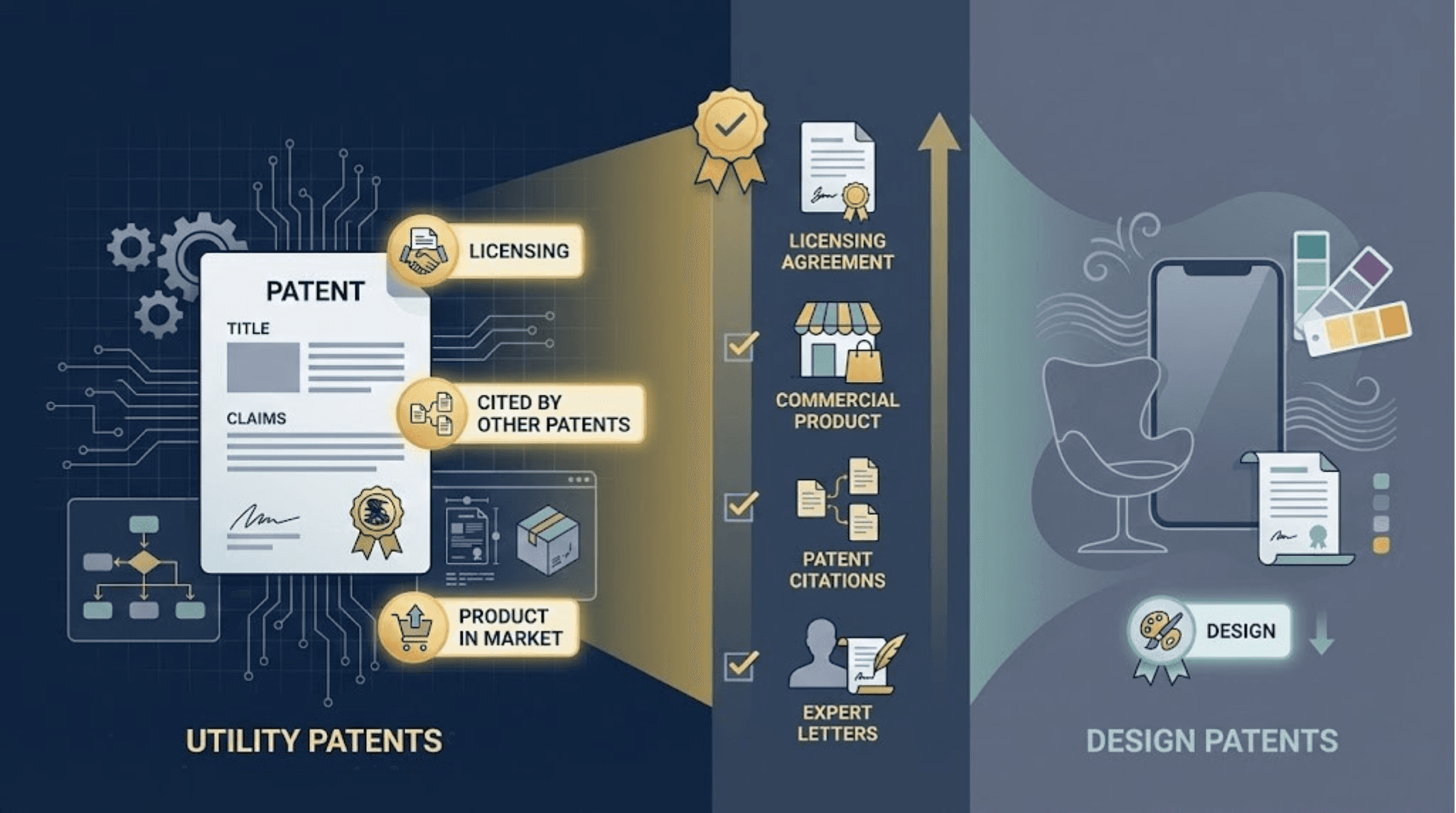
Patents can satisfy the "original contributions of major significance" criterion, but USCIS evaluates impact, not just existence. Utility patents (novel inventions) are stronger than design patents (ornamental appearances). Patent applications count but are weaker than granted patents.
Most importantly, you need evidence of commercial adoption, licensing, citations by other patents, or expert testimony explaining significance. Having a patent alone, without impact evidence, is insufficient.
Key Takeaways
Patents satisfy "original contributions" criterion
But only with evidence of significance and impact.
Utility patents are stronger than design patents
Utility patents protect functional innovations; design patents protect appearance.
Patent applications count, but weaker than granted patents
Pending applications show innovation; granted patents show USPTO validation.
Impact evidence is essential
Licensing agreements, commercial products, citations, or expert letters explaining significance.
Quantity doesn't replace quality
One commercially successful patent is stronger than 10 unused patents.
International patents add credibility
Filing in multiple countries shows global significance.
Understanding Patent Types
Utility Patents (Strongest for Immigration)
What they protect: Novel, useful inventions like machines, processes, compositions, improvements.
Why they're strong:
Require detailed technical disclosure
Must demonstrate novelty and non-obviousness
USPTO examination is rigorous
Typically represent genuine innovation
Examples:
New algorithm for data compression
Novel chemical compound
Improved manufacturing process
Innovative device mechanism
USCIS value: Strong if you can show impact (licensing, products, citations).
Design Patents (Weaker for Immigration)
What they protect: Ornamental appearance of functional items.
Why they're weaker:
Don't protect functional innovation
Less rigorous examination
Often protect aesthetic choices, not technical breakthroughs
Examples:
Shape of smartphone
GUI icon design
Product packaging appearance
Furniture design
USCIS value: Weak alone. Best used as supplementary evidence alongside utility patents or other evidence.
Provisional Patent Applications (Weakest)
What they are: Placeholder filing that establishes priority date. Not examined.
Why they're weakest:
No USPTO examination
Many provisionals never become full patents
Shows intent to patent, not validated innovation
USCIS value: Very weak. Only mention if you have other stronger patent evidence.
Pending Patent Applications (Moderate)
What they are: Full utility patent applications under USPTO examination.
Why they're moderate:
Shows serious innovation effort
USPTO is actively examining
May or may not be granted
USCIS value: Moderate. Stronger than nothing, weaker than granted patents. Best combined with other evidence.
Granted Patents (Strong)
What they are: Patents that completed USPTO examination and were approved.
Why they're strong:
USPTO validated novelty and non-obviousness
Legal protection exists
Demonstrates genuine innovation
USCIS value: Strong foundation, but still needs impact evidence.
What Makes a Patent Strong for O-1/EB-1A
The Patent Alone Isn't Enough
USCIS has explicitly stated that having patents is not automatically sufficient for "original contributions of major significance." You must demonstrate significance and impact.
Impact Evidence That Strengthens Patents:
1. Commercial Products Using Your Patent
What it is: Products on market that implement your patented technology.
Why it's strong: Proves real-world value and adoption.
Evidence:
Product documentation citing your patent
Press releases about product launch
Revenue or sales data (if available)
Letter from company confirming use of your patent
2. Licensing Agreements
What it is: Other companies paying to use your patented technology.
Why it's strong: Third parties are willing to pay = market validation.
Evidence:
Licensing agreement (can redact financial terms)
Letter from licensee explaining value
Number of licensees
Industries using your technology
3. Citations by Other Patents
What it is: Later patents that cite your patent as prior art.
Why it's strong: Other inventors acknowledge your contribution to the field.
Evidence:
USPTO citation report showing patents citing yours
Analysis of citing patents (are they from major companies?)
Total citation count over time
How to find: Google Patents, USPTO Patent Full-Text Database, or hire patent analyst.
4. Expert Letters Explaining Significance
What it is: Letters from independent experts explaining why your patent matters.
Why it's strong: USCIS officers aren't technical experts. Letters translate significance.
What letters should include:
Expert's qualifications
Explanation of problem your patent solves
Why solution is novel and significant
Comparison to prior approaches
Impact on field or industry
5. Industry Recognition
What it is: Awards, press coverage, or other recognition of your invention.
Why it's strong: External validation beyond USPTO approval.
Evidence:
Awards for innovation
Press coverage about your invention
Inclusion in industry reports
Speaking invitations about your technology
Patent Portfolio Strategy for Immigration
Scenario 1: You Have 1-2 Patents
Challenge: Small portfolio needs strong impact evidence.
Strategy:
Focus on impact for each patent
Get 2-3 expert letters per patent explaining significance
Document any commercial use or licensing
Show citation history
Combine with other criteria (press, awards, speaking)
Scenario 2: You Have 5+ Patents
Challenge: USCIS may question whether all are significant.
Strategy:
Highlight 2-3 most impactful patents
Provide detailed impact evidence for top patents
List others in exhibit but don't over-document weak patents
Show pattern of innovation over time
Scenario 3: You Have Only Patent Applications (No Grants)
Challenge: Pending applications are weaker evidence.
Strategy:
Emphasize other criteria (don't rely on patents alone)
Show USPTO has taken action (office actions, allowances)
Get expert letters explaining innovation regardless of grant status
Document any commercial interest or industry attention
Scenario 4: You Have Design Patents Only
Challenge: Design patents are weak for O-1/EB-1A.
Strategy:
Use as supplementary evidence only
Focus on other criteria (press, awards, critical role)
If designs were commercially successful, document that impact
Consider whether utility patents are possible for underlying technology
How to Document Patents for USCIS
For Each Patent, Compile:
1. Patent Document
Full patent (first page + claims)
Patent number and issue date
Inventors listed (show your name)
2. Impact Evidence (Critical)
Commercial products
Licensing agreements
Citation analysis
Industry recognition
3. Expert Letters
2-3 letters per significant patent
From independent experts (not co-inventors)
Explaining problem, solution, and significance
4. Context Documentation
Industry background (what existed before your patent)
Comparative analysis (how your approach differs)
Timeline of development
Common Patent Evidence Mistakes
Mistake 1: Listing Patents Without Impact Evidence
What people do: Submit patent certificates with no explanation of significance.
Why it fails: USCIS requires "major significance," not just "patent exists."
Fix: For each patent, provide impact evidence (products, licenses, citations, expert letters).
Mistake 2: Over-Relying on Patent Count
What people do: "I have 15 patents" as if quantity proves quality.
Why it fails: USCIS evaluates significance, not count. Many patents are never used.
Fix: Highlight 2-3 most impactful patents with detailed evidence.
Mistake 3: No Expert Explanation
What people do: Submit technical patent without explaining why it matters.
Why it fails: USCIS officers aren't engineers. They can't evaluate technical significance.
Fix: Get expert letters translating technical contribution into understandable significance.
Mistake 4: Confusing Invention with Innovation
What people do: Describe what patent does, not why it's significant.
Why it fails: USCIS wants "major significance" - industry impact, not just novelty.
Fix: Show how patent changed industry, enabled products, or solved important problems.
International Patents
Why File Internationally?
Filing patents in multiple countries demonstrates:
Global commercial potential
Willingness to invest in protection
International recognition of value
Strong International Filings:
PCT (Patent Cooperation Treaty) applications
European Patent Office (EPO) grants
Patents in major markets (China, Japan, Korea)
How to Document:
List all countries where patent is filed or granted
Show international companies using your technology
Expert letters can mention global impact
Combining Patents with Other Criteria
Patents + Press = Stronger Case
Your patent generates press coverage:
Featured in TechCrunch article about your invention
This satisfies: Original contributions (patent) + Press coverage (article)
Patents + Commercial Success = Impact Proof
Your patent is in successful products:
Document product revenue, user numbers, or market impact
Get letters from companies using your technology
This strengthens original contributions significantly
Patents + Speaking = Multiple Criteria
You're invited to speak about your patented technology:
This satisfies: Original contributions (patent) + Speaking (recognition)
How OpenSphere Evaluates Patent Evidence
Patent Strength Assessment
Input your patents. OpenSphere evaluates:
Utility vs design?
Granted vs pending?
Any citations?
Commercial use?
Impact Evidence Checklist
For each patent, OpenSphere shows what you need: Products using patent, licensing agreements, citation analysis, expert letters.
Portfolio Optimization
If you have multiple patents, OpenSphere identifies which 2-3 to emphasize and what evidence to gather for each.
Gap Analysis
"Your patents are strong, but you need impact evidence. Prioritize: expert letters explaining significance, citation analysis, or commercial use documentation."
Patent Evidence Strength
Patent Type | Base Value | With Impact Evidence | What Strengthens It |
Utility Patent (granted) | Moderate | Very Strong | Products, licenses, citations, expert letters |
Utility Patent (pending) | Weak-Moderate | Moderate-Strong | Commercial interest, expert letters, USPTO progress |
Design Patent (granted) | Weak | Moderate | Commercial success of designed products |
Provisional Application | Very Weak | Weak | Only mention if converted to full application |
International Patents | Strengthens any patent | Strong | Shows global recognition and commercial value |
Want to know if your patents are strong enough for O-1 or EB-1A - and what impact evidence you need to document?
Take the OpenSphere evaluation. You'll get patent portfolio analysis and documentation recommendations.
1. How many patents do I need for O-1 or EB-1A?
There's no minimum. One commercially successful patent with strong impact evidence is better than 20 unused patents.
2. Do patent applications count, or only granted patents?
Both count, but granted patents are stronger. Pending applications should be supplemented with other evidence.
3. Can I use patents assigned to my employer?
Yes. As inventor, you can cite patents even if assigned to employer. Include your name on patent document.
4. What if my patent has no commercial use yet?
Focus on: citations by other patents, expert letters explaining potential significance, industry interest (if any).
5. Do international patents count?
Yes. Filing in multiple countries strengthens your case by showing global significance.
6. How do I find patents that cite mine?
Google Patents, USPTO database, or hire patent analyst. Search for your patent number in "references cited."
7. Can I use patents from my PhD research?
Yes. Document your inventive contribution, especially if you're named inventor on university-assigned patent.
8. What if I'm co-inventor with many others?
Still counts, but explain your specific contribution. Being 1 of 2 inventors is stronger than 1 of 10.
9. Do software patents count the same as hardware patents?
Yes, both are utility patents. Software patents may be harder to get but carry same weight if granted.
10. What if my field doesn't typically use patents (e.g., academic research)?
Focus on publications, citations, and other criteria. Patents aren't required—just one type of evidence for "original contributions."