How Do You Schedule a Visa Stamping Appointment?
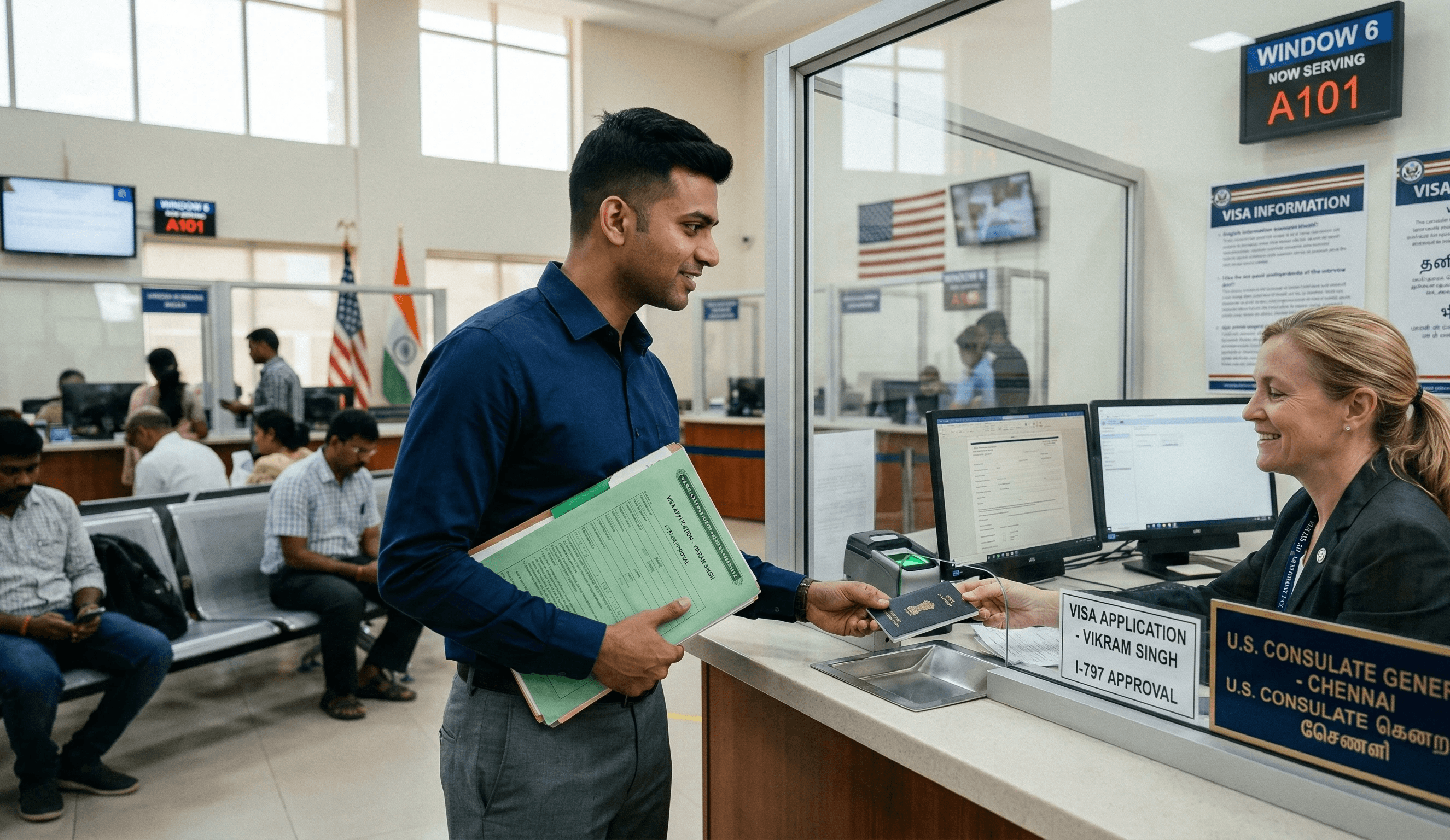
After receiving your I-797 approval notice from USCIS, begin the consular appointment process. For nonimmigrant visas like H-1B, schedule directly through the U.S. embassy website serving your location. For immigrant visas, the National Visa Center coordinates scheduling after document processing.
Check current wait times before making travel plans. The Department of State appointment wait times page shows estimates by consulate. Some locations offer appointments within weeks; others require months of waiting.
Pay the MRV fee before or during scheduling. Most consulates require fee payment before appointment slots become available in the scheduling system.
Which Consulate Should You Choose?
Apply at a consulate in your country of nationality or country of legal residence. This is the standard approach and typically faces the least scrutiny.
Third-country national (TCN) processing means applying in a country where you are neither a citizen nor resident. TCN processing is permitted but may trigger additional questions about why you are not applying in your home country.
Consider appointment availability when selecting consulates. If your home country consulate has 3-month waits while a neighboring country offers appointments in 2 weeks, weigh convenience against potential TCN scrutiny.
What Documents Are Required for Visa Stamping?
Bring your valid passport with at least six months validity beyond your intended stay period. Passports expiring sooner may limit visa validity or cause denial.
Your I-797 approval notice is essential. This USCIS document confirms your petition was approved and provides case details the consular officer will reference.
Print and bring your DS-160 confirmation page showing the barcode. Officers access your electronic application using this barcode.
What Supporting Documents Should You Prepare?
Educational documents include original diplomas, transcripts, and credential evaluations if your degree is from outside the United States. Some consulates require originals; others accept copies.
Employment documents include your offer letter, employment contract, recent pay stubs (if currently employed by the petitioner), and company information such as annual reports or marketing materials.
Financial documents may be relevant for some visa categories. Bank statements and tax returns demonstrate financial stability and ties to your home country.
What Happens During the Consular Interview?
Arrive at the embassy at your scheduled appointment time. Pass through security screening, which typically prohibits electronic devices including cell phones. Plan to leave devices in your vehicle or with a companion.
After security, proceed to the visa window for your interview. Wait times inside the embassy vary from 15 minutes to several hours depending on volume.
The consular officer reviews your DS-160 application, examines your documents, and asks questions about your petition, qualifications, and travel intentions. Most interviews conclude within 5 to 15 minutes.
What Questions Will the Consular Officer Ask?
For work visa applicants, expect questions about your job duties, employer, qualifications, and salary. Sample questions include: "What will you do at this company?" "Why did they hire you specifically?" "What is your educational background?"
Expect questions probing immigrant intent regardless of visa category. Officers assess whether you intend to return home after your authorized stay. "What ties do you have to your home country?" "Do you own property here?" "Where is your family?"
Officers may probe inconsistencies between your DS-160, petition documents, and verbal answers. Review all submitted materials before your interview to ensure consistent responses.
What Are the Possible Interview Outcomes?
Approval means the officer will issue your visa. Your passport is typically retained and returned via courier with the visa stamp within 3 to 7 business days.
Administrative processing (often called "221g") means additional review is required. Your passport may be retained or returned depending on expected processing duration. Common triggers include technology-sector work, security clearance requirements, and certain countries of origin.
Denial means the officer determined you are ineligible for the visa. You receive written notice citing the legal basis, typically INA 214(b) (failure to demonstrate nonimmigrant intent) or specific inadmissibility grounds.
What Is INA 214(b) Denial?
INA 214(b) is the most common nonimmigrant visa denial ground. It means you failed to overcome the presumption that you intend to immigrate permanently rather than visit temporarily.
This denial is not technically permanent. You can reapply with stronger evidence of ties to your home country: property ownership, family relationships, employment obligations, and other factors demonstrating intent to return.
According to Department of State guidance, 214(b) denials are discretionary determinations that can be reconsidered with changed circumstances or additional evidence.
How Do You Prepare for H-1B Visa Stamping?
H-1B visa stamping requires your I-797 approval notice, certified Labor Condition Application (LCA), and evidence supporting the specialty occupation nature of your position.
Consular officers independently evaluate whether the position qualifies as a specialty occupation. Bring detailed job descriptions, organizational charts showing your position, and educational credentials demonstrating your qualifications.
Third-party placement or consulting arrangements face heightened scrutiny. Bring client letters confirming the work assignment, contracts specifying work location and duties, and detailed itineraries if multiple worksites are involved.
What About Stamping After Employer Change?
If you changed employers via H-1B transfer while in the United States, bring documentation from both employers. The officer may ask about the transition and reasons for changing jobs.
Ensure you are stamping the correct, currently approved petition. If you had multiple transfers, bring the most recent I-797 approval notice reflecting your current employer.
Some practitioners recommend completing visa stamping before changing employers when possible. This simplifies documentation and avoids transfer-related questions.
What Is Administrative Processing and How Long Does It Take?
Administrative processing indicates the consulate requires additional review before deciding your visa. Common triggers include work in sensitive technology sectors, security clearance needs, and certain nationality patterns.
Processing times vary significantly. According to Department of State, most administrative processing completes within 60 days, but some cases take months.
You cannot expedite most administrative processing. Patience is required, though congressional inquiry may prompt status updates for significantly delayed cases.
How Do You Check Administrative Processing Status?
Check your case status at ceac.state.gov using your DS-160 barcode number. Status updates reflect when processing completes.
Contact the consulate only for cases significantly exceeding normal timeframes. Premature inquiries typically yield no information and do not accelerate processing.
If your case has been in administrative processing for over 60 days, consider congressional inquiry. Your representative or senator's office can submit inquiries on your behalf.