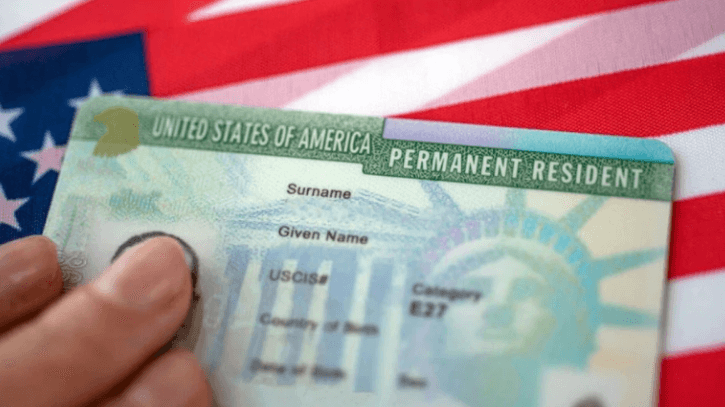
EB-1B Outstanding Researcher: Green Card for Distinguished Academics

The EB-1B category provides a green card pathway for outstanding professors and researchers in academic fields. This first preference employment-based category is particularly valuable for tenured faculty and senior researchers due to its faster processing and bypass of the PERM labor certification process. This guide explains EB-1B eligibility, evidence requirements, and the application process.

The EB-1B category provides a green card pathway for outstanding professors and researchers in academic fields. This first preference employment-based category is particularly valuable for tenured faculty and senior researchers due to its faster processing and bypass of the PERM labor certification process. This guide explains EB-1B eligibility, evidence requirements, and the application process.

Quick Answer

The EB-1B Outstanding Researcher and Outstanding Professor classification provides green cards to academics with at least 3 years of teaching or research experience and international recognition for outstanding achievements. According to USCIS EB-1B requirements, applicants must have a permanent research position at a U.S. university, college, or qualifying private employer with established research programs. Unlike EB-1A, EB-1B requires employer sponsorship but does not require labor certification (PERM). Required evidence includes documentation of international recognition and 3+ years of teaching/research experience. Processing is generally faster than EB-2 or EB-3 categories.

Key Takeaways

  • EB-1B is for outstanding professors and researchers, not all academics.

  • Requires 3+ years of teaching or research experience in the academic field.

  • Permanent research position required at qualifying U.S. employer.

  • No PERM labor certification needed, unlike EB-2 and EB-3.

  • Six specific evidence criteria; must satisfy at least two.

  • Premium processing available for I-140 petitions.

  • Faster green card path than EB-2 and EB-3 in most cases.

Table of Content

Who Qualifies for EB-1B?

EB-1B has several specific requirements:

Three years of experience: Must have at least 3 years of teaching or research experience in the academic field.

Permanent position: Must be coming to fill a permanent research position. Cannot use EB-1B for short-term or temporary positions.

Qualifying employer: Must have offer from:

  • U.S. university or college

  • Department, division, or institute of a private employer with at least 3 full-time researchers and documented accomplishments

International recognition: Must demonstrate international recognition for outstanding achievements in the academic field.

Coming to continue research: Must be coming to continue work in the area of academic field where the recognition was received.

What Counts as 3 Years of Teaching or Research?

The 3-year requirement is strictly interpreted:

Qualifying experience:

  • Tenure-track or tenured teaching positions

  • Postdoctoral research positions

  • Academic research at universities or research institutions

  • Government research positions

  • Industry research positions in qualifying employers

Time requirements:

  • Must be 3 full years

  • Must be continuous experience or properly documented if interrupted

  • Must be in the same general academic field

Common qualifying combinations:

  • 3 years of postdoctoral research

  • 2 years postdoc plus 1 year faculty

  • 3 years tenure-track faculty

  • 3 years research scientist

Less qualifying:

  • Doctoral student years (typically excluded)

  • Non-academic positions

  • Positions outside the field of expertise

What Is the EB-1B Evidence Standard?

USCIS evaluates EB-1B applications using six specific criteria. Applicants must satisfy at least two:

Criterion 1: Major prizes or awards: Receipt of major prizes or awards for outstanding achievement in the academic field.

Criterion 2: Membership in associations: Membership in associations requiring outstanding achievements of their members.

Criterion 3: Published material in professional publications: Material written by others about the applicant's work in professional publications.

Criterion 4: Participation as judge: Participation as judge of others' work in the same or allied field.

Criterion 5: Original scientific or scholarly research contributions: Evidence of original contributions of significance to the field.

Criterion 6: Authorship of scholarly books or articles: Authorship of scholarly books or articles in scholarly journals with international circulation.

How Are These Criteria Different from EB-1A?

While both EB-1A and EB-1B address extraordinary ability/achievement, they differ. EB-1A standard is extraordinary ability while EB-1B is outstanding achievement (slightly lower). EB-1A has 10 criteria (need 3) while EB-1B has 6 (need 2). EB-1A allows self-petition while EB-1B requires employer. Neither requires labor certification. EB-1A covers all fields while EB-1B is academic only. EB-1A doesn't require 3-year experience while EB-1B does.

EB-1B is more accessible to academics with established careers who may not meet EB-1A's higher standard.

What Documents Establish Outstanding Achievement?

Strong EB-1B applications include comprehensive documentation:

Awards documentation:

  • Award certificates and announcements

  • Selection criteria for major awards

  • Lists of past recipients showing prestige

  • Coverage of awards in professional publications

Membership evidence:

  • Membership certificates

  • Organization bylaws showing selection requirements

  • Evidence of organization prestige

  • Historical membership selection rates

Published material about applicant:

  • Profiles in academic publications

  • Coverage of research in major journals

  • Interview articles

  • Highlighted research mentions

Judge of work evidence:

  • Letters from journals confirming peer review activity

  • Conference reviewer designations

  • Tenure committee participation

  • Grant review panel service

Original contributions evidence:

  • Citations of work showing impact

  • Letters from experts explaining contributions

  • Evidence of practical applications

  • Adoption of work by others in field

Scholarly publications evidence:

  • Comprehensive publication list

  • Citation analyses (Google Scholar, Web of Science)

  • Journal impact factors

  • H-index and other metrics

What Constitutes Major Prizes or Awards?

Awards must be at outstanding level:

Examples of qualifying awards:

  • Nobel Prize

  • Major scientific society awards (recognized internationally)

  • Government-issued awards for scientific achievement

  • Major foundation awards

  • Significant academic honors

Less likely to qualify:

  • Department or university-level awards

  • Routine teaching awards

  • Student-nominated awards

  • Internal company awards

Documentation needs:

  • Information about award significance

  • Selection process details

  • Past notable recipients

  • International recognition of award

What Is the EB-1B Application Process?

The EB-1B process resembles EB-2/EB-3 without PERM:

Step 1: U.S. employer sponsorship: Employer commits to permanent research position.

Step 2: File Form I-140: Employer files petition with USCIS. No labor certification (PERM) required.

Step 3: Documentation gathering: Comprehensive evidence supporting at least two criteria.

Step 4: USCIS adjudication: Approval, RFE, or denial. Premium processing available.

Step 5: Adjustment or consular processing: Apply for green card after I-140 approval and visa availability.

What Documents Support I-140?

Required I-140 documentation:

Employer sponsorship documentation:

  • Job offer letter

  • Documentation of permanent position

  • Employer information establishing qualifying status

Beneficiary qualifications:

  • Curriculum vitae

  • Doctoral degree and other relevant degrees

  • Documentation of 3+ years experience

Outstanding achievement evidence:

  • Documentation supporting at least 2 of the 6 criteria

  • Recommendation letters from experts in the field

  • Citation evidence and impact documentation

Filing fee and forms:

  • Form I-140 with EB-1B classification

  • Filing fee ($715)

  • Optional premium processing fee ($2,805)

What Are Qualifying Employers?

Two main categories of qualifying employers:

Universities and colleges:

  • Public or private institutions of higher education

  • Must offer permanent research or tenure-track teaching positions

  • Various levels of higher education institutions

Private employers with research programs:

  • Must have at least 3 full-time researchers

  • Must have documented accomplishments in the academic field

  • Examples: Industrial research labs, pharmaceutical companies, technology research firms, think tanks

Common characteristics of qualifying employers:

  • Established research mission

  • Documented research output

  • Permanent position offered

  • Research-focused environment

What Doesn't Qualify as Permanent Position?

Several position types don't qualify for EB-1B:

Limited-term positions: Positions with fixed end dates that don't constitute permanent employment.

Postdoctoral fellowships: Generally not permanent positions, even if multi-year.

Visiting scholar positions: Temporary in nature, not permanent.

Teaching-only positions without research: Some pure teaching positions may not qualify if research isn't part of duties.

Adjunct or part-time positions: Generally not permanent enough for EB-1B.

The position must be a true permanent commitment by the employer.

How Long Does EB-1B Processing Take?

EB-1B processing involves several stages:

I-140 processing: 4 to 8 months without premium processing; 15 business days with premium processing ($2,805).

Visa availability: For most countries, EB-1B priority dates are current or close to current.

Adjustment of status or consular processing: 8 to 14 months for I-485, similar for consular processing.

Total timeline: Typically 12 to 20 months from I-140 filing to green card receipt.

How Does EB-1B Compare to Other Categories for Time?

EB-1B advantages over EB-2 and EB-3 are notable. EB-1B and EB-2 NIW don't require PERM while EB-2 PERM and EB-3 require it (taking 6-18 months). For most countries visa wait is current or short for EB-1B and EB-2 NIW; variable for EB-2 PERM; longer for EB-3. For India and China applicants, all categories face years of waiting but EB-1B may have shorter waits than EB-2 in some periods.

What If You Don't Qualify for EB-1B?

If you don't meet EB-1B requirements, alternatives include:

EB-1A: Extraordinary ability in your field. Self-petition possible without employer sponsorship.

EB-2 NIW: National Interest Waiver. Self-petition for advanced degree professionals or exceptional ability.

EB-2 PERM: Standard EB-2 with labor certification required.

EB-3: For positions requiring less than master's degree. Includes skilled workers, professionals.

Each alternative has different requirements and timelines.

Can You Apply for Multiple Categories Simultaneously?

Yes, in many cases:

Concurrent EB-1A and EB-1B: Both can be filed simultaneously if you meet criteria for both.

EB-1A and EB-2 NIW: Both can be filed simultaneously to maximize options.

Strategic considerations:

  • Different evidence emphases

  • Different processing approaches

  • Backup options if one denied

  • Cost considerations (multiple filing fees)

Multiple petitions provide more flexibility and protection if any single petition is denied.

Who Qualifies for EB-1B?

EB-1B has several specific requirements:

Three years of experience: Must have at least 3 years of teaching or research experience in the academic field.

Permanent position: Must be coming to fill a permanent research position. Cannot use EB-1B for short-term or temporary positions.

Qualifying employer: Must have offer from:

  • U.S. university or college

  • Department, division, or institute of a private employer with at least 3 full-time researchers and documented accomplishments

International recognition: Must demonstrate international recognition for outstanding achievements in the academic field.

Coming to continue research: Must be coming to continue work in the area of academic field where the recognition was received.

What Counts as 3 Years of Teaching or Research?

The 3-year requirement is strictly interpreted:

Qualifying experience:

  • Tenure-track or tenured teaching positions

  • Postdoctoral research positions

  • Academic research at universities or research institutions

  • Government research positions

  • Industry research positions in qualifying employers

Time requirements:

  • Must be 3 full years

  • Must be continuous experience or properly documented if interrupted

  • Must be in the same general academic field

Common qualifying combinations:

  • 3 years of postdoctoral research

  • 2 years postdoc plus 1 year faculty

  • 3 years tenure-track faculty

  • 3 years research scientist

Less qualifying:

  • Doctoral student years (typically excluded)

  • Non-academic positions

  • Positions outside the field of expertise

What Is the EB-1B Evidence Standard?

USCIS evaluates EB-1B applications using six specific criteria. Applicants must satisfy at least two:

Criterion 1: Major prizes or awards: Receipt of major prizes or awards for outstanding achievement in the academic field.

Criterion 2: Membership in associations: Membership in associations requiring outstanding achievements of their members.

Criterion 3: Published material in professional publications: Material written by others about the applicant's work in professional publications.

Criterion 4: Participation as judge: Participation as judge of others' work in the same or allied field.

Criterion 5: Original scientific or scholarly research contributions: Evidence of original contributions of significance to the field.

Criterion 6: Authorship of scholarly books or articles: Authorship of scholarly books or articles in scholarly journals with international circulation.

How Are These Criteria Different from EB-1A?

While both EB-1A and EB-1B address extraordinary ability/achievement, they differ. EB-1A standard is extraordinary ability while EB-1B is outstanding achievement (slightly lower). EB-1A has 10 criteria (need 3) while EB-1B has 6 (need 2). EB-1A allows self-petition while EB-1B requires employer. Neither requires labor certification. EB-1A covers all fields while EB-1B is academic only. EB-1A doesn't require 3-year experience while EB-1B does.

EB-1B is more accessible to academics with established careers who may not meet EB-1A's higher standard.

What Documents Establish Outstanding Achievement?

Strong EB-1B applications include comprehensive documentation:

Awards documentation:

  • Award certificates and announcements

  • Selection criteria for major awards

  • Lists of past recipients showing prestige

  • Coverage of awards in professional publications

Membership evidence:

  • Membership certificates

  • Organization bylaws showing selection requirements

  • Evidence of organization prestige

  • Historical membership selection rates

Published material about applicant:

  • Profiles in academic publications

  • Coverage of research in major journals

  • Interview articles

  • Highlighted research mentions

Judge of work evidence:

  • Letters from journals confirming peer review activity

  • Conference reviewer designations

  • Tenure committee participation

  • Grant review panel service

Original contributions evidence:

  • Citations of work showing impact

  • Letters from experts explaining contributions

  • Evidence of practical applications

  • Adoption of work by others in field

Scholarly publications evidence:

  • Comprehensive publication list

  • Citation analyses (Google Scholar, Web of Science)

  • Journal impact factors

  • H-index and other metrics

What Constitutes Major Prizes or Awards?

Awards must be at outstanding level:

Examples of qualifying awards:

  • Nobel Prize

  • Major scientific society awards (recognized internationally)

  • Government-issued awards for scientific achievement

  • Major foundation awards

  • Significant academic honors

Less likely to qualify:

  • Department or university-level awards

  • Routine teaching awards

  • Student-nominated awards

  • Internal company awards

Documentation needs:

  • Information about award significance

  • Selection process details

  • Past notable recipients

  • International recognition of award

What Is the EB-1B Application Process?

The EB-1B process resembles EB-2/EB-3 without PERM:

Step 1: U.S. employer sponsorship: Employer commits to permanent research position.

Step 2: File Form I-140: Employer files petition with USCIS. No labor certification (PERM) required.

Step 3: Documentation gathering: Comprehensive evidence supporting at least two criteria.

Step 4: USCIS adjudication: Approval, RFE, or denial. Premium processing available.

Step 5: Adjustment or consular processing: Apply for green card after I-140 approval and visa availability.

What Documents Support I-140?

Required I-140 documentation:

Employer sponsorship documentation:

  • Job offer letter

  • Documentation of permanent position

  • Employer information establishing qualifying status

Beneficiary qualifications:

  • Curriculum vitae

  • Doctoral degree and other relevant degrees

  • Documentation of 3+ years experience

Outstanding achievement evidence:

  • Documentation supporting at least 2 of the 6 criteria

  • Recommendation letters from experts in the field

  • Citation evidence and impact documentation

Filing fee and forms:

  • Form I-140 with EB-1B classification

  • Filing fee ($715)

  • Optional premium processing fee ($2,805)

What Are Qualifying Employers?

Two main categories of qualifying employers:

Universities and colleges:

  • Public or private institutions of higher education

  • Must offer permanent research or tenure-track teaching positions

  • Various levels of higher education institutions

Private employers with research programs:

  • Must have at least 3 full-time researchers

  • Must have documented accomplishments in the academic field

  • Examples: Industrial research labs, pharmaceutical companies, technology research firms, think tanks

Common characteristics of qualifying employers:

  • Established research mission

  • Documented research output

  • Permanent position offered

  • Research-focused environment

What Doesn't Qualify as Permanent Position?

Several position types don't qualify for EB-1B:

Limited-term positions: Positions with fixed end dates that don't constitute permanent employment.

Postdoctoral fellowships: Generally not permanent positions, even if multi-year.

Visiting scholar positions: Temporary in nature, not permanent.

Teaching-only positions without research: Some pure teaching positions may not qualify if research isn't part of duties.

Adjunct or part-time positions: Generally not permanent enough for EB-1B.

The position must be a true permanent commitment by the employer.

How Long Does EB-1B Processing Take?

EB-1B processing involves several stages:

I-140 processing: 4 to 8 months without premium processing; 15 business days with premium processing ($2,805).

Visa availability: For most countries, EB-1B priority dates are current or close to current.

Adjustment of status or consular processing: 8 to 14 months for I-485, similar for consular processing.

Total timeline: Typically 12 to 20 months from I-140 filing to green card receipt.

How Does EB-1B Compare to Other Categories for Time?

EB-1B advantages over EB-2 and EB-3 are notable. EB-1B and EB-2 NIW don't require PERM while EB-2 PERM and EB-3 require it (taking 6-18 months). For most countries visa wait is current or short for EB-1B and EB-2 NIW; variable for EB-2 PERM; longer for EB-3. For India and China applicants, all categories face years of waiting but EB-1B may have shorter waits than EB-2 in some periods.

What If You Don't Qualify for EB-1B?

If you don't meet EB-1B requirements, alternatives include:

EB-1A: Extraordinary ability in your field. Self-petition possible without employer sponsorship.

EB-2 NIW: National Interest Waiver. Self-petition for advanced degree professionals or exceptional ability.

EB-2 PERM: Standard EB-2 with labor certification required.

EB-3: For positions requiring less than master's degree. Includes skilled workers, professionals.

Each alternative has different requirements and timelines.

Can You Apply for Multiple Categories Simultaneously?

Yes, in many cases:

Concurrent EB-1A and EB-1B: Both can be filed simultaneously if you meet criteria for both.

EB-1A and EB-2 NIW: Both can be filed simultaneously to maximize options.

Strategic considerations:

  • Different evidence emphases

  • Different processing approaches

  • Backup options if one denied

  • Cost considerations (multiple filing fees)

Multiple petitions provide more flexibility and protection if any single petition is denied.
Frequently Asked Questions

Can I self-petition for EB-1B?

Can I self-petition for EB-1B?

Do postdoctoral years count toward the 3-year requirement?

Do postdoctoral years count toward the 3-year requirement?

Is premium processing available for EB-1B?

Is premium processing available for EB-1B?

Can my spouse work while my EB-1B is processing?

Can my spouse work while my EB-1B is processing?

Does EB-1B require a doctoral degree?

Share post