Networking in America: Cultural Differences and Professional Relationships
American networking feels transactional and superficial compared to other cultures. But mastering it is essential for career success. Here's how networking actually works in America.
American networking feels transactional and superficial compared to other cultures. But mastering it is essential for career success. Here's how networking actually works in America.
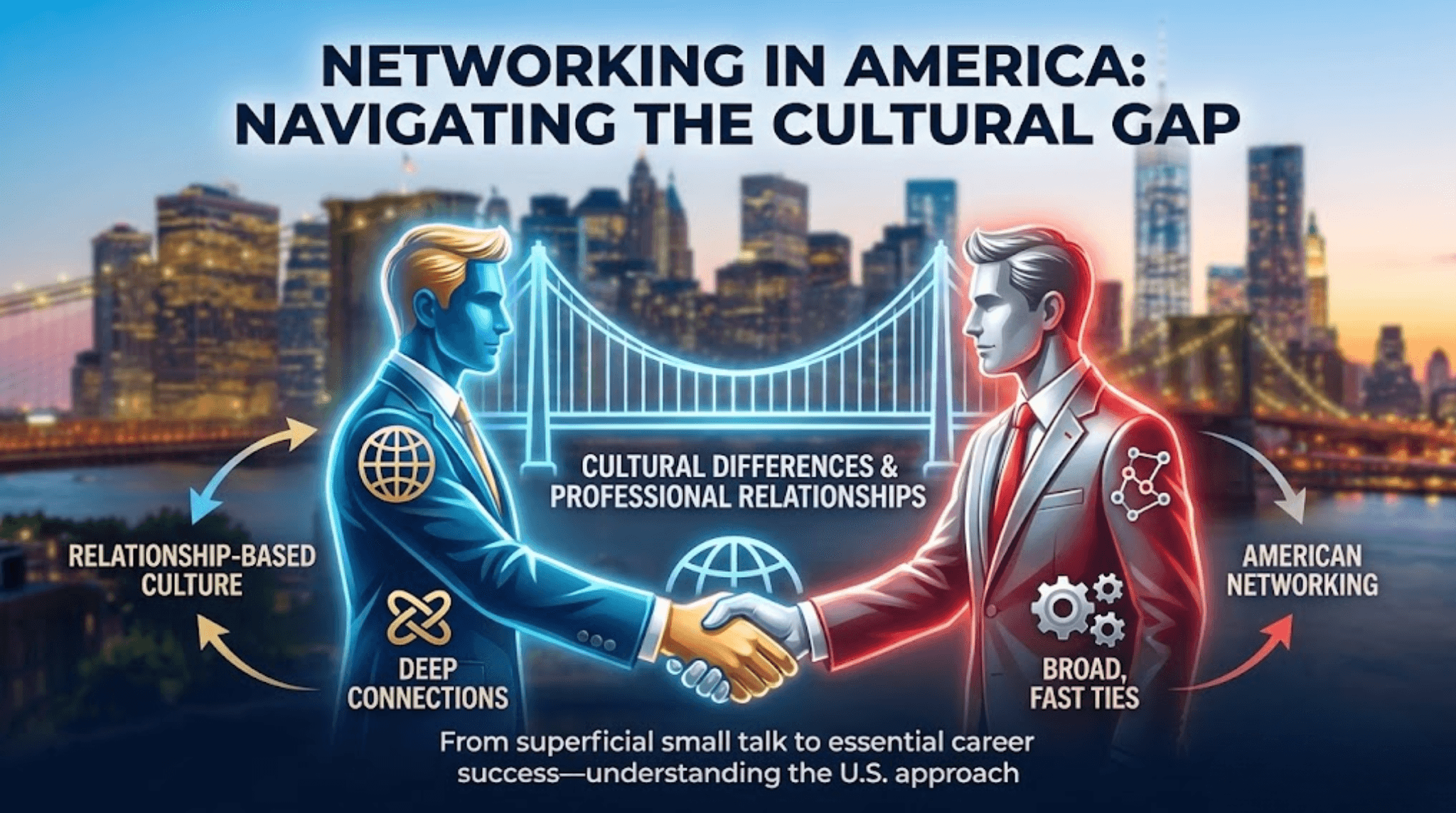
American networking emphasizes broad, weak connections over deep relationships, with direct asks and transactional interactions that feel uncomfortable to immigrants from relationship-first cultures.
Success requires quantity and consistency, being comfortable with small talk, following up systematically, and offering value before asking favors. Most jobs come through networking, making this skill essential despite cultural discomfort.
Key Takeaways
American networking is broader and more transactional but equally valuable as relationship-based approaches
Small talk serves as trust-building tool, not wasted time
Direct asks for help are acceptable and expected
Follow up within 24-48 hours after meeting someone
Offer value first before asking for favors
LinkedIn is the primary professional networking platform
Table of Content
Understanding American Networking Culture
Networking in America operates on fundamentally different principles than professional relationship-building in many other cultures. In countries like India, China, Japan, and much of Latin America, professional relationships develop slowly through repeated interactions and demonstrated loyalty over time. You build deep relationships with a smaller circle of trusted contacts.
American networking emphasizes building large numbers of relatively superficial connections quickly, with transactional exchanges of information and favors. Americans routinely have conversations with people they've never met and may never see again. They ask strangers for job referrals or introductions. This directness can feel inappropriate if you're from a culture where such requests would only come after months or years of relationship development.
The difference stems from American values of individualism, direct communication, and efficiency. Americans view networking as normal professional behavior rather than something happening only within established relationships. Both parties understand they're seeking mutual benefit, and there's no shame in being explicit about what you need.
Key cultural differences:
Americans start with strangers and build outward vs starting with family and close friends
Small talk establishes rapport before business discussion
"Let's stay in touch" is polite convention, not binding commitment
Following up is your responsibility, not assumed mutual
LinkedIn connections happen after brief professional interactions
The Mechanics of Networking Events
Professional networking events follow unwritten rules that immigrants must learn explicitly. Events typically last 1-2 hours with light food and drinks. The goal is meeting many people briefly, not deep conversations with one or two people. A successful event means having 10-15 brief conversations of 5-10 minutes each.
When you arrive, don't wait for others to approach or cling to someone you know. Proactively introduce yourself to strangers. Walk up to groups, wait for a pause, and introduce yourself with your name and what you do.
The networking conversation formula:
Start with greeting and introduction: "Hi, I'm [Name], a [job title] at [company]. What brings you here?"
Ask open-ended questions about their work and interests
Listen actively and follow up on interesting points
Share relevant information about yourself
Exchange contact information through LinkedIn
Thank them and move on after 5-10 minutes
LinkedIn: The American Networking Platform
LinkedIn dominates professional networking in America. Your profile functions as your professional face, often viewed before your resume. Optimize it with professional headshot, compelling headline, and summary highlighting key accomplishments.
Connect broadly with people you meet professionally, not just close colleagues. Americans expect LinkedIn requests from people they've had brief professional interactions with.
LinkedIn best practices:
Add personalized note when connecting: "Great meeting you at [Event]. Enjoyed our conversation about [topic]."
Follow up after connecting with message offering value
Engage with connections' content through likes and thoughtful comments
Share your own content regularly about your industry
Post insights positioning you as knowledgeable and engaged
The Art of Asking for Help
One of the most uncomfortable aspects for many immigrants is the directness with which Americans ask for help from relative strangers. The key to comfortable asking lies in understanding unwritten rules: offer value before asking favors, be specific, make it easy for people to help, and accept no gracefully.
When asking for informational interview, be specific: "Would you have 20 minutes for a phone call where I could ask about your experience transitioning from engineering to product management?" works better than vague "Can I pick your brain?"
When asking for job referral, provide everything they need: your resume tailored to role, brief explanation of why you're interested and qualified, and specific position information.
Offering value before asking:
Share relevant articles related to their interests
Make introductions connecting people who could benefit from knowing each other
Offer your expertise to help with challenges they mention
Promote their work or accomplishments to others
Building Long-Term Relationships
While American networking starts transactionally, successful networkers convert some initial connections into deeper relationships over time. Maintain relationships through consistent but light-touch communication. Send occasional messages when you see relevant news about their company or congratulate them on achievements.
Relationship maintenance:
Set calendar reminders to check in with key contacts quarterly
Celebrate others' successes publicly on LinkedIn
Organize small group meetups bringing together 3-5 people from your network
Attend same events consistently so you see same people repeatedly
Networking in the U.S. vs. Other Cultures
Aspect
American Networking
Relationship-Based Cultures
Approach
Broad network, many weak ties
Deep relationships, fewer connections
Initial Contact
Direct outreach to strangers okay
Introductions through mutual connections required
Small Talk
Essential trust-building ritual
Often viewed as wasting time
Direct Asks
Expected early
Only after extended relationship
Nature
Explicit exchange of value
Implicit long-term reciprocity
Timeline
Quick connections, deepen selectively
Slow development of trusted relationships
The most successful immigrant networkers blend both approaches, using American-style broad networking to meet people quickly while applying relationship-based depth to promising connections. This hybrid approach leverages the best of both cultural models.