Quick Answer

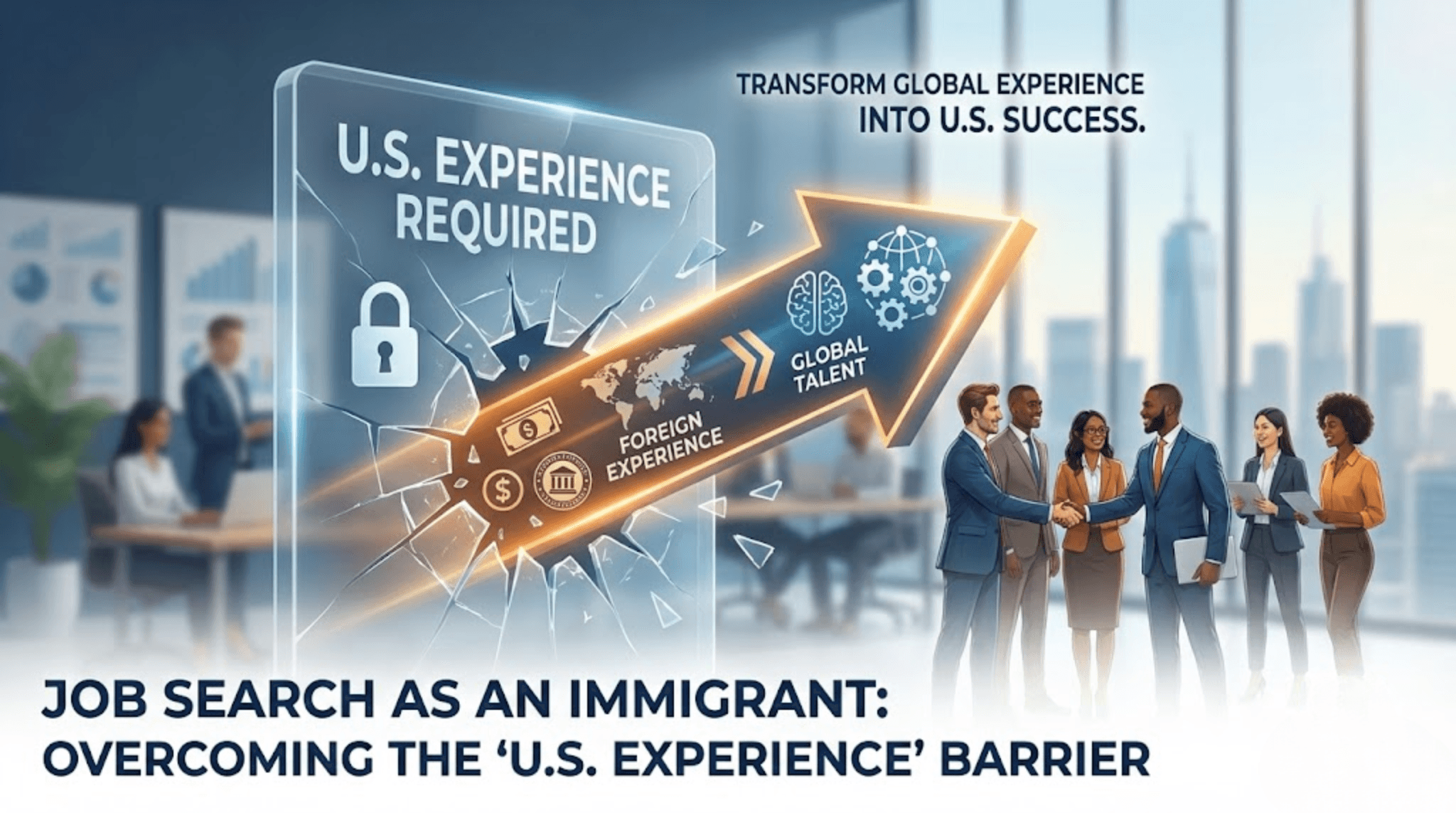
The "U.S. experience" requirement isn't always about geography but about understanding American work culture, communication styles, and business practices. Overcome it by translating foreign experience into U.S. context, emphasizing transferable skills, getting certifications recognized in the U.S., networking aggressively, targeting immigrant-friendly companies, and being willing to take a slight step back initially to prove yourself. Your first U.S. job is a stepping stone, not your final destination.

Key Takeaways

  • "U.S. experience" often means understanding American work culture and communication norms, not just physical location

  • Translate your foreign experience using American terminology and frameworks that employers recognize

  • Target companies with diverse workforces and international operations who value global experience

  • Network extensively as 70% of jobs are filled through referrals and connections, not applications

  • Consider contract or consulting roles as entry points that lead to full-time positions

  • Your first U.S. role may be below your experience level but opens doors for rapid advancement

Key Takeaways

  • "U.S. experience" often means understanding American work culture and communication norms, not just physical location

  • Translate your foreign experience using American terminology and frameworks that employers recognize

  • Target companies with diverse workforces and international operations who value global experience

  • Network extensively as 70% of jobs are filled through referrals and connections, not applications

  • Consider contract or consulting roles as entry points that lead to full-time positions

  • Your first U.S. role may be below your experience level but opens doors for rapid advancement

Table of Content

Why Employers Ask for U.S. Experience

When American employers list "U.S. experience required" in job postings, they're rarely being xenophobic or discriminatory. Instead, they're expressing legitimate concerns based on past experiences with international hires who struggled to adapt. Understanding these concerns helps you address them proactively in your applications and interviews.

American business culture emphasizes direct communication, individual accountability, and flat hierarchies compared to many other countries. Someone from India might be accustomed to more hierarchical structures where junior employees defer to senior leadership and wait for explicit instructions. An American manager expects proactive problem-solving and speaking up when you disagree. Someone from Japan or Korea might practice more indirect communication and consensus-building, while American workplaces reward those who advocate clearly for their ideas.

Employers worry about cultural misunderstandings that slow down projects and create friction on teams. They've had experiences where excellent technical candidates struggled with communication expectations, meeting culture, email etiquette, or the pace of American business. These concerns are valid, but the good news is that you can address them directly rather than viewing them as insurmountable barriers.

What employers really mean by "U.S. experience":

  • Familiarity with American communication norms and directness

  • Understanding of U.S. business practices and regulatory environment

  • Ability to work in fast-paced environments with less formal structure

  • Comfort with American meeting culture and decision-making processes

  • References they can call and verify from U.S. companies

  • Education credentials they recognize and can evaluate easily

Translating Your Foreign Experience

Your decade of experience in Bangalore, Shanghai, London, or São Paulo has tremendous value, but you need to translate it into terms American employers understand and appreciate. Start by reframing your resume and LinkedIn profile to emphasize outcomes over processes, using metrics and numbers that demonstrate impact rather than describing responsibilities.

Instead of saying "Managed software development team," say "Led 8-person engineering team delivering $2M product launch 3 weeks ahead of schedule, reducing customer onboarding time by 40%." American employers respond to quantifiable results and business impact. They care less about your job title or organizational structure and more about what you actually accomplished and how it drove business results.

Use American terminology for technologies, methodologies, and business concepts. If you worked with the British term "mobile phone," use "cell phone" or "smartphone" in your resume. If you used Agile methodology but called it something else locally, explicitly state "Agile/Scrum." Look at job postings for roles you want and mirror the language they use to describe similar responsibilities and skills.

Emphasize transferable skills that work anywhere, particularly technical skills, analytical abilities, project management, and leadership. Programming languages work the same in every country. Data analysis principles are universal. The ability to manage complex projects translates across borders. Highlight these universal competencies while addressing potential cultural adaptation concerns directly.

How to reframe common experiences:

For management experience, emphasize decision-making autonomy, budget responsibility, and team development rather than just headcount. American employers value managers who can operate independently and drive results without constant oversight.

For technical work, focus on technologies used, problems solved, and innovations created. If you built something used by millions of people, say so with specific user numbers and growth metrics.

For client-facing roles, highlight the industries you served, size of accounts managed, and revenue impact. If you worked with multinational clients, emphasize your exposure to global business practices.

Targeting the Right Employers

Not all American employers are equally receptive to international experience. Some companies actively value global perspectives, have diverse workforces, and understand how to integrate international talent. Others prefer local candidates who fit their existing culture. Your job search efficiency increases dramatically when you target companies in the first category.

Tech companies, particularly those in Silicon Valley, Seattle, and other tech hubs, have the most diverse workforces and are most comfortable hiring immigrants. Companies like Google, Microsoft, Amazon, Apple, and thousands of smaller tech firms employ people from dozens of countries. They have established processes for sponsoring visas, understand the value of global talent, and appreciate diverse perspectives.

Multinational corporations with operations in your home country often value your bicultural perspective. If you're from India and apply to a company with significant operations in India, your understanding of both markets becomes an asset rather than something to overlook. You can bridge communication gaps, understand cultural nuances, and facilitate collaboration between offices.

Companies founded by immigrants or with immigrant CEOs tend to be more open to international candidates. Research company leadership on LinkedIn. If the founder came from another country or the executive team includes multiple nationalities, they're likely to appreciate what you bring.

Industries most receptive to international talent:

  • Technology and software

  • Consulting (especially firms with international clients)

  • Finance and banking (particularly in New York and Charlotte)

  • Healthcare and pharmaceuticals

  • Engineering and manufacturing

  • Academic and research institutions

Avoid industries that are highly regulated or require deep local knowledge of American systems, at least initially. Insurance, real estate, local government, K-12 education, and legal services typically prefer candidates with established U.S. experience. You can break into these fields later, but they're harder as entry points.

The Power of Networking

Job applications through online portals result in success rates below 2% for most candidates. Networking and referrals, however, lead to success rates of 20-40% because you bypass initial screening filters and get your resume reviewed by actual decision-makers who see you as a person rather than just keywords on paper.

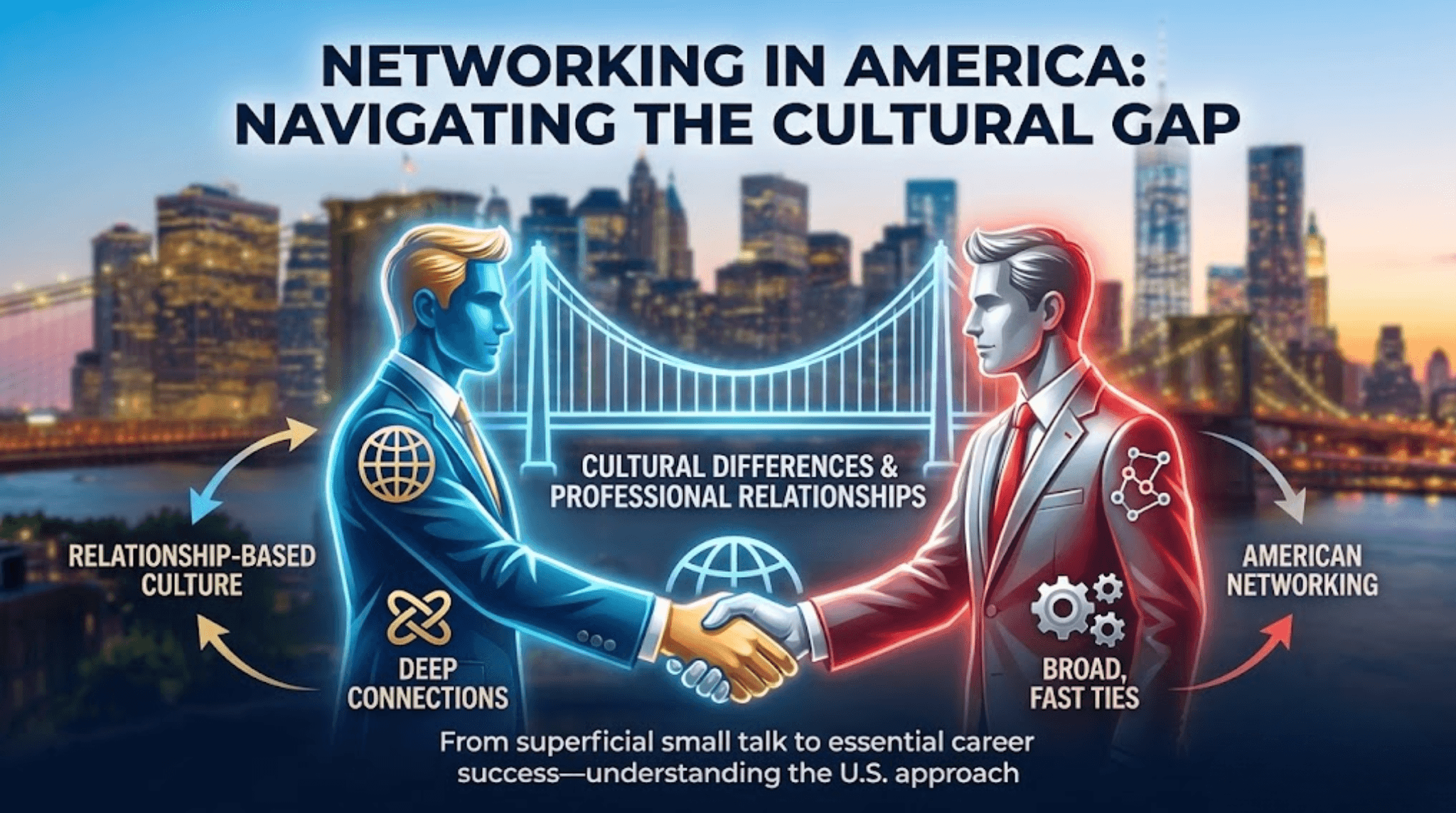
American professional networking operates differently from many other cultures, with more emphasis on building broad connections rather than only deepening existing relationships. Americans generally respond positively to informational interview requests, LinkedIn connection requests, and professional coffee meetings, even from people they've never met. This openness creates opportunities if you learn to leverage it.

Start with alumni networks from your university. Search LinkedIn for alumni working at companies you're interested in and reach out with personalized messages mentioning your shared educational background. Alumni generally feel obligated to help fellow graduates and often respond positively to connection requests.

Join professional associations in your field and attend their events, whether in-person or virtual. These organizations exist for every profession, from engineering societies to marketing associations to industry-specific groups. Attending events puts you in rooms with hiring managers and opens conversations that lead to opportunities.

Effective networking strategies for immigrants:

  • Attend 2-3 networking events per month consistently

  • Set a goal of 10 new LinkedIn connections weekly

  • Request 2-3 informational interviews per week

  • Join immigrant professional groups in your city

  • Volunteer for professional organization committees

  • Attend tech meetups and industry conferences

LinkedIn becomes especially powerful for immigrants because it levels the playing field. Your profile can showcase your skills, experience, and accomplishments without anyone making assumptions based on accent or name. Optimize your profile with keywords from job postings you're interested in, write a compelling headline that emphasizes your unique value, and share content regularly to increase visibility.

Alternative Entry Strategies

If traditional full-time employment proves difficult initially, alternative paths can get your foot in the door and lead to permanent positions. Contract roles, consulting arrangements, and project-based work let you prove your abilities without companies committing to long-term employment.

Contract-to-hire positions have become increasingly common, with companies bringing people on as contractors with the intention of converting them to full-time employees after 3-6 months. These arrangements reduce company risk and let you demonstrate value before they commit to permanent employment and visa sponsorship. Many immigrants find their best opportunities through this path.

Freelancing and consulting through platforms like Upwork, Toptal, or directly with companies lets you build U.S. client relationships and references even before moving to America. Once you're in the country, these relationships can lead to full-time opportunities or at least provide strong references from American companies.

Consider roles slightly below your experience level for your first U.S. position. If you were a Senior Manager in your home country, you might need to accept a Manager title initially. This step back is temporary and allows you to prove yourself, learn American business culture, and position yourself for rapid advancement. Many immigrants find they get promoted to their "true" level within 12-18 months once they demonstrate their capabilities.

Alternative paths to explore:

  • Staffing agencies specializing in your field

  • Consulting firms that place contractors at client companies

  • Startup companies willing to take chances on talent

  • Companies in smaller cities with less competition

  • Remote work opportunities that value skills over location

Addressing Concerns Proactively

In your cover letters, interviews, and networking conversations, address the unspoken concern about U.S. experience directly rather than hoping employers won't notice. Frame your international background as an asset while demonstrating awareness of American business culture.

In your cover letter, include a paragraph specifically addressing cultural fit. Mention if you've worked with American clients, managed cross-cultural teams, or collaborated with U.S. offices. If you've taken online courses in American business communication or earned U.S. certifications, highlight these proactive steps toward adaptation.

During interviews, share stories demonstrating your understanding of American work culture. Describe situations where you advocated for your ideas, made decisions independently, or adapted quickly to changing circumstances. These examples prove you won't struggle with cultural adjustment.

Offer to do a project or trial period to prove your abilities. Some employers respond positively to candidates who say, "I understand you might have concerns about my lack of U.S. experience. Would you consider a one-month trial project where I can demonstrate my abilities before you commit to full-time employment?" This confidence and solution-oriented approach impresses American employers.

Get U.S. references as quickly as possible, even if through volunteer work, contract projects, or professional associations. Having even one American reference who can vouch for your work eliminates a major barrier. Volunteer your skills for nonprofit organizations, offer to help on open-source projects, or do pro-bono consulting to build these crucial references.

Timeline and Expectations

Timeline

Activity

Expected Outcome

Month 1-2

Optimize resume/LinkedIn, research target companies, begin networking

50+ applications, 10-20 networking meetings

Month 3-4

Increase networking, attend events, request informational interviews

5-10 phone screens, 2-3 first interviews

Month 5-6

Continue applications, leverage growing network, consider contract roles

Multiple interview rounds, 1-2 offers possible

Month 6-9

Expand search if needed, consider alternative entry paths

Contract role or full-time position secured

Month 9-12

Prove yourself in first role, network internally for advancement

Positioned for promotion or better opportunity

The job search timeline for immigrants typically runs longer than for candidates with U.S. experience, often taking 3-6 months of active searching to secure a good position. This extended timeline results from the additional barriers you're navigating, not from inadequate skills or experience. Plan financially for this reality and don't get discouraged by early rejections.

Your first U.S. job serves as a credibility builder more than a final destination. Even if the role, company, or compensation doesn't perfectly match your experience level, accepting it gives you that crucial "U.S. experience" that eliminates barriers for future opportunities. Many immigrants find they switch to much better roles within 12-24 months once they have American experience on their resume and a network of U.S. colleagues who can vouch for their work.

Struggling to land interviews despite strong experience? Want strategies to overcome the U.S. experience barrier?

Get Your Job Search Strategy

Why Employers Ask for U.S. Experience

When American employers list "U.S. experience required" in job postings, they're rarely being xenophobic or discriminatory. Instead, they're expressing legitimate concerns based on past experiences with international hires who struggled to adapt. Understanding these concerns helps you address them proactively in your applications and interviews.

American business culture emphasizes direct communication, individual accountability, and flat hierarchies compared to many other countries. Someone from India might be accustomed to more hierarchical structures where junior employees defer to senior leadership and wait for explicit instructions. An American manager expects proactive problem-solving and speaking up when you disagree. Someone from Japan or Korea might practice more indirect communication and consensus-building, while American workplaces reward those who advocate clearly for their ideas.

Employers worry about cultural misunderstandings that slow down projects and create friction on teams. They've had experiences where excellent technical candidates struggled with communication expectations, meeting culture, email etiquette, or the pace of American business. These concerns are valid, but the good news is that you can address them directly rather than viewing them as insurmountable barriers.

What employers really mean by "U.S. experience":

  • Familiarity with American communication norms and directness

  • Understanding of U.S. business practices and regulatory environment

  • Ability to work in fast-paced environments with less formal structure

  • Comfort with American meeting culture and decision-making processes

  • References they can call and verify from U.S. companies

  • Education credentials they recognize and can evaluate easily

Translating Your Foreign Experience

Your decade of experience in Bangalore, Shanghai, London, or São Paulo has tremendous value, but you need to translate it into terms American employers understand and appreciate. Start by reframing your resume and LinkedIn profile to emphasize outcomes over processes, using metrics and numbers that demonstrate impact rather than describing responsibilities.

Instead of saying "Managed software development team," say "Led 8-person engineering team delivering $2M product launch 3 weeks ahead of schedule, reducing customer onboarding time by 40%." American employers respond to quantifiable results and business impact. They care less about your job title or organizational structure and more about what you actually accomplished and how it drove business results.

Use American terminology for technologies, methodologies, and business concepts. If you worked with the British term "mobile phone," use "cell phone" or "smartphone" in your resume. If you used Agile methodology but called it something else locally, explicitly state "Agile/Scrum." Look at job postings for roles you want and mirror the language they use to describe similar responsibilities and skills.

Emphasize transferable skills that work anywhere, particularly technical skills, analytical abilities, project management, and leadership. Programming languages work the same in every country. Data analysis principles are universal. The ability to manage complex projects translates across borders. Highlight these universal competencies while addressing potential cultural adaptation concerns directly.

How to reframe common experiences:

For management experience, emphasize decision-making autonomy, budget responsibility, and team development rather than just headcount. American employers value managers who can operate independently and drive results without constant oversight.

For technical work, focus on technologies used, problems solved, and innovations created. If you built something used by millions of people, say so with specific user numbers and growth metrics.

For client-facing roles, highlight the industries you served, size of accounts managed, and revenue impact. If you worked with multinational clients, emphasize your exposure to global business practices.

Targeting the Right Employers

Not all American employers are equally receptive to international experience. Some companies actively value global perspectives, have diverse workforces, and understand how to integrate international talent. Others prefer local candidates who fit their existing culture. Your job search efficiency increases dramatically when you target companies in the first category.

Tech companies, particularly those in Silicon Valley, Seattle, and other tech hubs, have the most diverse workforces and are most comfortable hiring immigrants. Companies like Google, Microsoft, Amazon, Apple, and thousands of smaller tech firms employ people from dozens of countries. They have established processes for sponsoring visas, understand the value of global talent, and appreciate diverse perspectives.

Multinational corporations with operations in your home country often value your bicultural perspective. If you're from India and apply to a company with significant operations in India, your understanding of both markets becomes an asset rather than something to overlook. You can bridge communication gaps, understand cultural nuances, and facilitate collaboration between offices.

Companies founded by immigrants or with immigrant CEOs tend to be more open to international candidates. Research company leadership on LinkedIn. If the founder came from another country or the executive team includes multiple nationalities, they're likely to appreciate what you bring.

Industries most receptive to international talent:

  • Technology and software

  • Consulting (especially firms with international clients)

  • Finance and banking (particularly in New York and Charlotte)

  • Healthcare and pharmaceuticals

  • Engineering and manufacturing

  • Academic and research institutions

Avoid industries that are highly regulated or require deep local knowledge of American systems, at least initially. Insurance, real estate, local government, K-12 education, and legal services typically prefer candidates with established U.S. experience. You can break into these fields later, but they're harder as entry points.

The Power of Networking

Job applications through online portals result in success rates below 2% for most candidates. Networking and referrals, however, lead to success rates of 20-40% because you bypass initial screening filters and get your resume reviewed by actual decision-makers who see you as a person rather than just keywords on paper.

American professional networking operates differently from many other cultures, with more emphasis on building broad connections rather than only deepening existing relationships. Americans generally respond positively to informational interview requests, LinkedIn connection requests, and professional coffee meetings, even from people they've never met. This openness creates opportunities if you learn to leverage it.

Start with alumni networks from your university. Search LinkedIn for alumni working at companies you're interested in and reach out with personalized messages mentioning your shared educational background. Alumni generally feel obligated to help fellow graduates and often respond positively to connection requests.

Join professional associations in your field and attend their events, whether in-person or virtual. These organizations exist for every profession, from engineering societies to marketing associations to industry-specific groups. Attending events puts you in rooms with hiring managers and opens conversations that lead to opportunities.

Effective networking strategies for immigrants:

  • Attend 2-3 networking events per month consistently

  • Set a goal of 10 new LinkedIn connections weekly

  • Request 2-3 informational interviews per week

  • Join immigrant professional groups in your city

  • Volunteer for professional organization committees

  • Attend tech meetups and industry conferences

LinkedIn becomes especially powerful for immigrants because it levels the playing field. Your profile can showcase your skills, experience, and accomplishments without anyone making assumptions based on accent or name. Optimize your profile with keywords from job postings you're interested in, write a compelling headline that emphasizes your unique value, and share content regularly to increase visibility.

Alternative Entry Strategies

If traditional full-time employment proves difficult initially, alternative paths can get your foot in the door and lead to permanent positions. Contract roles, consulting arrangements, and project-based work let you prove your abilities without companies committing to long-term employment.

Contract-to-hire positions have become increasingly common, with companies bringing people on as contractors with the intention of converting them to full-time employees after 3-6 months. These arrangements reduce company risk and let you demonstrate value before they commit to permanent employment and visa sponsorship. Many immigrants find their best opportunities through this path.

Freelancing and consulting through platforms like Upwork, Toptal, or directly with companies lets you build U.S. client relationships and references even before moving to America. Once you're in the country, these relationships can lead to full-time opportunities or at least provide strong references from American companies.

Consider roles slightly below your experience level for your first U.S. position. If you were a Senior Manager in your home country, you might need to accept a Manager title initially. This step back is temporary and allows you to prove yourself, learn American business culture, and position yourself for rapid advancement. Many immigrants find they get promoted to their "true" level within 12-18 months once they demonstrate their capabilities.

Alternative paths to explore:

  • Staffing agencies specializing in your field

  • Consulting firms that place contractors at client companies

  • Startup companies willing to take chances on talent

  • Companies in smaller cities with less competition

  • Remote work opportunities that value skills over location

Addressing Concerns Proactively

In your cover letters, interviews, and networking conversations, address the unspoken concern about U.S. experience directly rather than hoping employers won't notice. Frame your international background as an asset while demonstrating awareness of American business culture.

In your cover letter, include a paragraph specifically addressing cultural fit. Mention if you've worked with American clients, managed cross-cultural teams, or collaborated with U.S. offices. If you've taken online courses in American business communication or earned U.S. certifications, highlight these proactive steps toward adaptation.

During interviews, share stories demonstrating your understanding of American work culture. Describe situations where you advocated for your ideas, made decisions independently, or adapted quickly to changing circumstances. These examples prove you won't struggle with cultural adjustment.

Offer to do a project or trial period to prove your abilities. Some employers respond positively to candidates who say, "I understand you might have concerns about my lack of U.S. experience. Would you consider a one-month trial project where I can demonstrate my abilities before you commit to full-time employment?" This confidence and solution-oriented approach impresses American employers.

Get U.S. references as quickly as possible, even if through volunteer work, contract projects, or professional associations. Having even one American reference who can vouch for your work eliminates a major barrier. Volunteer your skills for nonprofit organizations, offer to help on open-source projects, or do pro-bono consulting to build these crucial references.

Timeline and Expectations

Timeline

Activity

Expected Outcome

Month 1-2

Optimize resume/LinkedIn, research target companies, begin networking

50+ applications, 10-20 networking meetings

Month 3-4

Increase networking, attend events, request informational interviews

5-10 phone screens, 2-3 first interviews

Month 5-6

Continue applications, leverage growing network, consider contract roles

Multiple interview rounds, 1-2 offers possible

Month 6-9

Expand search if needed, consider alternative entry paths

Contract role or full-time position secured

Month 9-12

Prove yourself in first role, network internally for advancement

Positioned for promotion or better opportunity

The job search timeline for immigrants typically runs longer than for candidates with U.S. experience, often taking 3-6 months of active searching to secure a good position. This extended timeline results from the additional barriers you're navigating, not from inadequate skills or experience. Plan financially for this reality and don't get discouraged by early rejections.

Your first U.S. job serves as a credibility builder more than a final destination. Even if the role, company, or compensation doesn't perfectly match your experience level, accepting it gives you that crucial "U.S. experience" that eliminates barriers for future opportunities. Many immigrants find they switch to much better roles within 12-24 months once they have American experience on their resume and a network of U.S. colleagues who can vouch for their work.

Struggling to land interviews despite strong experience? Want strategies to overcome the U.S. experience barrier?

Get Your Job Search Strategy

Frequently Asked Questions

How long does job search typically take for immigrants? Expect 3-6 months of active searching for a good position, longer than the 2-3 months typical for candidates with U.S. experience.

Should I remove my foreign experience from resume? No, but reframe it using American terminology and emphasizing quantifiable results rather than descriptions of responsibilities.

Do I need to hire a resume writer? Not necessary, but getting feedback from Americans in your field helps ensure your resume translates well culturally.

Should I apply even if posting says "U.S. experience required"? Yes, especially if you meet other qualifications strongly. Requirements are often preferences rather than absolutes.

How do I explain gaps in employment? Be honest about visa transitions or relocation periods. American employers understand immigration timelines take time.

Should I mention I need visa sponsorship upfront? If currently on work visa, you don't need sponsorship for new H-1B transfer. Only mention if specifically asked.

Do I need to Americanize my name? Keep your name but ensure email and LinkedIn URL are professional and easy to type. Consider adding pronunciation guide.

Should I work with recruiters? Yes, recruiters can be helpful, especially those specializing in your field or working with immigrant candidates.

How important are U.S. certifications? Vary by field. Tech certifications (AWS, PMP) help. Professional licenses (CPA, PE) may be required for some roles.

What if I'm overqualified? Consider roles one level below your experience initially. Frame as interest in company rather than lack of options.

Share post

Explore Topics

Icon

0%

Explore Topics

Icon

0%