The "I Didn't Get Selected in H-1B Lottery" Recovery Plan: 5 Paths Forward
You weren't selected in the H-1B lottery. You have 12-36 months of OPT remaining. Here are five strategic paths to stay in the U.S. without depending on lottery luck.
1 min read
1 min read


H-1B lottery rejection isn't the end - it's a signal to pursue better alternatives. With OPT remaining, you can:
(1) pursue cap-exempt H-1B at universities/nonprofits (no lottery),
(2) build O-1 evidence during OPT (6-12 months),
(3) enroll in Day 1 CPT programs for extended work authorization,
(4) file EB-2 NIW or EB-1A directly for green card, or
(5) leave U.S. temporarily and return on O-1 via consular processing.
The best path depends on how much OPT you have left and your evidence strength.
The lottery isn't your only option
Cap-exempt H-1B, O-1, and self-petitioned green cards bypass the lottery entirely.
Time remaining on OPT determines strategy
6 months left requires different approach than 24 months left.
Cap-exempt H-1B is fastest alternative
Universities, nonprofits, and research organizations sponsor H-1B without lottery.
O-1 is better than H-1B long-term
No lottery, multiple employers allowed, builds toward EB-1A green card.
Don't waste OPT time hoping
Use every month to build evidence or pursue cap-exempt positions.
You can try H-1B lottery again
But have backup plans so you're not dependent on 25% odds.
The lottery isn't your only option
Cap-exempt H-1B, O-1, and self-petitioned green cards bypass the lottery entirely.
Time remaining on OPT determines strategy
6 months left requires different approach than 24 months left.
Cap-exempt H-1B is fastest alternative
Universities, nonprofits, and research organizations sponsor H-1B without lottery.
O-1 is better than H-1B long-term
No lottery, multiple employers allowed, builds toward EB-1A green card.
Don't waste OPT time hoping
Use every month to build evidence or pursue cap-exempt positions.
You can try H-1B lottery again
But have backup plans so you're not dependent on 25% odds.
The math
85,000 H-1B visas available (65,000 regular + 20,000 advanced degree)
400,000+ registrations
Selection rate: ~25%
3 out of 4 qualified candidates rejected
This is not about your qualifications. It's a random lottery. Many exceptional candidates get rejected while maintaining inferior candidates get selected.
What it is
H-1B positions at qualifying organizations that are exempt from the annual cap and lottery.
Who qualifies for cap-exempt
Universities (public and private)
Nonprofit research organizations
Government research organizations
Nonprofits affiliated with qualifying institutions
Why this is your best immediate option
No lottery required
Can file any time of year
Processing: 2-4 months (faster with premium processing)
Provides same work authorization as regular H-1B
Can later transfer to cap-subject employer (and you won't need lottery since you already have H-1B approval)
Types of cap-exempt positions
University Positions
Research positions (postdoc, research scientist, research associate)
Teaching positions (adjunct, lecturer, visiting professor)
Administrative positions (if at least 50% of your time is at university)
Industry partnerships where university is primary employer
Nonprofit Research Positions
Think tanks (RAND, Brookings Institution)
Research institutes (Allen Institute, Howard Hughes Medical Institute)
Hospitals doing research (must be nonprofit and research-focused)
National labs (Department of Energy labs, NIH)
Strategy (Months 1-6 of OPT)
Apply to 50+ university positions (postdocs, research roles, teaching)
Network with professors and research groups
Target schools with strong industry partnerships (can transition to industry later)
Accept cap-exempt position, file H-1B without lottery
After 1-2 years, transfer to industry job (no lottery needed since you already have H-1B)
Example timeline
Month 1-2: Apply to university positions
Month 3: Accept postdoc offer at research university
Month 4: University files cap-exempt H-1B
Month 6: H-1B approved, valid for 3 years
Year 2: Build O-1 or EB-1A evidence
Year 3: Transfer to industry company or file O-1/EB-1A
Who this works for
Those with some evidence foundation (publications, early press, awards, high salary)
Timeline
Use OPT period to systematically build to 3 criteria
Evidence-building focus areas
Criterion 3 (Press Coverage) - Fastest to Achieve
Months 1-3: Pitch your story to tech journalists
Work with company PR team on funding/product announcements
Target TechCrunch, Forbes, Wired, industry publications
Goal: 2-3 articles where you're featured
Criterion 4 (Judging) - Highly Achievable
Months 1-6: Volunteer as peer reviewer for conferences in your field
Judge 5-10 hackathons or startup competitions
Serve on program committees
Goal: Complete 5-10 peer reviews with documentation
Criterion 8 (Critical Role) - If You Have It
Document your role at current company (if funded startup or growing company)
Org chart, responsibilities, team size
If not currently at distinguished org, join one
Criterion 9 (High Salary) - If Applicable
Negotiate strong OPT compensation ($120K-$200K+ for experienced candidates)
Gather wage comparison data
Document you're in top 10-20% for your role
6-Month Evidence-Building Plan
Month 1-2: Apply to awards, volunteer for judging roles
Month 3-4: Pitch media stories, complete peer reviews
Month 5: Win 1-2 awards or complete 5 peer reviews
Month 6: Have 3 criteria met, file O-1 with premium processing
Result
O-1 approved by month 6-7 of OPT, transition seamlessly without H-1B lottery.
What it is
Graduate programs that allow immediate work authorization through Curricular Practical Training.
Who this works for
Those willing to pursue another degree
Need more time to build O-1 evidence
Want to stay in U.S. while waiting for next H-1B lottery
How it works
Enroll in master's or professional program
Program requires "practical training" as part of curriculum
You can work full-time from day 1 of enrollment
Typically in business, computer science, or engineering
Legitimate programs
Accredited universities with established programs
Clear curricular justification for work component
Reasonable tuition ($15K-$40K/year)
Actual coursework and degree requirements
Red flags (avoid these)
Very low or very high tuition ($5K or $80K+)
Minimal coursework requirements
"Guaranteed" Day 1 CPT with no questions
Located far from where you'll actually work
Strategy
Enroll in legitimate Day 1 CPT program
Work full-time (builds more O-1 evidence)
Complete actual degree (adds credentials)
File O-1 after 12-18 months when evidence is strong
Or try H-1B lottery again next year
Timeline: 24-36 months of additional work authorization
Cost: $15K-$40K per year tuition
Who this works for
Those with strong evidence who want permanent residence, not temporary work authorization
Why skip H-1B
EB-1A and EB-2 NIW are green cards (permanent residence)
No employer sponsorship required
No annual caps or lotteries
Process while on OPT, get green card in 12-24 months
EB-1A Path
If you meet 3 of 10 criteria strongly
Processing: 12-24 months
No backlog for most countries (even Indians get approved in 2-3 years)
EB-2 NIW Path
If your work has national importance
Lower bar than EB-1A
Processing: 12-18 months + backlog (current for most countries, 2-5 years for China, 10+ for India)
Strategy
Spend OPT months 1-6 building evidence
File EB-1A or NIW by month 6
Continue on OPT while petition processes
If OPT expires before approval, switch to O-1 as bridge
Timeline example
Month 1-6: Build final evidence pieces
Month 6: File EB-1A or NIW
Month 18-24: Green card approved
Result: Permanent residence without ever needing H-1B
Who this works for
Those with O-1 evidence who are flexible about being abroad for 3-6 months
Why this works
You can file O-1 from abroad
Consular processing can be faster than adjustment of status
Preserves your immigration record (no overstay risk)
Can work remotely from home country during processing
Strategy
Months 1-3 of OPT: Build O-1 evidence
Month 3: Assess - do you meet 3 criteria?
Month 4-6: Prepare O-1 petition (gather evidence, letters)
Month 6: Leave U.S. before OPT expires
Month 7: File O-1 consular processing from home country
Month 8-9: O-1 approved, attend visa interview at U.S. consulate
Month 10: Return to U.S. on O-1 visa
Advantage: No gaps in work authorization if timed correctly
Risk: Time abroad (but can work remotely)
If you have 24+ months of OPT (STEM extension)
You can try H-1B lottery again next year. But don't rely on it.
March Year 1: H-1B lottery rejection
March Year 2: Register for lottery again (25% odds)
But simultaneously,
Build O-1 evidence during Year 1
Pursue cap-exempt H-1B positions
File EB-2 NIW or EB-1A if you qualify
Why: Even if selected in Year 2, you'll have better options (O-1 flexibility, green card in progress).
Timeline Assessment
Based on OPT remaining (6 months? 24 months?), you are recommended the optimal path.
Evidence Evaluation
OpenSphere assesses how close you are to O-1 qualification:
Already meet 2 criteria? → Build 1 more in 6 months.
Meet 1 criterion? → Cap-exempt H-1B or Day 1 CPT better options.
Cap-Exempt Job Finder
OpenSphere identifies universities and nonprofits in your field hiring for cap-exempt positions.
Multi-Path Strategy
We create layered plan for you:
Primary - Cap-exempt H-1B.
Secondary - Build O-1 evidence.
Tertiary - Try lottery again next year.
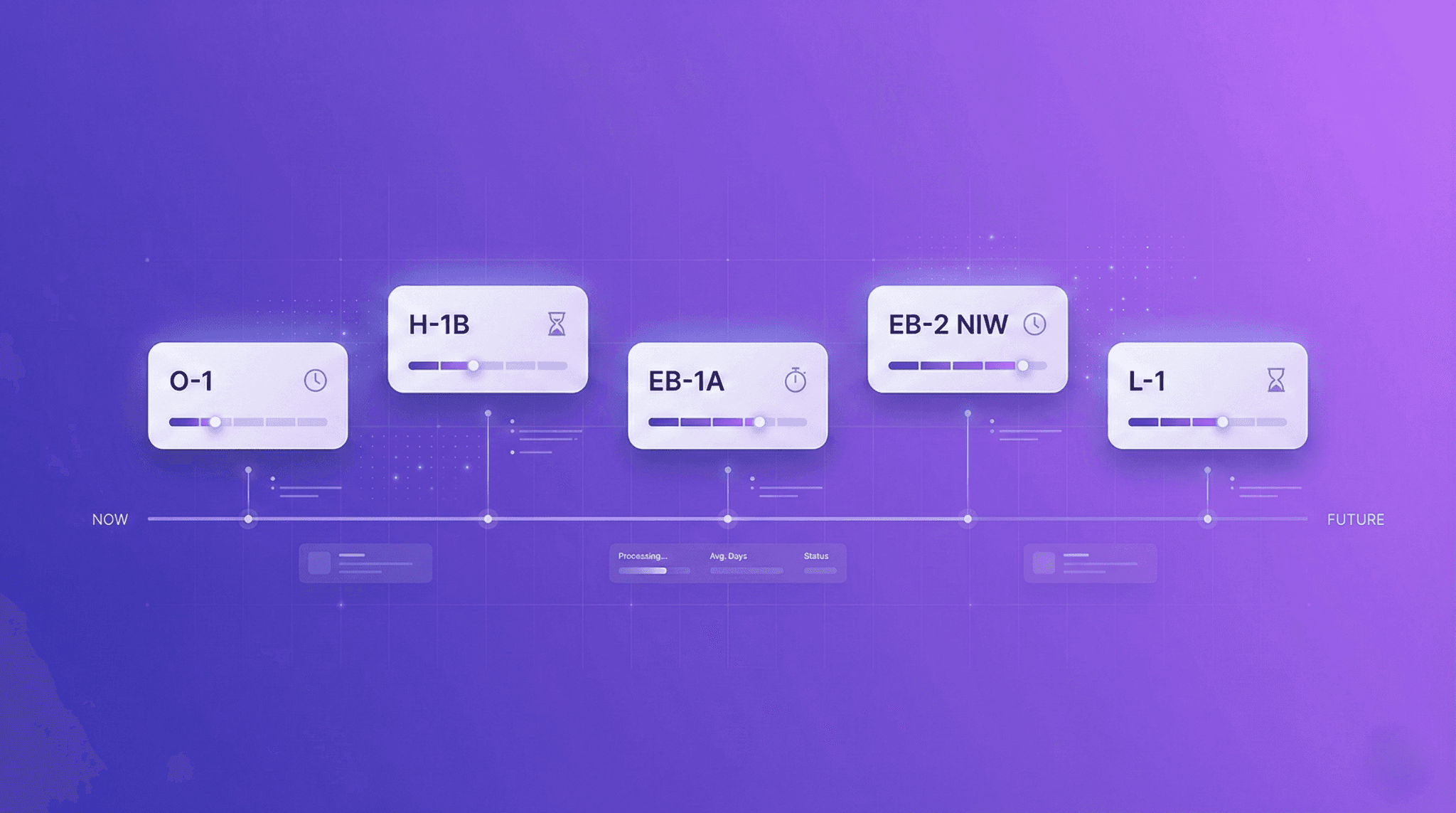
Path | Timeline | Lottery Required? | Best For |
Cap-exempt H-1B | 2-4 months | No | Anyone willing to work at university/nonprofit 1-2 years |
Build O-1 evidence | 6-12 months | No | Those with foundation (publications, press, awards) |
Day 1 CPT | Immediate | No | Willing to pursue another degree |
EB-1A or NIW | 12-24 months | No | Strong evidence, want green card directly |
Leave & Consular O-1 | 3-6 months | No | Flexible about time abroad |
Want to know which path makes sense for your profile, OPT timeline, and evidence strength?
Take the OpenSphere evaluation. You'll get a post-rejection recovery plan customized to your situation.
The math
85,000 H-1B visas available (65,000 regular + 20,000 advanced degree)
400,000+ registrations
Selection rate: ~25%
3 out of 4 qualified candidates rejected
This is not about your qualifications. It's a random lottery. Many exceptional candidates get rejected while maintaining inferior candidates get selected.
What it is
H-1B positions at qualifying organizations that are exempt from the annual cap and lottery.
Who qualifies for cap-exempt
Universities (public and private)
Nonprofit research organizations
Government research organizations
Nonprofits affiliated with qualifying institutions
Why this is your best immediate option
No lottery required
Can file any time of year
Processing: 2-4 months (faster with premium processing)
Provides same work authorization as regular H-1B
Can later transfer to cap-subject employer (and you won't need lottery since you already have H-1B approval)
Types of cap-exempt positions
University Positions
Research positions (postdoc, research scientist, research associate)
Teaching positions (adjunct, lecturer, visiting professor)
Administrative positions (if at least 50% of your time is at university)
Industry partnerships where university is primary employer
Nonprofit Research Positions
Think tanks (RAND, Brookings Institution)
Research institutes (Allen Institute, Howard Hughes Medical Institute)
Hospitals doing research (must be nonprofit and research-focused)
National labs (Department of Energy labs, NIH)
Strategy (Months 1-6 of OPT)
Apply to 50+ university positions (postdocs, research roles, teaching)
Network with professors and research groups
Target schools with strong industry partnerships (can transition to industry later)
Accept cap-exempt position, file H-1B without lottery
After 1-2 years, transfer to industry job (no lottery needed since you already have H-1B)
Example timeline
Month 1-2: Apply to university positions
Month 3: Accept postdoc offer at research university
Month 4: University files cap-exempt H-1B
Month 6: H-1B approved, valid for 3 years
Year 2: Build O-1 or EB-1A evidence
Year 3: Transfer to industry company or file O-1/EB-1A
Who this works for
Those with some evidence foundation (publications, early press, awards, high salary)
Timeline
Use OPT period to systematically build to 3 criteria
Evidence-building focus areas
Criterion 3 (Press Coverage) - Fastest to Achieve
Months 1-3: Pitch your story to tech journalists
Work with company PR team on funding/product announcements
Target TechCrunch, Forbes, Wired, industry publications
Goal: 2-3 articles where you're featured
Criterion 4 (Judging) - Highly Achievable
Months 1-6: Volunteer as peer reviewer for conferences in your field
Judge 5-10 hackathons or startup competitions
Serve on program committees
Goal: Complete 5-10 peer reviews with documentation
Criterion 8 (Critical Role) - If You Have It
Document your role at current company (if funded startup or growing company)
Org chart, responsibilities, team size
If not currently at distinguished org, join one
Criterion 9 (High Salary) - If Applicable
Negotiate strong OPT compensation ($120K-$200K+ for experienced candidates)
Gather wage comparison data
Document you're in top 10-20% for your role
6-Month Evidence-Building Plan
Month 1-2: Apply to awards, volunteer for judging roles
Month 3-4: Pitch media stories, complete peer reviews
Month 5: Win 1-2 awards or complete 5 peer reviews
Month 6: Have 3 criteria met, file O-1 with premium processing
Result
O-1 approved by month 6-7 of OPT, transition seamlessly without H-1B lottery.
What it is
Graduate programs that allow immediate work authorization through Curricular Practical Training.
Who this works for
Those willing to pursue another degree
Need more time to build O-1 evidence
Want to stay in U.S. while waiting for next H-1B lottery
How it works
Enroll in master's or professional program
Program requires "practical training" as part of curriculum
You can work full-time from day 1 of enrollment
Typically in business, computer science, or engineering
Legitimate programs
Accredited universities with established programs
Clear curricular justification for work component
Reasonable tuition ($15K-$40K/year)
Actual coursework and degree requirements
Red flags (avoid these)
Very low or very high tuition ($5K or $80K+)
Minimal coursework requirements
"Guaranteed" Day 1 CPT with no questions
Located far from where you'll actually work
Strategy
Enroll in legitimate Day 1 CPT program
Work full-time (builds more O-1 evidence)
Complete actual degree (adds credentials)
File O-1 after 12-18 months when evidence is strong
Or try H-1B lottery again next year
Timeline: 24-36 months of additional work authorization
Cost: $15K-$40K per year tuition
Who this works for
Those with strong evidence who want permanent residence, not temporary work authorization
Why skip H-1B
EB-1A and EB-2 NIW are green cards (permanent residence)
No employer sponsorship required
No annual caps or lotteries
Process while on OPT, get green card in 12-24 months
EB-1A Path
If you meet 3 of 10 criteria strongly
Processing: 12-24 months
No backlog for most countries (even Indians get approved in 2-3 years)
EB-2 NIW Path
If your work has national importance
Lower bar than EB-1A
Processing: 12-18 months + backlog (current for most countries, 2-5 years for China, 10+ for India)
Strategy
Spend OPT months 1-6 building evidence
File EB-1A or NIW by month 6
Continue on OPT while petition processes
If OPT expires before approval, switch to O-1 as bridge
Timeline example
Month 1-6: Build final evidence pieces
Month 6: File EB-1A or NIW
Month 18-24: Green card approved
Result: Permanent residence without ever needing H-1B
Who this works for
Those with O-1 evidence who are flexible about being abroad for 3-6 months
Why this works
You can file O-1 from abroad
Consular processing can be faster than adjustment of status
Preserves your immigration record (no overstay risk)
Can work remotely from home country during processing
Strategy
Months 1-3 of OPT: Build O-1 evidence
Month 3: Assess - do you meet 3 criteria?
Month 4-6: Prepare O-1 petition (gather evidence, letters)
Month 6: Leave U.S. before OPT expires
Month 7: File O-1 consular processing from home country
Month 8-9: O-1 approved, attend visa interview at U.S. consulate
Month 10: Return to U.S. on O-1 visa
Advantage: No gaps in work authorization if timed correctly
Risk: Time abroad (but can work remotely)
If you have 24+ months of OPT (STEM extension)
You can try H-1B lottery again next year. But don't rely on it.
March Year 1: H-1B lottery rejection
March Year 2: Register for lottery again (25% odds)
But simultaneously,
Build O-1 evidence during Year 1
Pursue cap-exempt H-1B positions
File EB-2 NIW or EB-1A if you qualify
Why: Even if selected in Year 2, you'll have better options (O-1 flexibility, green card in progress).
Timeline Assessment
Based on OPT remaining (6 months? 24 months?), you are recommended the optimal path.
Evidence Evaluation
OpenSphere assesses how close you are to O-1 qualification:
Already meet 2 criteria? → Build 1 more in 6 months.
Meet 1 criterion? → Cap-exempt H-1B or Day 1 CPT better options.
Cap-Exempt Job Finder
OpenSphere identifies universities and nonprofits in your field hiring for cap-exempt positions.
Multi-Path Strategy
We create layered plan for you:
Primary - Cap-exempt H-1B.
Secondary - Build O-1 evidence.
Tertiary - Try lottery again next year.
Path | Timeline | Lottery Required? | Best For |
Cap-exempt H-1B | 2-4 months | No | Anyone willing to work at university/nonprofit 1-2 years |
Build O-1 evidence | 6-12 months | No | Those with foundation (publications, press, awards) |
Day 1 CPT | Immediate | No | Willing to pursue another degree |
EB-1A or NIW | 12-24 months | No | Strong evidence, want green card directly |
Leave & Consular O-1 | 3-6 months | No | Flexible about time abroad |
Want to know which path makes sense for your profile, OPT timeline, and evidence strength?
Take the OpenSphere evaluation. You'll get a post-rejection recovery plan customized to your situation.
1. Can I try the H-1B lottery again next year?
Yes. You can register every March. But have backup plans—don't rely on 25% odds.
2. How long does cap-exempt H-1B take?
2-4 months standard processing. Can be faster with premium processing (15 days).
3. Will working at a university hurt my industry career?
Not if framed correctly. Many use university positions as 1-2 year bridges, then transfer to industry on H-1B (no lottery needed since you already have H-1B approval).
4. Can I build O-1 evidence in just 6 months?
Possible if you already have foundation (1-2 criteria met). Focus on fastest criteria: press coverage and judging.
5. Are Day 1 CPT programs legitimate?
Some are, some aren't. Only enroll in accredited programs with genuine curricular justification for practical training.
6. Can I file EB-1A while on OPT?
Yes. Many file self-petitioned green cards while on OPT. Processing takes 12-24 months.
7. What if my OPT expires before my green card is approved?
You'd need bridge status—O-1, cap-exempt H-1B, or leave U.S. and return when green card approved.
8. How do I find cap-exempt H-1B jobs?
Search university job boards, research institute sites, and nonprofit research organizations in your field.
9. Can I work for multiple employers on cap-exempt H-1B?
Only if each employer files separate H-1B petition for you. Unlike O-1, H-1B is more restrictive.
10. Should I give up on H-1B lottery entirely?
Not necessarily. Register each year (it's cheap), but don't depend on it. Build alternatives simultaneously.

Explore Topics
0%
Explore Topics
0%