Infectious Disease Epidemiologist: O-1A Extraordinary Ability Approved via Agent Route for India-Based Public Health Expert
Infectious Disease Epidemiologist: O-1A Extraordinary Ability Approved via Agent Route for India-Based Public Health Expert
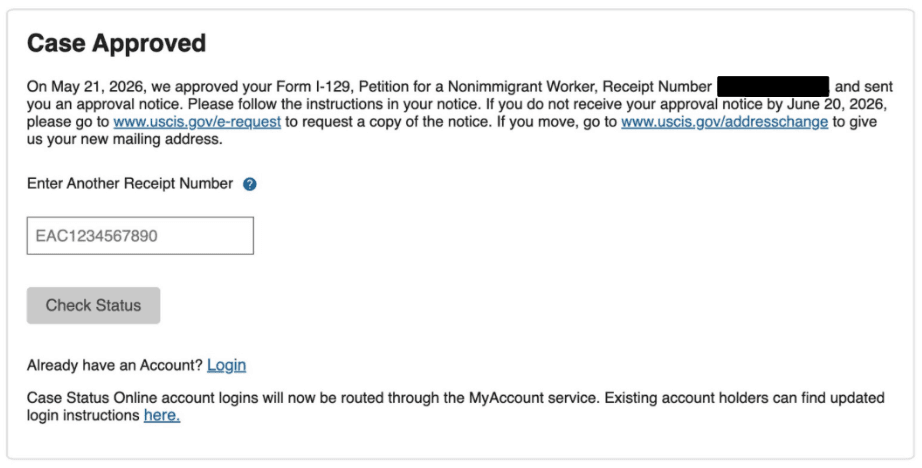
End-to-end O-1A success through an agent-based filing for an India-based public health expert specializing in infectious disease epidemiology. Petition approved under premium processing with no RFE in the heavily scrutinized sciences field, structured for consular processing at the US consulate in Mumbai. Critical roles span federal tribal health programs, a USAID global tuberculosis initiative, and tuberculosis research at a top-ranked US academic medical institution.
End-to-end O-1A success through an agent-based filing for an India-based public health expert specializing in infectious disease epidemiology. Petition approved under premium processing with no RFE in the heavily scrutinized sciences field, structured for consular processing at the US consulate in Mumbai. Critical roles span federal tribal health programs, a USAID global tuberculosis initiative, and tuberculosis research at a top-ranked US academic medical institution.
May 21, 2026
May 21, 2026
Petition Type | Processing | RFE | USCIS Status | Filing Route |
O-1A Extraordinary Ability | Premium | None | Approved | Agent-Based, India |
Case Background
Case Background
A US-based public health and management company engaged OpenSphere to handle an agent-based O-1A extraordinary ability petition for an India-based public health expert, with the petition structured to carry cleanly into consular processing and visa stamping at the US consulate in Mumbai.
The beneficiary's profile:
Indian national based in Mumbai, seeking O-1A classification as a Public Health Expert and Consultant
Infectious disease epidemiologist with specialized expertise in tuberculosis, HIV, and opioid overdose surveillance among underserved populations in the United States and globally
Prior experience spanning a federally engaged tribal public health organization, a NASDAQ-listed global health and development consulting firm, and one of the world's leading academic medical and research universities
Future engagements arranged with a top-ranked US school of public health and a US public health training organization
Field of endeavor: Public Health
A US-based public health and management company engaged OpenSphere to handle an agent-based O-1A extraordinary ability petition for an India-based public health expert, with the petition structured to carry cleanly into consular processing and visa stamping at the US consulate in Mumbai.
The beneficiary's profile:
Indian national based in Mumbai, seeking O-1A classification as a Public Health Expert and Consultant
Infectious disease epidemiologist with specialized expertise in tuberculosis, HIV, and opioid overdose surveillance among underserved populations in the United States and globally
Prior experience spanning a federally engaged tribal public health organization, a NASDAQ-listed global health and development consulting firm, and one of the world's leading academic medical and research universities
Future engagements arranged with a top-ranked US school of public health and a US public health training organization
Field of endeavor: Public Health
The Challenge
The Challenge
This case presented several factors that typically draw heightened USCIS scrutiny:
1. Beneficiary Located Outside the United States, Requiring Consular Processing
The beneficiary was based in India, and had no prior US nonimmigrant status to extend or change. This created a two-stage journey. First, securing USCIS approval of the O-1A petition through an agent-based filing. Second, structuring the record so that the O-1 visa could be issued at the US consulate in Mumbai through a separate consular interview. The consular stage adds an independent layer of review, where a consular officer separately examines the agent structure, the multi-engagement itinerary, and the beneficiary's qualifications, and can request administrative processing even after USCIS has approved the petition.
2. Agent-Based Petition Structure
Rather than filing through a single direct employer, the petition was filed through an agent representing multiple US engagements. Agent petitions require additional documentation, including a detailed three-year itinerary, executed deal memos and offer letters for each engagement, and proof of the petitioner's standing as a qualifying agent. Any gap in this documentation invites procedural questions that can stall an otherwise strong case.
3. A Career Spread Across Multiple Distinguished Organizations and Continents
The beneficiary's accomplishments were distributed across several distinguished organizations operating in the United States, India, and sub-Saharan Africa. Establishing a critical or essential role at each entity, while maintaining a coherent narrative of sustained acclaim, required precise documentation across jurisdictions, funding bodies, and program structures.
4. An Original Contribution Resting on a Recent Flagship Study
The beneficiary's central original contribution, a population-level finding on the real-world uptake of long-acting injectable HIV therapy, was anchored in a single peer-reviewed study published in 2024. Establishing that this work was of major significance, rather than simply a recent publication, required objective, third-party evidence of independent adoption, validation, and policy influence.
5. Sciences Field Classification
Public health sits within the sciences category, where USCIS applies heightened scrutiny to confirm that the beneficiary genuinely ranks among the small percentage of professionals at the very top of the field nationally and internationally. Research-heavy profiles must be presented so that adjudicators can see sustained acclaim rather than routine academic output.
This case presented several factors that typically draw heightened USCIS scrutiny:
1. Beneficiary Located Outside the United States, Requiring Consular Processing
The beneficiary was based in India, and had no prior US nonimmigrant status to extend or change. This created a two-stage journey. First, securing USCIS approval of the O-1A petition through an agent-based filing. Second, structuring the record so that the O-1 visa could be issued at the US consulate in Mumbai through a separate consular interview. The consular stage adds an independent layer of review, where a consular officer separately examines the agent structure, the multi-engagement itinerary, and the beneficiary's qualifications, and can request administrative processing even after USCIS has approved the petition.
2. Agent-Based Petition Structure
Rather than filing through a single direct employer, the petition was filed through an agent representing multiple US engagements. Agent petitions require additional documentation, including a detailed three-year itinerary, executed deal memos and offer letters for each engagement, and proof of the petitioner's standing as a qualifying agent. Any gap in this documentation invites procedural questions that can stall an otherwise strong case.
3. A Career Spread Across Multiple Distinguished Organizations and Continents
The beneficiary's accomplishments were distributed across several distinguished organizations operating in the United States, India, and sub-Saharan Africa. Establishing a critical or essential role at each entity, while maintaining a coherent narrative of sustained acclaim, required precise documentation across jurisdictions, funding bodies, and program structures.
4. An Original Contribution Resting on a Recent Flagship Study
The beneficiary's central original contribution, a population-level finding on the real-world uptake of long-acting injectable HIV therapy, was anchored in a single peer-reviewed study published in 2024. Establishing that this work was of major significance, rather than simply a recent publication, required objective, third-party evidence of independent adoption, validation, and policy influence.
5. Sciences Field Classification
Public health sits within the sciences category, where USCIS applies heightened scrutiny to confirm that the beneficiary genuinely ranks among the small percentage of professionals at the very top of the field nationally and internationally. Research-heavy profiles must be presented so that adjudicators can see sustained acclaim rather than routine academic output.
Our Strategic Approach
Our Strategic Approach
Documenting Five Qualifying Criteria
We identified and documented five of the eight regulatory criteria, well above the required minimum of three, to build a clearly above-threshold case:
1. Authorship of Scholarly Articles in the Field
15 peer-reviewed scholarly publications across 12 distinct scientific journals, supported by 30 independent citations from researchers worldwide
First-authored research in top-tier journals, including Open Forum Infectious Diseases, published by Oxford University Press on behalf of the Infectious Diseases Society of America
A body of work spanning tuberculosis epidemiology, HIV treatment and prevention, opioid surveillance, HPV vaccination strategy, mental health, and healthcare delivery systems
Peer-reviewed research presented at the American Public Health Association Annual Meeting and Expo, one of the largest public health conferences in the world
2. Participation as a Judge of the Work of Others
Selected as a peer reviewer across seven journals and conferences, with more than 50 studies evaluated
Reviewer roles for the American Public Health Association Annual Meeting, a global health journal published under the Johns Hopkins Bloomberg School of Public Health, a journal affiliated with the Africa Centres for Disease Control and Prevention, and three journals under a leading international academic publisher
Reviewer for the world's largest scientific conference on family planning and reproductive health
Selected as a judge of clinical and infectious disease research presentations at a historically significant US research university
3. Critical Employment at Distinguished Organizations
Federally engaged tribal public health organization: Led epidemiology, monitoring, and evaluation for a CDC-funded opioid surveillance program across eight Tribal Health Programs, and deployed a real-time overdose detection and mapping system across underserved tribal communities
NASDAQ-listed global health and development consulting firm: Built a tuberculosis and HIV testing target model across four high-burden African countries under a $120M USAID infectious disease detection and surveillance initiative spanning 24 priority countries that account for roughly 74% of the global tuberculosis burden
Top-ranked academic medical and research university: Contributed in a critical capacity to two major tuberculosis research initiatives, including a Gates Foundation-supported vaccine implementation study, completing approximately 72% of one project's total screening output, the highest contribution of any reviewer
4. Membership in Associations Requiring Outstanding Achievement
Full membership in a scientific research honor society founded in 1886, an invitation-and-evaluation-based body whose historical members include more than 200 Nobel Laureates
Fellowship in a long-established public health professional body founded in 1856 and operating under Royal Charter
5. Original Contributions of Major Significance
Conducted one of the earliest population-level, multi-site evaluations of long-acting injectable HIV therapy uptake following FDA approval, across 14 clinical care sites in a designated federal Ending the HIV Epidemic priority jurisdiction
Demonstrated that, of the patients clinically eligible for the therapy, only a very small fraction had actually initiated treatment, exposing a systemic gap between HIV treatment innovation and equitable real-world delivery
The methodological framework was independently adopted as a benchmark by NIH-funded investigators, validated at the national level using CDC surveillance data, and cited in congressional policy recommendations by the two preeminent US professional societies governing infectious disease and HIV practice
Building the Petition's Credibility
Despite the cross-border structure and the multi-organization career history, we established legitimacy through:
Detailed confirmation letters from senior leaders at each of the distinguished organizations where the beneficiary held a critical role
Direct, addendum-supported evidence quantifying her contributions, including documented increases in tuberculosis case detection across multiple high-burden countries
Objective third-party indicators of significance, including independent citations, follow-on studies, and adoption of her findings by federal health agencies
Evidence of real-world policy impact, including an invitation to provide testimony before a US state legislative committee in support of a public health bill that was subsequently signed into law
Expert Advisory Opinion Letters
We secured comprehensive advisory opinions from a peer group appropriate to the field, including:
A global health leader with experience across the National Institutes of Health, a major medical research institute, and large-scale USAID and Gates Foundation-funded programs
A board-certified physician and researcher with a publication record in leading clinical journals
An academic editor and public health practitioner with extensive experience in population-level health research
Each letter specifically addressed the beneficiary's sustained national and international acclaim, the originality and significance of her contributions, and her standing among the top professionals in the field of public health.
Documenting Five Qualifying Criteria
We identified and documented five of the eight regulatory criteria, well above the required minimum of three, to build a clearly above-threshold case:
1. Authorship of Scholarly Articles in the Field
15 peer-reviewed scholarly publications across 12 distinct scientific journals, supported by 30 independent citations from researchers worldwide
First-authored research in top-tier journals, including Open Forum Infectious Diseases, published by Oxford University Press on behalf of the Infectious Diseases Society of America
A body of work spanning tuberculosis epidemiology, HIV treatment and prevention, opioid surveillance, HPV vaccination strategy, mental health, and healthcare delivery systems
Peer-reviewed research presented at the American Public Health Association Annual Meeting and Expo, one of the largest public health conferences in the world
2. Participation as a Judge of the Work of Others
Selected as a peer reviewer across seven journals and conferences, with more than 50 studies evaluated
Reviewer roles for the American Public Health Association Annual Meeting, a global health journal published under the Johns Hopkins Bloomberg School of Public Health, a journal affiliated with the Africa Centres for Disease Control and Prevention, and three journals under a leading international academic publisher
Reviewer for the world's largest scientific conference on family planning and reproductive health
Selected as a judge of clinical and infectious disease research presentations at a historically significant US research university
3. Critical Employment at Distinguished Organizations
Federally engaged tribal public health organization: Led epidemiology, monitoring, and evaluation for a CDC-funded opioid surveillance program across eight Tribal Health Programs, and deployed a real-time overdose detection and mapping system across underserved tribal communities
NASDAQ-listed global health and development consulting firm: Built a tuberculosis and HIV testing target model across four high-burden African countries under a $120M USAID infectious disease detection and surveillance initiative spanning 24 priority countries that account for roughly 74% of the global tuberculosis burden
Top-ranked academic medical and research university: Contributed in a critical capacity to two major tuberculosis research initiatives, including a Gates Foundation-supported vaccine implementation study, completing approximately 72% of one project's total screening output, the highest contribution of any reviewer
4. Membership in Associations Requiring Outstanding Achievement
Full membership in a scientific research honor society founded in 1886, an invitation-and-evaluation-based body whose historical members include more than 200 Nobel Laureates
Fellowship in a long-established public health professional body founded in 1856 and operating under Royal Charter
5. Original Contributions of Major Significance
Conducted one of the earliest population-level, multi-site evaluations of long-acting injectable HIV therapy uptake following FDA approval, across 14 clinical care sites in a designated federal Ending the HIV Epidemic priority jurisdiction
Demonstrated that, of the patients clinically eligible for the therapy, only a very small fraction had actually initiated treatment, exposing a systemic gap between HIV treatment innovation and equitable real-world delivery
The methodological framework was independently adopted as a benchmark by NIH-funded investigators, validated at the national level using CDC surveillance data, and cited in congressional policy recommendations by the two preeminent US professional societies governing infectious disease and HIV practice
Building the Petition's Credibility
Despite the cross-border structure and the multi-organization career history, we established legitimacy through:
Detailed confirmation letters from senior leaders at each of the distinguished organizations where the beneficiary held a critical role
Direct, addendum-supported evidence quantifying her contributions, including documented increases in tuberculosis case detection across multiple high-burden countries
Objective third-party indicators of significance, including independent citations, follow-on studies, and adoption of her findings by federal health agencies
Evidence of real-world policy impact, including an invitation to provide testimony before a US state legislative committee in support of a public health bill that was subsequently signed into law
Expert Advisory Opinion Letters
We secured comprehensive advisory opinions from a peer group appropriate to the field, including:
A global health leader with experience across the National Institutes of Health, a major medical research institute, and large-scale USAID and Gates Foundation-funded programs
A board-certified physician and researcher with a publication record in leading clinical journals
An academic editor and public health practitioner with extensive experience in population-level health research
Each letter specifically addressed the beneficiary's sustained national and international acclaim, the originality and significance of her contributions, and her standing among the top professionals in the field of public health.
The Outcome
The Outcome
APPROVED | AGENT ROUTE | 3-YEAR VALIDITY |
Premium Processing, No RFE | Agent-based filing, India-based | Maximum initial period for O-1A |
The petition was approved under premium processing with no Request for Evidence. The same documentation rigor that produced an RFE-free approval also positions the case to read cleanly at the consular stage, with the petition structured for visa issuance at the US consulate in Mumbai. The approval enables the beneficiary to take up her arranged US engagements in public health research and consulting, contributing her expertise in infectious disease epidemiology, tuberculosis and HIV control, and surveillance system design to US institutions.
APPROVED | AGENT ROUTE | 3-YEAR VALIDITY |
Premium Processing, No RFE | Agent-based filing, India-based | Maximum initial period for O-1A |
The petition was approved under premium processing with no Request for Evidence. The same documentation rigor that produced an RFE-free approval also positions the case to read cleanly at the consular stage, with the petition structured for visa issuance at the US consulate in Mumbai. The approval enables the beneficiary to take up her arranged US engagements in public health research and consulting, contributing her expertise in infectious disease epidemiology, tuberculosis and HIV control, and surveillance system design to US institutions.
Key Success Factors
Key Success Factors
1. Five Criteria, Not Just Three
Documenting five of the eight regulatory criteria gave USCIS clear, redundant evidence of extraordinary ability and sustained acclaim, reducing RFE risk in the heavily scrutinized sciences field.
2. Quantifiable Impact at Every Layer
Specific, verifiable metrics anchored every claim: 15 peer-reviewed publications across 12 journals, 30 independent citations, 50 studies reviewed across 7 journals and conferences, a $120M USAID initiative spanning 24 priority countries, a roughly 20% average increase in tuberculosis case detection across four high-burden countries, and a population-level HIV finding drawn from a 14-site cohort.
3. Third-Party Validation of the Original Contribution
Rather than letting the original contribution rest on a single publication, we documented its independent adoption by NIH-funded investigators, its validation through CDC national surveillance data, and its citation in congressional policy recommendations, establishing major significance through objective evidence rather than assertion.
4. Critical Roles Across Three Distinguished Institutions
We documented critical or essential roles at a federally engaged tribal health organization, a NASDAQ-listed global health consulting firm, and a top-ranked academic medical university, each supported by a detailed confirmation letter from a senior leader and addendum-level evidence of the beneficiary's specific contributions.
5. Recommender Hierarchy Across Geographies
Confirmation and advisory letters from leaders spanning the United States, India, and global health programs demonstrated that the beneficiary's reputation extended well beyond a single market, institution, or professional network.
6. Real-World Policy Impact
Evidence that the beneficiary's expertise was sought for legislative testimony, and that her research findings informed federal HIV policy discussions, demonstrated influence that extended beyond academic publication into population-level public health practice.
7. Clean Agent-Based Filing
A detailed three-year itinerary, fully executed offer letters and deal memos for each engagement, and complete petitioner documentation ensured that the agent-based structure raised no procedural questions during adjudication.
8. A Filing Built to Survive Both Stages
The agent itinerary, engagement documentation, beneficiary profile, and supporting evidence were structured to read cleanly to both USCIS adjudicators and consular officers. For India-based beneficiaries on agent-route petitions, building a record that holds up at both stages is often the difference between an approval on paper and the actual ability to enter and work in the United States.
1. Five Criteria, Not Just Three
Documenting five of the eight regulatory criteria gave USCIS clear, redundant evidence of extraordinary ability and sustained acclaim, reducing RFE risk in the heavily scrutinized sciences field.
2. Quantifiable Impact at Every Layer
Specific, verifiable metrics anchored every claim: 15 peer-reviewed publications across 12 journals, 30 independent citations, 50 studies reviewed across 7 journals and conferences, a $120M USAID initiative spanning 24 priority countries, a roughly 20% average increase in tuberculosis case detection across four high-burden countries, and a population-level HIV finding drawn from a 14-site cohort.
3. Third-Party Validation of the Original Contribution
Rather than letting the original contribution rest on a single publication, we documented its independent adoption by NIH-funded investigators, its validation through CDC national surveillance data, and its citation in congressional policy recommendations, establishing major significance through objective evidence rather than assertion.
4. Critical Roles Across Three Distinguished Institutions
We documented critical or essential roles at a federally engaged tribal health organization, a NASDAQ-listed global health consulting firm, and a top-ranked academic medical university, each supported by a detailed confirmation letter from a senior leader and addendum-level evidence of the beneficiary's specific contributions.
5. Recommender Hierarchy Across Geographies
Confirmation and advisory letters from leaders spanning the United States, India, and global health programs demonstrated that the beneficiary's reputation extended well beyond a single market, institution, or professional network.
6. Real-World Policy Impact
Evidence that the beneficiary's expertise was sought for legislative testimony, and that her research findings informed federal HIV policy discussions, demonstrated influence that extended beyond academic publication into population-level public health practice.
7. Clean Agent-Based Filing
A detailed three-year itinerary, fully executed offer letters and deal memos for each engagement, and complete petitioner documentation ensured that the agent-based structure raised no procedural questions during adjudication.
8. A Filing Built to Survive Both Stages
The agent itinerary, engagement documentation, beneficiary profile, and supporting evidence were structured to read cleanly to both USCIS adjudicators and consular officers. For India-based beneficiaries on agent-route petitions, building a record that holds up at both stages is often the difference between an approval on paper and the actual ability to enter and work in the United States.
Why Public Health Professionals Trust OpenSphere
Why Public Health Professionals Trust OpenSphere
OpenSphere specializes in O-1A petitions for researchers, scientists, and extraordinary professionals. Our track record speaks for itself:
High approval rate on O-1A extraordinary ability petitions
Specialized expertise in agent-based filings, including itinerary construction, deal memo drafting, and multi-engagement three-year validity periods
Deep experience with India-based and cross-border beneficiaries seeking US classification through consular processing
A proven approach for research-heavy profiles, including original contribution documentation, recommender curation, and third-party validation of significance
Experience with the heavily scrutinized sciences field, where the standard is genuine top-of-field standing
Fast turnaround to meet critical research, hiring, and program timelines
Whether you are a researcher, an epidemiologist, or a public health professional building your career across borders, OpenSphere can help you secure the visa status you need.
Get Your Free Visa Evaluation at opensphere.ai
Note: Client details have been anonymized to protect confidentiality while preserving the essential facts of the case.
OpenSphere specializes in O-1A petitions for researchers, scientists, and extraordinary professionals. Our track record speaks for itself:
High approval rate on O-1A extraordinary ability petitions
Specialized expertise in agent-based filings, including itinerary construction, deal memo drafting, and multi-engagement three-year validity periods
Deep experience with India-based and cross-border beneficiaries seeking US classification through consular processing
A proven approach for research-heavy profiles, including original contribution documentation, recommender curation, and third-party validation of significance
Experience with the heavily scrutinized sciences field, where the standard is genuine top-of-field standing
Fast turnaround to meet critical research, hiring, and program timelines
Whether you are a researcher, an epidemiologist, or a public health professional building your career across borders, OpenSphere can help you secure the visa status you need.
Get Your Free Visa Evaluation at opensphere.ai
Note: Client details have been anonymized to protect confidentiality while preserving the essential facts of the case.