Self-Taught Gen-Z Engineer: O-1A Approved at 25 With No RFE
Self-Taught Gen-Z Engineer: O-1A Approved at 25 With No RFE
An O-1A approval for a 25-year-old, self-taught software engineer who started writing code at 14 and turned more than a decade of hands-on work into top-of-field recognition in AI and the infrastructure behind the compute economy. Approved on the first try, under premium processing, with no questions asked back by USCIS.
An O-1A approval for a 25-year-old, self-taught software engineer who started writing code at 14 and turned more than a decade of hands-on work into top-of-field recognition in AI and the infrastructure behind the compute economy. Approved on the first try, under premium processing, with no questions asked back by USCIS.
June 22, 2026
June 22, 2026
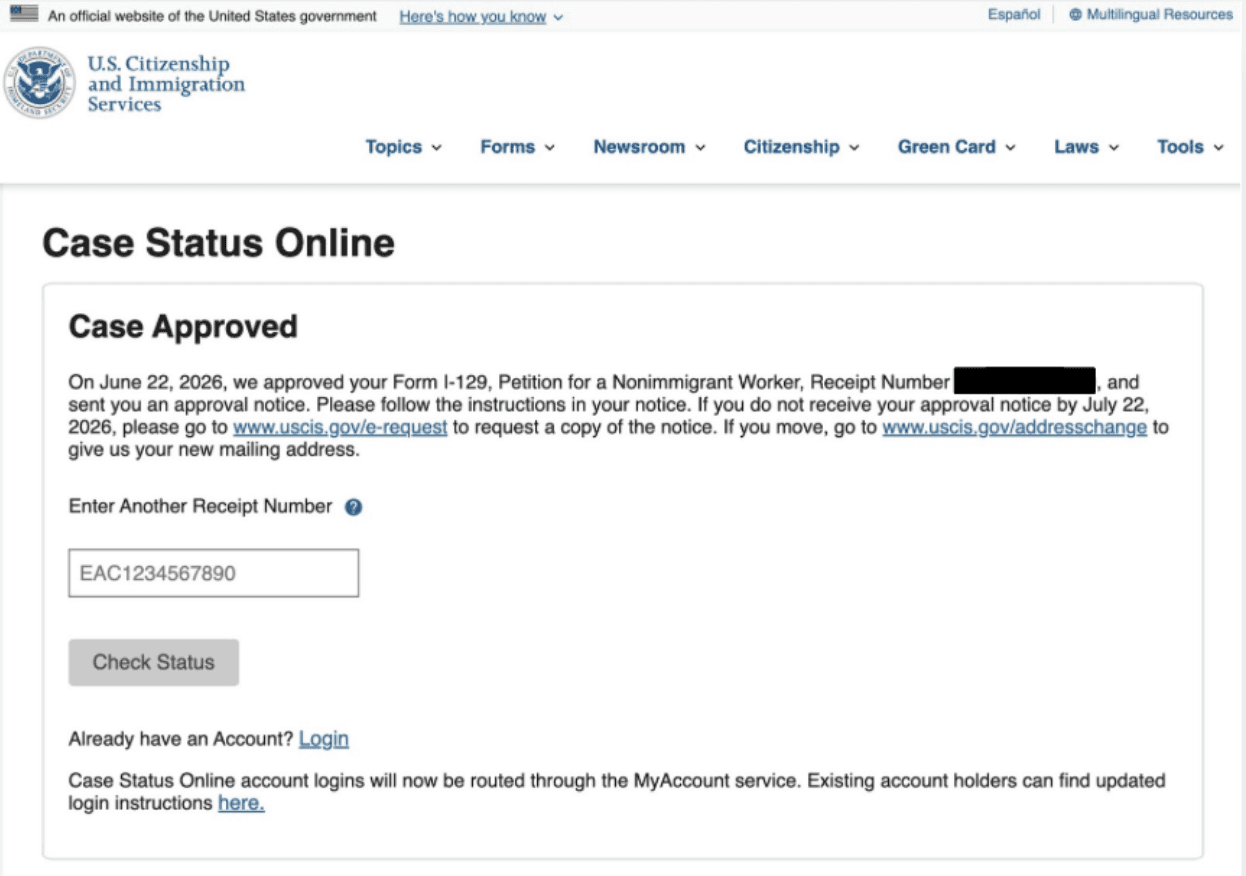
Petition Type | Processing | RFE | Status |
O-1A Extraordinary Ability | Premium | None | Approved |
Case Background
Case Background
This is the kind of profile a lot of young engineers will see themselves in. He is a hands-on builder, not a founder or a professor, and he reached the top of his field unusually early. Here is who he is:
A Canadian national working remotely for a US technology company, on an O-1A
Just 25 years old and entirely self-taught, he started writing code at 14, earned his first paid engineering role at 15, and has more than a decade of professional experience
A founding engineer at a venture-backed US company building real-time financial infrastructure for the AI compute economy, used by data centers and GPU cloud providers, which raised 4.5 million dollars in funding
Earlier founding and senior engineering roles at a fast-growing Canadian AI company that hit 1 million dollars in revenue in 42 days, and at an open-source AI email project, backed by a top US startup accelerator, with a large public following of more than 10,000 stars
Featured in three technology and business publications, a judge at four coding competitions, and a top-tier member of two highly selective founder and AI communities
Field: Technology
This is the kind of profile a lot of young engineers will see themselves in. He is a hands-on builder, not a founder or a professor, and he reached the top of his field unusually early. Here is who he is:
A Canadian national working remotely for a US technology company, on an O-1A
Just 25 years old and entirely self-taught, he started writing code at 14, earned his first paid engineering role at 15, and has more than a decade of professional experience
A founding engineer at a venture-backed US company building real-time financial infrastructure for the AI compute economy, used by data centers and GPU cloud providers, which raised 4.5 million dollars in funding
Earlier founding and senior engineering roles at a fast-growing Canadian AI company that hit 1 million dollars in revenue in 42 days, and at an open-source AI email project, backed by a top US startup accelerator, with a large public following of more than 10,000 stars
Featured in three technology and business publications, a judge at four coding competitions, and a top-tier member of two highly selective founder and AI communities
Field: Technology
The Challenge
The Challenge
A few things about this case usually make USCIS look harder.
1. He is very young
At 25, he is far younger than most people who reach this level. O-1A asks for proof that you are among the small few at the top of your field, and adjudicators usually expect that to come from a long career. We had to show that a self-taught 25-year-old had genuinely earned that standing.
2. He has no college degree
He never took the traditional academic path. In a technical field, USCIS looks for real, verifiable proof of skill, so we built the case on what he had actually shipped and the recognition he had earned, not on a diploma.
3. Most of his recognition was recent
A lot of his outside recognition came in the months before filing. We had to show this was genuine standing in the field, not a short-lived spike.
A few things about this case usually make USCIS look harder.
1. He is very young
At 25, he is far younger than most people who reach this level. O-1A asks for proof that you are among the small few at the top of your field, and adjudicators usually expect that to come from a long career. We had to show that a self-taught 25-year-old had genuinely earned that standing.
2. He has no college degree
He never took the traditional academic path. In a technical field, USCIS looks for real, verifiable proof of skill, so we built the case on what he had actually shipped and the recognition he had earned, not on a diploma.
3. Most of his recognition was recent
A lot of his outside recognition came in the months before filing. We had to show this was genuine standing in the field, not a short-lived spike.
Our Strategic Approach
Our Strategic Approach
We built the case around six qualifying criteria, double the minimum of three, and tied them together into one clear story.
1. Critical role
He is a founding engineer at a venture-backed US company building real-time billing and settlement systems for data centers and GPU clouds, where he built the core technology that lets the platform run in production and helped the company close a 4.5 million dollar funding round. He held similar founding and senior engineering roles at two other respected companies. Senior leaders at all three confirmed his role in writing.
2. High salary
His pay was checked against three independent salary sources, including the Canadian government's official wage data, at the city, provincial, and national level. He earns more than the highest published figure at every level, from about 14 percent to 82 percent above the top benchmark.
3. Judging
He was chosen to judge four competitive coding events in a single season, including the country's oldest university hackathon and an international AI awards program whose panel included senior engineers from some of the world's largest tech companies. Being asked again and again to grade other builders shows the field treats him as an expert.
4. Membership
He holds the top tier of membership in a selective Silicon Valley founder network that accepts about 3 percent of applicants, and in an elite AI builder community that accepts under 1 percent. Both admit people only after a strict review by recognized experts.
5. Media
He was the subject of feature articles in three technology and business publications, one of them a widely read outlet reaching close to a million readers a month. The coverage was about him and his career, not just his employer.
6. Original contribution
He designed core parts of a new kind of financial system for the compute economy that reads live data from thousands of GPUs and power units, prices usage in real time, and settles payments automatically, something that did not exist in production before. Two senior venture and AI experts confirmed in writing that the work is original and significant.
On top of these six areas, we added letters from people who worked with him, independent proof of how respected his companies are, and opinion letters from outside experts who vouched for his standing in the field.
We built the case around six qualifying criteria, double the minimum of three, and tied them together into one clear story.
1. Critical role
He is a founding engineer at a venture-backed US company building real-time billing and settlement systems for data centers and GPU clouds, where he built the core technology that lets the platform run in production and helped the company close a 4.5 million dollar funding round. He held similar founding and senior engineering roles at two other respected companies. Senior leaders at all three confirmed his role in writing.
2. High salary
His pay was checked against three independent salary sources, including the Canadian government's official wage data, at the city, provincial, and national level. He earns more than the highest published figure at every level, from about 14 percent to 82 percent above the top benchmark.
3. Judging
He was chosen to judge four competitive coding events in a single season, including the country's oldest university hackathon and an international AI awards program whose panel included senior engineers from some of the world's largest tech companies. Being asked again and again to grade other builders shows the field treats him as an expert.
4. Membership
He holds the top tier of membership in a selective Silicon Valley founder network that accepts about 3 percent of applicants, and in an elite AI builder community that accepts under 1 percent. Both admit people only after a strict review by recognized experts.
5. Media
He was the subject of feature articles in three technology and business publications, one of them a widely read outlet reaching close to a million readers a month. The coverage was about him and his career, not just his employer.
6. Original contribution
He designed core parts of a new kind of financial system for the compute economy that reads live data from thousands of GPUs and power units, prices usage in real time, and settles payments automatically, something that did not exist in production before. Two senior venture and AI experts confirmed in writing that the work is original and significant.
On top of these six areas, we added letters from people who worked with him, independent proof of how respected his companies are, and opinion letters from outside experts who vouched for his standing in the field.
The Outcome
The Outcome
APPROVED | NO RFE |
Premium Processing | O-1A Extraordinary Ability |
The case was approved on the first try, under premium processing, with no request for more evidence. The approval recognizes him as a person of extraordinary ability and lets him keep building in the United States for up to three years, the full initial period an O-1A allows.
For an engineer who reached this level at 25, with no traditional degree, the approval sends a clear message: what you build can matter more than how long you have been at it or what is on your resume.
APPROVED | NO RFE |
Premium Processing | O-1A Extraordinary Ability |
The case was approved on the first try, under premium processing, with no request for more evidence. The approval recognizes him as a person of extraordinary ability and lets him keep building in the United States for up to three years, the full initial period an O-1A allows.
For an engineer who reached this level at 25, with no traditional degree, the approval sends a clear message: what you build can matter more than how long you have been at it or what is on your resume.
Key Success Factors
Key Success Factors
1. Six areas, not just three
Showing six qualifying criteria instead of the minimum three gave USCIS plenty of overlapping proof and made a request for evidence far less likely.
2. We turned his age into a strength
Instead of treating how young he is as a weakness, we made it the headline: a 25-year-old with more than a decade of shipped work and genuine outside recognition.
3. We led with substance, not credentials
With no degree to point to, we anchored every claim in real, verifiable work and hard numbers, so USCIS saw genuine achievement rather than a resume.
4. We backed every claim with real numbers
Concrete figures carried the case: a 4.5 million dollar raise, 1 million dollars in revenue in 42 days at a prior company, more than 10,000 stars on his open-source code, a salary above every benchmark, four judging panels, and three feature articles.
5. We added outside expert support
Letters from senior investors and engineers backed up his standing from several different angles.
1. Six areas, not just three
Showing six qualifying criteria instead of the minimum three gave USCIS plenty of overlapping proof and made a request for evidence far less likely.
2. We turned his age into a strength
Instead of treating how young he is as a weakness, we made it the headline: a 25-year-old with more than a decade of shipped work and genuine outside recognition.
3. We led with substance, not credentials
With no degree to point to, we anchored every claim in real, verifiable work and hard numbers, so USCIS saw genuine achievement rather than a resume.
4. We backed every claim with real numbers
Concrete figures carried the case: a 4.5 million dollar raise, 1 million dollars in revenue in 42 days at a prior company, more than 10,000 stars on his open-source code, a salary above every benchmark, four judging panels, and three feature articles.
5. We added outside expert support
Letters from senior investors and engineers backed up his standing from several different angles.
Why Technology Professionals Trust OpenSphere
Why Technology Professionals Trust OpenSphere
OpenSphere prepares O-1A and other extraordinary ability cases for engineers, founders, and builders, including young and self-taught talent whose achievements run ahead of their years.
A proven way to turn fast, recent recognition into a strong, top-of-field case
Smart positioning for young and non-traditional profiles, from how we frame your work to how we choose your recommenders
Deep experience with technical cases in AI, software, and infrastructure
Whether you are a founder, an engineer, or a self-taught builder, OpenSphere can help you build a case that stands on its own.
Get your free visa evaluation at opensphere.ai
Note: Client details have been anonymized to protect confidentiality while preserving the essential facts of the case.
OpenSphere prepares O-1A and other extraordinary ability cases for engineers, founders, and builders, including young and self-taught talent whose achievements run ahead of their years.
A proven way to turn fast, recent recognition into a strong, top-of-field case
Smart positioning for young and non-traditional profiles, from how we frame your work to how we choose your recommenders
Deep experience with technical cases in AI, software, and infrastructure
Whether you are a founder, an engineer, or a self-taught builder, OpenSphere can help you build a case that stands on its own.
Get your free visa evaluation at opensphere.ai
Note: Client details have been anonymized to protect confidentiality while preserving the essential facts of the case.