Does Startup Founder Experience Help in O-1A?
How entrepreneurs can leverage their founding role to demonstrate extraordinary ability
How entrepreneurs can leverage their founding role to demonstrate extraordinary ability


Yes, startup founder experience can significantly strengthen an O-1A application—but only if you can connect your entrepreneurial achievements to the specific regulatory criteria. USCIS updated its policy manual to explicitly recognize that entrepreneurs and those in critical and emerging technologies can qualify. The key is translating founder accomplishments into evidence that maps to the eight O-1A criteria.
• USCIS explicitly recognizes entrepreneurs: Recent policy guidance includes examples of evidence relevant to founders and those in technology fields.
• Your startup role is inherently "critical": As a founder, demonstrating an essential role in a distinguished organization is often straightforward.
• Venture capital can count as an "award": Funding from recognized VC firms may satisfy the awards criterion if the selection was competitive and merit-based.
• No degree requirement: Unlike H-1B, O-1A has no educational prerequisites—results matter, not credentials.
• Self-sponsorship is possible: You can petition through your own U.S. company, though specific requirements apply.
• High salary works for entrepreneurs: If your compensation as founder exceeds industry norms, it demonstrates high remuneration.
The O-1A visa category requires demonstrating extraordinary ability in business, science, education, or athletics through sustained national or international acclaim. For founders, "business" is the applicable field, and your entrepreneurial achievements can provide evidence across multiple criteria.
The standard for O-1A—"one of the small percentage who have risen to the very top of the field"—sounds daunting, but USCIS interprets this within specific contexts. You do not need to be the most famous entrepreneur in the world; you need to demonstrate sustained recognition for exceptional achievements in your particular area.
Recent USCIS policy updates specifically acknowledge evidence types common to entrepreneurs, including venture capital funding, startup accelerator participation, patents, and business media coverage.
You must satisfy at least three of the eight regulatory criteria. Here is how founder experience typically maps:
Awards/prizes: Venture capital investment from recognized firms can constitute a form of "prize for excellence" in the entrepreneurship field. The logic: VC firms conduct rigorous evaluation and select only a small percentage of applicants, effectively judging your work to be exceptional. Accelerator acceptance from programs like Y Combinator, Techstars, or similar competitive programs can also qualify.
Membership in distinguished associations: This criterion requires membership that demanded outstanding achievements as judged by recognized experts. Some elite founder networks or by-invitation industry groups may qualify—but be cautious, as many "pay-to-play" organizations do not meet USCIS standards.
Published material about you: Major media coverage of you and your company in publications like Forbes, TechCrunch, Wall Street Journal, or major trade publications can satisfy this criterion. The coverage must be about you (not just your company generally) and in major outlets.
Judging others: Serving as a judge for startup competitions, accelerator selection panels, grant committees, or investment review boards demonstrates peer recognition of your expertise.
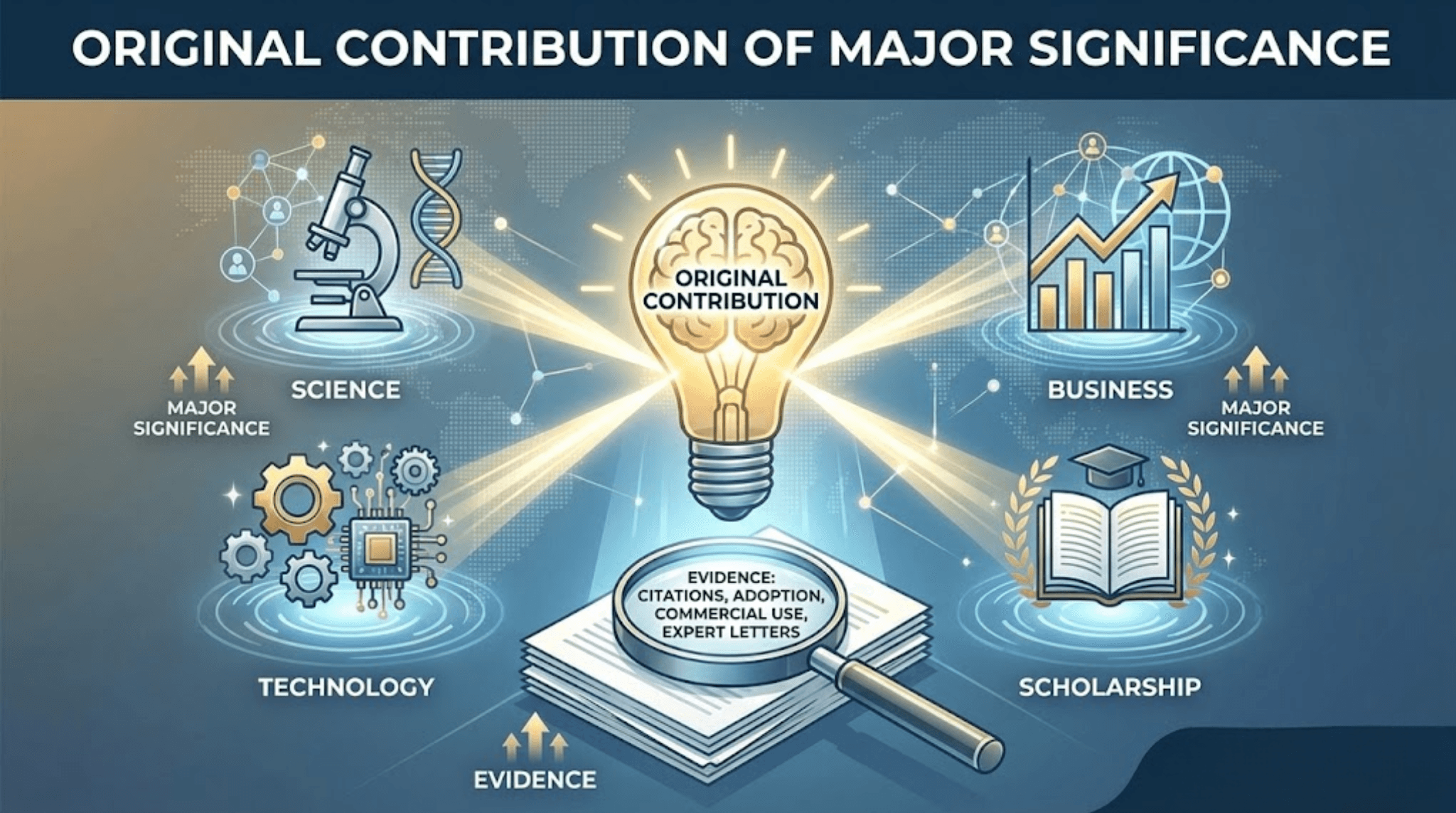
Original contribution: Your core innovation—whether technological, business model, or market-creating—can constitute an original contribution of major significance if you demonstrate meaningful impact, such as user adoption, revenue, licensing, or industry influence.
Leading/critical role: This is often the easiest criterion for founders. As CEO or co-founder, you inherently play a critical or essential role in your organization. You must also demonstrate that your organization has a distinguished reputation through evidence like funding, partnerships, media coverage, or market position.
High salary/remuneration: If your compensation as founder (including equity value, in some interpretations) is high relative to peers, this criterion may apply. Some founders have successfully argued that the valuation of their equity stake demonstrates high remuneration.
Scholarly articles: If you have published articles in business journals, trade publications, or contributed pieces to major media, these may count toward authorship criteria.
Unlike most work visas, O-1A allows founders to petition through their own U.S. company. However, this requires establishing a legitimate employer-employee relationship.
Requirements include: Your U.S. company must have at least one other employee (not just you), typically a U.S. citizen or permanent resident with signing authority. The company must have an operational presence, including a physical address and U.S. phone number. You will have an employment contract with your own company, and the petition will include a specific work itinerary.
Angel investors and family members investing in your company generally do not count as independent funding evidence, and capital must come from authorized sources.
The most common mistake founders make is assuming their company's success automatically qualifies them for O-1A. It does not work that way.
You must present evidence that maps to specific regulatory criteria. A successful product launch, for example, only helps if you can show it resulted in major media coverage (published material criterion), or constitutes an original contribution of major significance, or led to recognition through awards or competitions.
Similarly, raising capital only helps if you can characterize it as a competitive, merit-based award and provide documentation of the selection process and prestige of the funding source.
The other common error is insufficient expert letters. Your investors, advisors, and industry leaders must write detailed letters explaining why your achievements are exceptional—not just that you are building a good company.
OpenSphere helps founders map their unique achievements to O-1A criteria and identify evidence gaps before filing. Our evaluation tool assesses your specific profile against USCIS standards.
Take the free evaluation: https://evaluation.opensphere.ai/best-visa-for-you
Q: Can I apply for O-1A without any VC funding?
A: Absolutely. Many bootstrapped founders have received O-1A visas by demonstrating traction through user growth, revenue, media coverage, awards, or other achievements that map to the criteria.
Q: Does having a co-founder weaken my case?
A: Not if you clearly demonstrate your individual contributions. USCIS wants to understand what you specifically brought to the venture.
Q: How much funding is enough to count as an "award"?
A: There is no specific dollar threshold. What matters is the reputation of the funding source and the competitiveness of the selection process. A $500K investment from a top-tier VC firm is stronger than a $5M investment from an unknown source.
Q: Can my startup sponsor my O-1A even if we are pre-revenue?
A: Yes, revenue is not a requirement for sponsorship. The company needs to be a legitimate U.S. entity with an operational presence and at least one other employee.
Q: What if my previous startup failed?
A: Previous ventures can still provide relevant evidence. The experience of building, leading, and being recognized for your work applies regardless of ultimate commercial outcomes.
Q: How long does O-1A processing take?
A: Standard processing takes 3–6 months depending on the service center. Premium processing is available for an additional fee and provides a decision within 15 business days.
Q: Can O-1A lead to a green card?
A: O-1A is technically temporary, but it allows "dual intent," meaning you can pursue permanent residency (such as EB-1A) while in O-1A status without jeopardizing your visa.
Q: Do I need to have started the company before applying?
A: You need an existing U.S. entity to sponsor the petition, but the company can be newly formed. Some founders form the U.S. entity specifically for this purpose.
Q: What if my achievements are primarily from my home country?
A: International achievements count. O-1A evaluates national or international acclaim—your recognition does not need to come solely from the United States.
Q: How is O-1A different from E-2 investor visa?
A: E-2 requires a substantial investment and is limited to treaty countries. O-1A requires no investment, has no nationality restrictions, and focuses on your achievements rather than capital contribution.