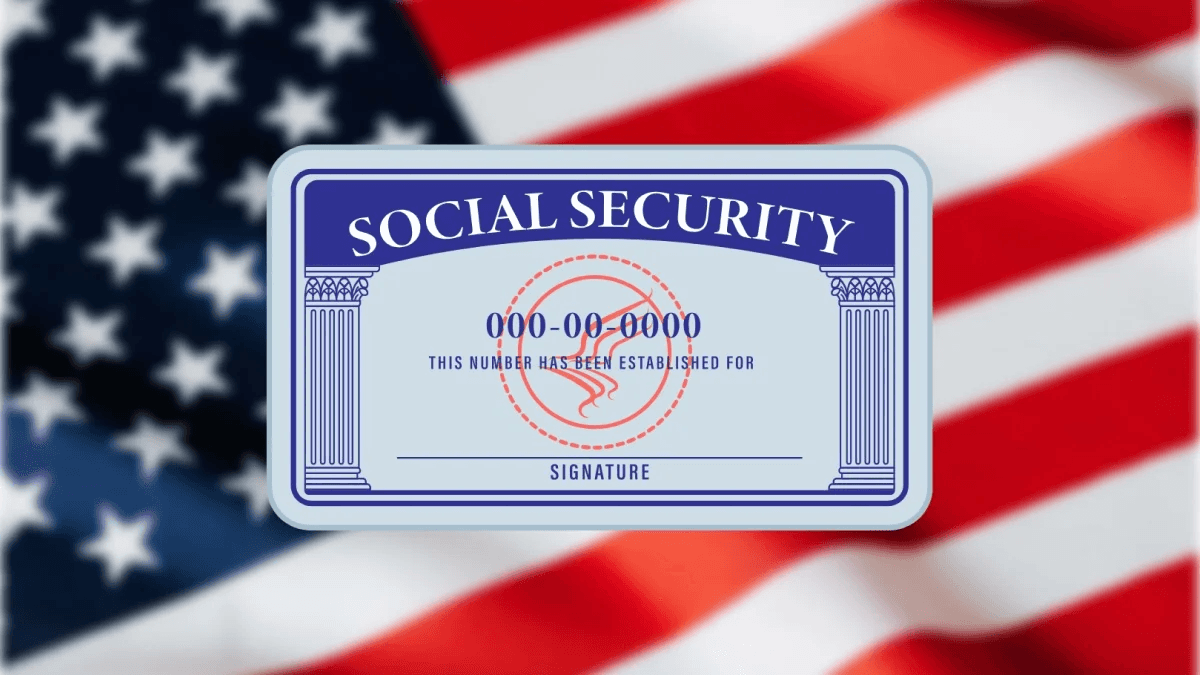
How to Get a Social Security Number on a U.S. Work Visa: The Complete 2025 Guide
A step-by-step process to get your SSN after arriving in the U.S. on an O-1A, H-1B, L-1, F-1, or other work-authorized visa. This guide includes timelines, required documents, and common mistakes to avoid.
A step-by-step process to get your SSN after arriving in the U.S. on an O-1A, H-1B, L-1, F-1, or other work-authorized visa. This guide includes timelines, required documents, and common mistakes to avoid.
To get a Social Security Number after arriving on a work visa, wait at least 10 days after U.S. entry, then visit your local Social Security Administration office with the following:
(1) your passport,
(2) I-94,
(3) visa approval notice (I-797),
(4) and proof of employment authorization.
The application is free, takes about 15 minutes, and your card arrives by mail within 2-4 weeks. You can start working before receiving your physical card - your employer can process payroll without it initially.
Key Takeaways
Wait 10 days after arrival before applying.
SSA must verify your immigration status through DHS systems, which takes time to update after entry.
Different visas require different documents.
H-1B holders need their I-797 approval notice.
F-1 students need an EAD card or CPT authorization on their I-20.
O-1A holders need their approval notice and I-94.
You don't need the SSN to start working.
Employers can begin payroll processing while your SSN application is pending - you just need to provide it once received.
The application is free and in-person.
No online application exists for first-time SSN applicants on work visas. You must visit an SSA office.
Name consistency is critical.
Your name must match exactly across your passport, visa documents, and SSN application to avoid processing delays.
F-1 students need authorized employment first.
You cannot apply for an SSN on F-1 status unless you have on-campus employment, CPT authorization, or an OPT EAD card.
Table of Content
What Is a Social Security Number and Why Do You Need One?
A Social Security Number is a nine-digit identification number issued by the Social Security Administration. For anyone working legally in the United States, it serves as your primary tax identification number and employment tracking mechanism.
Your employer uses your SSN to report your wages to the IRS and Social Security Administration. Beyond employment, you'll need it to open bank accounts, build credit history, apply for a driver's license in most states, file tax returns, and rent an apartment. While some of these activities have workarounds for people without SSNs, having one makes nearly every financial and administrative process in the U.S. significantly easier.
The SSN itself is permanent. Once issued, it never changes, even if you change visa status or eventually become a permanent resident or citizen.
Who Is Eligible for a Social Security Number?
Your eligibility depends on your visa type and work authorization status:
Immediately eligible upon arrival
Work visas with authorization "incident to status" (meaning work permission is built into the visa itself) allow you to apply for an SSN immediately after arrival. This includes H-1B, O-1A, O-1B, L-1, E-1, E-2, TN, and similar employment-based categories.
Eligible with additional authorization
F-1 students can apply for an SSN only after obtaining authorized employment through on-campus work, Curricular Practical Training (CPT), or Optional Practical Training (OPT) with an Employment Authorization Document (EAD).
J-1 exchange visitors need employment authorization or evidence of a job.
H-4 spouses need an approved EAD if their H-1B spouse has an approved I-140 or H-1B extension beyond six years.
Not eligible
Dependent visa holders without work authorization (H-4, L-2, O-3 without EAD) cannot obtain an SSN. Instead, they may apply for an Individual Taxpayer Identification Number (ITIN) for tax purposes.
Required Documents by Visa Type
The SSA requires original documents or certified copies, no photocopies accepted. Here's what you need based on your visa category:
H-1B, L-1, O-1A, O-1B, TN visa holders
Valid unexpired passport with visa stamp
Form I-94 (electronic printout from CBP website)
Form I-797 Approval Notice
Birth certificate (if available; passport can substitute)
F-1 students with on-campus employment
Valid unexpired passport
Form I-94
Form I-20 (current, unexpired)
Job offer letter from on-campus employer
F-1 students with CPT authorization
Valid unexpired passport
Form I-94
Form I-20 with CPT authorization printed on page 3
Job offer letter from employer
F-1 students with OPT
Valid unexpired passport
Form I-94
Employment Authorization Document (EAD card, Form I-766)
Job offer letter (recommended but not always required)
EAD holders (H-4 EAD, L-2 EAD, asylum EAD)
Valid unexpired passport
Form I-94
Employment Authorization Document (EAD card)
Birth certificate (if available)
Step-by-Step Application Process
Step 1: Wait at least 10 days after U.S. arrival
The Social Security Administration must verify your immigration status through DHS's Systematic Alien Verification for Entitlements (SAVE) system. If you apply too soon after arrival, your records may not be in the system yet, causing delays or rejection.
Step 2: Locate your nearest SSA office
Use the SSA's office locator at ssa.gov/locator to find the closest office. Some offices require appointments; others accept walk-ins. Call ahead to confirm current procedures - policies vary by location.
Step 3: Complete Form SS-5
Download Form SS-5 (Application for a Social Security Card) from ssa.gov or pick one up at the office. Key sections to note:
Item 2 (mailing address): Must be a U.S. address since SSA will not mail cards internationally
Item 3 (citizenship status): Select "Legal Alien Allowed to Work"
Item 17: Check "Self" if applying for yourself
Step 4: Visit the SSA office with original documents
Bring all required documents in original form. The SSA representative will review your application, verify your documents, and provide a receipt confirming your application was submitted. Keep this receipt to show to your employer as proof you've applied.
Step 5: Receive your SSN card by mail
Your Social Security card typically arrives within 2-4 weeks. If you don't receive it within 4 weeks, contact your local SSA office or call 1-800-772-1213.
Application Timeline: What to Expect
Stage
Timeline
Arrival in U.S.
Day 0
Wait period before applying
10+ days
SSA office visit
15-30 minutes
SAVE verification
Immediate to several days
Card mailed
2-4 weeks after application
Total time from arrival to card in hand
3-6 weeks
During peak periods or if additional verification is needed, processing can extend to 6-8 weeks. Recent reports indicate appointment delays of 1-3 weeks in some metropolitan areas, so factor this into your timeline.
What If You Need to Start Work Before Receiving Your SSN?
You can legally begin working before receiving your Social Security card. The law allows employees to complete Form I-9 (Employment Eligibility Verification) without an SSN. Your employer should:
Accept your other work authorization documents (passport, visa, I-94, EAD)
Begin payroll processing
Add your SSN to their records once you receive it
The SSA provides employers with guidance on processing W-2s for employees with pending SSN applications. Your first paycheck may be processed without the SSN, and your employer will update their records when you provide it.
Common Mistakes That Delay Your SSN Application
Applying too soon after arrival.
The most common rejection reason. Your immigration records must propagate through government systems before SSA can verify your status.
Name mismatches across documents.
If your passport says "RAJESH KUMAR SHARMA" but your I-797 says "RAJESH K SHARMA," the SSA may flag the discrepancy. Ensure exact consistency across all documents before applying.
F-1 students applying without employment authorization.
You cannot get an SSN on F-1 status simply because you're a student. You need authorized employment like an on-campus job offer, CPT-endorsed I-20, or OPT EAD card.
Bringing photocopies instead of originals.
SSA requires original documents or copies certified by the issuing agency. Standard photocopies or notarized copies are not accepted.
Applying more than 30 days before employment starts (F-1).
For F-1 students, some SSA offices reject applications submitted more than 30 days before your authorized employment start date.
Missing the I-94 printout.
Many applicants forget that the I-94 is now electronic. Print it from the CBP website (i94.cbp.dhs.gov) before your SSA appointment.
Special Considerations for F-1 Students
F-1 visa holders face unique requirements because the visa itself doesn't include work authorization. You must first obtain employment authorization, then apply for the SSN:
On-campus employment:
Get a job offer letter from a university department, then request an SSN authorization letter from your international student office if required by your school.
CPT employment:
Ensure your I-20 has CPT authorization printed on page 3 with the correct employer name and dates before applying for an SSN.
OPT employment:
Wait until you receive your EAD card from USCIS. Recent guidance suggests not requesting an SSN through your I-765 application. Instead, apply separately after receiving your EAD to avoid processing complications.
Your SEVIS record must be in "Active" status for at least two days before the SSA can verify your information.
After You Receive Your SSN: What to Know
Protect your number.
Your SSN is a prime target for identity theft. Memorize it, store the card securely, and never carry it in your wallet.
Report it to your employer.
Provide your SSN to your employer's HR department promptly so they can update payroll records.
Use it for tax filing.
You'll need your SSN to file federal and state tax returns, typically due by April 15 of the following year.
Don't request unnecessary replacements.
You're limited to three replacement cards per year and ten over your lifetime (legal name changes don't count toward this limit).
Update SSA when your status changes.
If you become a permanent resident, visit an SSA office to update your records. Your SSN stays the same, but SSA will issue a new card without work restrictions.
Understanding the SSN process is just one part of navigating U.S. immigration successfully. If you're planning your visa pathway or need to evaluate which visa category best fits your profile, OpenSphere can help.
How long after arriving in the U.S. can I apply for an SSN?
Wait at least 10 days after your initial U.S. entry. This allows time for your immigration records to update in government verification systems. Applying earlier often results in processing delays.
Can I apply for an SSN online?
No. First-time SSN applicants on work visas must apply in person at an SSA office. Online applications are only available for U.S. citizens requesting replacement cards in certain circumstances.
Is there a fee to apply for a Social Security Number?
No. The SSN application is completely free. There is no charge for the initial card or for replacements (up to the annual and lifetime limits).
Can I start working before I receive my SSN card?
Yes. You can legally begin employment with valid work authorization documents. Your employer can process payroll and complete Form I-9 without your SSN, then add it to their records when you receive it.
What if my SSN application is rejected?
The most common reasons are applying too soon after arrival or document mismatches. Wait a few more days for records to update, verify all names match exactly across documents, and reapply. The resubmission process can take up to 90 days in some cases.
Do I need a job offer before applying for an SSN on an H-1B?
No. H-1B holders have work authorization incident to status - your approved I-797 and valid I-94 are sufficient proof of work eligibility. You don't need a separate job offer letter.
Can my spouse on an H-4 visa get an SSN?
Only if they have an approved Employment Authorization Document (EAD). H-4 spouses qualify for EADs if their H-1B spouse has an approved I-140 petition or has received H-1B extensions beyond the normal six-year limit.
What documents do I need for an F-1 OPT SSN application?
You need your valid passport, I-94, and Employment Authorization Document (EAD card). A job offer letter is helpful but not always required. Do not apply before receiving your physical EAD card.
How do I get my I-94 record?
Visit i94.cbp.dhs.gov and enter your passport information to retrieve and print your electronic I-94. Bring this printout to your SSA appointment.
What happens if I lose my Social Security card?
You can request a replacement by visiting an SSA office with identity documents. Replacements are free but limited to three per year and ten per lifetime.